
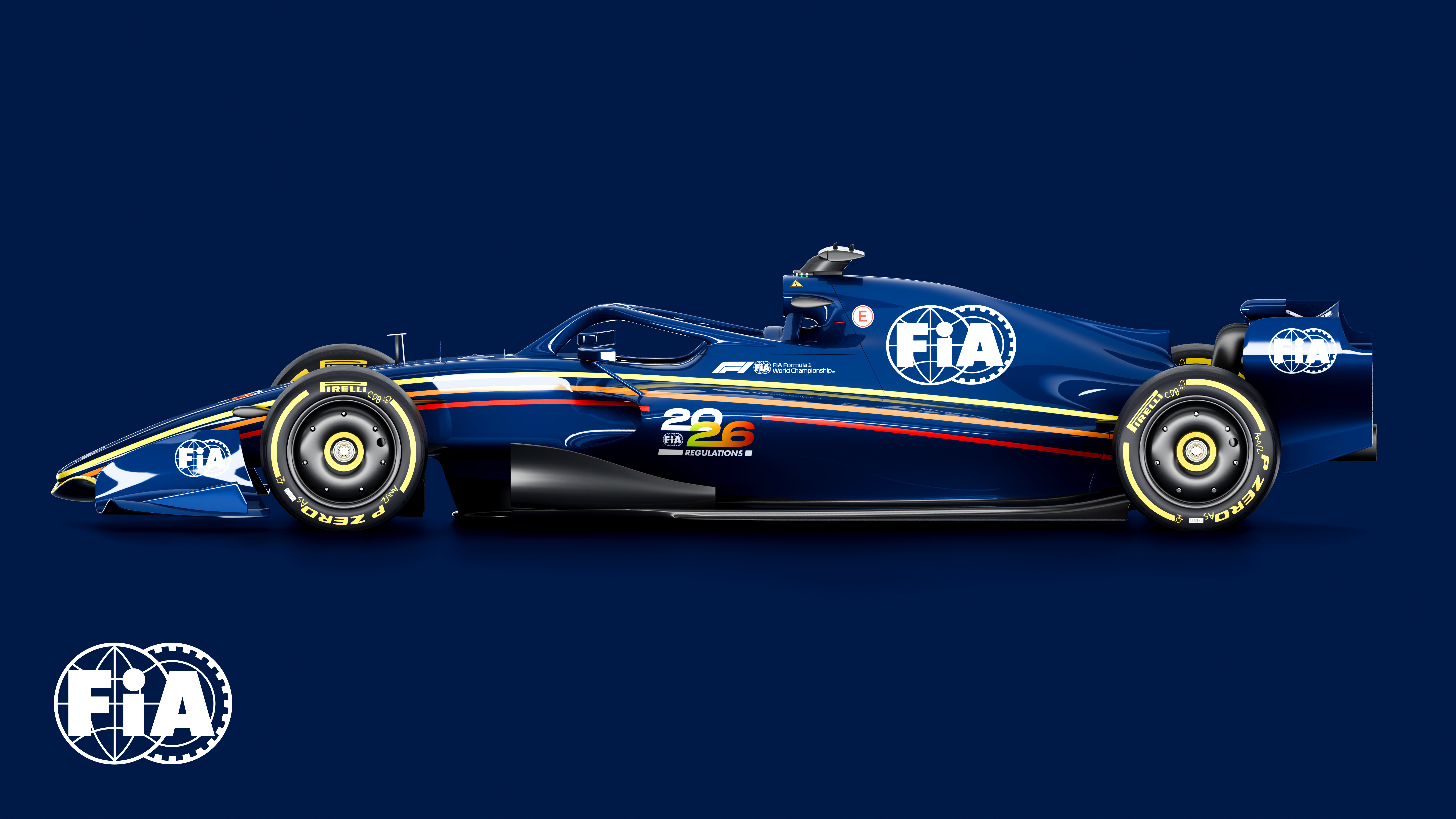
The 2026 rules could change before teams start aero work in January
FIA single seater director Nikolas Tombazis insists that the 2026 Formula 1 technical regulations are not yet set in stone, and there is plenty of scope to make changes before they are finalised.
The FIA has given the teams the draft rules, and on Thursday the governing body issued the main details to the media.
Under the International Sporting Code the regulations have to be approved by the World Motor Sport Council by June 30.
Refinements can be made by the end of October, while in reality on the aero side the deadline for detailed changes is the end of the year, as teams cannot start work until January 1.
Teams and drivers have expressed doubts about some aspects of the draft regs, notably the 30kgs weight reduction, the low downforce and hence reduced speed in the corners, and the higher speed on the straights.
Teams are also on happy at how little freedom they have initially been given in terms of aerodynamic development.
However Tombazis made it clear that their views will be taken into consideration in the coming weeks.
“There’s clearly some concern expressed by some drivers or some teams,” he said. “First of all, these regulations are not yet approved.
“We are presenting them to the World Council on Tuesday in a very extensive manner, the aim being to have them approved by the World Council towards the end of the month. But that’s still not the case.
“Additionally, I would say that we clearly wanted to share these things with the media earlier, because we didn’t want things to leak from teams, we just wanted the media to get the full picture early on.
“But finally, most important of all, I would say, the World Council discussion, and hopefully the approval is the first step, we’re not in the final set of regulations yet.
“We do have quite a few things that we need to refine and discuss with the teams. We are fully conscious of some of the concerns over the level of downforce of the cars, or straightline speed, and these are things that are weak class as the refinements that still need to take place.
“So between, let’s say, the end of the month, when these regulations would hopefully be published, and the start of 2025 when teams can start aerodynamic development, because they cannot start earlier, we do expect a reasonable amount of extra work to be done – in full consultation with the teams, with FOM, and everybody else.
“And hopefully that will then lead to some refinements that would be submitted to the World Council maybe bit later in the year, and hopefully approved.”
Tombazis acknowledged that teams believe that as the regulations stand 2026 F1 cars will be potentially matching current F2 speeds.
“I think the fears are accurate because people are taking a snapshot of what the regulations on a piece of paper are now, and are making comments on the basis of what they see,” he said.
“So I don’t have any concern about these issues raised by people, but clearly as I explained at the start, we have full expectation to make some steps up for performance, and that’s exactly why we’ve set the bar reasonably low to start with, so we can build up on that, with collaboration of the teams.
“And to increase the downforce of these cars, is actually quite easy, if you have the regulatory freedom, I mean, and that’s exactly the step we want to take.
“So I understand the comments. I don’t think there’s any concern these cars will be not faster than F2 or anything like that. I think that would be 100% resolved by the time we are in the final regs.”
FIA single seater technical director Jan Monchaux insisted that the views of the teams are being taken into account.
“We are still in discussion, and we are always in discussion with the teams,” said the former Sauber technical director.
“They have expressed concerns. Typically, teams are always a bit reluctant at implementing large changes, so it’s a bit of an ongoing compromise that needs to constantly be found.”
Monchaux stressed that it’s better to start with restrictive regulations, especially on the aerodynamic side, and then give the teams more freedom.
“As Nikolas said effectively the approach we had since we needed to respect the framework, in terms of date of publication,” he noted.
“The regulations as they have been presented now, and which hopefully will be voted, are probably the most restrictive teams will be seeing, because we think also it’s going to be far easier in the next months to start increasing the freedom, and review some aspect of the regulation, which potentially currently are far too constrained, then the other way around, because they will all agree on having more freedom.
“If we had gone the other way around and effectively, let’s say, have something like providing a lot of freedom in their ability to design the cars, we would potentially realise in October or November on that one we don’t necessarily want, because it might put at risk some of the targets we want to achieve with these new regs.
“So it’s simply the approach we think is more reasonable to effectively now, step-by-step, since we have, I think, a solid basis to start discussion, to review some areas where, for the moment, we offer little or no freedom.
“Then if we convince ourselves, with the active support of the teams, to potentially say, ‘Okay, in this area, you can do more, it’s okay for us, you have more freedom,’ because we are convinced, through work they will have to do that it’s not going to put at risk all the high level objectives – the nimble car, which comes with reduction of weight, which comes with some reduction of downforce.
“And I think the process like this will be working, because it’s pretty much straightforward, because they will always say yes for more freedom.

 Adam Cooper F1