
Qualifying for the Dutch GP was a tricky affair for everyone, with gusts of wind catching many people out on top of the challenge of getting the tyres into just the right window.
It wasn’t easy to put all the pieces together, and just as Isack Hadjar got it spectacularly right in P4, so some others were a little bit out of position.
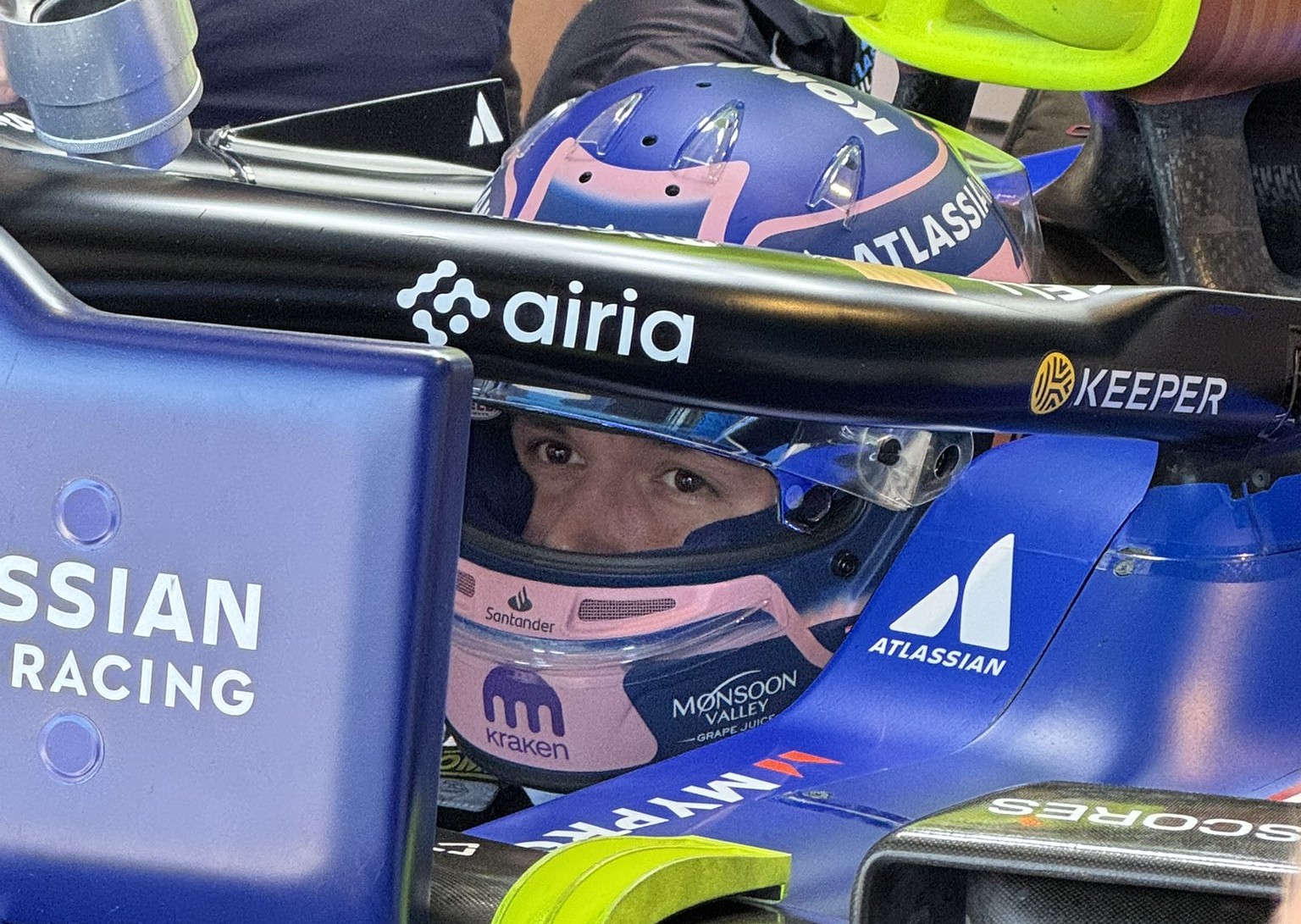
Among them was Alex Albon, who was as high as P6 in Q1 but then tumbled to a lowly P15 after a difficult final run in Q2.
The Williams driver was quick to flag a tyre temperature issues on team radio. Afterwards he gave a fascinating insight into the challenge of getting the out lap just right, revealing an unusual amount of detail about how the FW47 has to be pushed harder than rivals before commencing a flying lap.
“We were quite comfortably in the top 10 in Q1, and we were quite comfortably in the top 10 in Q2 run one,” he noted.
“And then basically when we came out the garage, we must have been waiting for about two and a half minutes to get out the pit lane.
“And then by the time we got out the pit lane, all the people that came out the pit lane before were on their push laps. So then you do a slow out lap, because you have to let all the cars past who are on the push lap.
“By the time that happens, you go into Turn 1, and the tyres are absolutely nowhere. And you cannot do anything, honestly. We know we’re on the on the back foot in terms of our window to get the tyres to work is narrower than other teams. I think you see that Carlos was struggling in Q1, I was okay in Q1.
“We’ve seen it in in so many tracks we’ve gone to this year so far, if we don’t get our clean out lap, we are nowhere.
“And I think our out lap is normally around this track so far this weekend has been about 10-15 seconds a lap quicker than the people around us. And my Q2 run two out lap was maybe 20-25 seconds slower than my normal out lap. So you can imagine that normally doesn’t go well when you go into Turn 1…”
That requirement for a quick out lap is part of the DNA that is baked into the Williams, and the team has had to work around it all season.
“It doesn’t make it easy for us in many ways,” said Albon. “Obviously I’m angry at the moment. But as a strategist when your window is a bit smaller than everyone else’s to get the clean air and to get the right space on track is very difficult.
“And I feel for us. We basically need to figure out the tyres first. That’s the main issue, and then everything else will come easier. That’s where the frustration is.”
In stark contrast other cars need or can deal with a much slower lap out of the pitlane.
“I think in that moment, it’s basically how versatile are you on your out lap? A team like RB or Aston, for example, their out laps are about 15 seconds a lap slower than hours. So for them, it doesn’t matter.
“They can have the slow exit out of he pit lane and they can have a slow out lap, because it that’s what they do, even on a clear run. That’s not the same for us.
“That’s why you see us a lot of the time go early, for that very reason. I think Mercedes did it in Q2, they went early. And maybe we should have done that.”
All of this makes for some interesting scenarios as drivers jockey for position coming out of the pits.
“Communication is very important,” Albon noted. “You have to be flexible in your run plans. Like I said, the easiest thing is to get the tyres to have a big window, that’s realistically where you can afford to do it.”
“Obviously, this regulation with the minimum delta time and the pit lane thing, this is what it’s come down to.
“And what’s interesting is you’ll actually see some teams purposely letting cars get in front of them, because for them, it’s better to cool the tyres down before they start their out laps.
“But then it just creates chaos! It’s the same for everyone. So I’m not going to complain. I think it’s a valid solution. I think it’s been better doing this than it was from previous years. But it’s the name of the game, and you’ve just got to adapt and get better.”

 Adam Cooper F1