Monthly Archives: June 2012

Lewis Hamilton: “My future is not important”

Lewis Hamilton says he is in no hurry to sort out his contractual situation for next year, and insists that he is focussing on winning this year’s title.

Hamilton is out of contract at the end of 2012 and after a few problems in the McLaren camp inevitably his name has been linked with other teams.

“I haven’t even discussed it,” said Hamilton in Montreal. “I think it’s just because I underestimated how difficult the season was going to be, I underestimated about how busy I’d be, and I also realise how unimportant it is at the moment. The championship’s more important than what I plan to do with my next contract.

“My future at the moment is not important. I might not even see next year! So, you know, what’s the point? I have to make sure I maximise and capitalise on this year.”

Asked whether he might even wait until the end of the season, he said: “Possibly.”

Pressed on whether he had other options, he added: “I’m not looking at anyone else, as I said I’m just trying to focus in this season, just trying to focus on winning. I have other people to worry about those things. When the time comes they sit down and say, ‘What do you want to do?’ And I can give them an answer. But I don’t have to do it at the moment.

“I think I could sit down if I wanted to, but I’ve got a job, and I am in no rush, I really am in no rush at all, so there’s no need to do it.”

5 Comments

Filed under Uncategorized

Dany Bahar sacked by Group Lotus

Dany Bahar has been sacked by Group Lotus

Dany Bahar has been sacked as CEO of Group Lotus, a couple of weeks after he was put on suspension.

A statement from the company said: “The decision was made by the board of Group Lotus plc following the results of an investigation into a complaint made against him by the company’s penultimate holding company, DRB-HICOM Berhad.”

Aslam Farikullah has become the company’s chief operating officer with immediate effect.

Bahar had instigated a number of motor racing programmes at Lotus, including the sponsorship of the F1 team that shares the name, which was terminated for this year, plus the disastrous Indycar involvement.

Bahar came to Lotus after a rollercoaster career that saw him have involvements with Sauber, Red Bull and Ferrari. He did not always part company on good terms with those organisations.

He filled the Lotus hierarchy with a number of his old Ferrari contacts, and it will be interesting to see what now happens to them.

5 Comments

Filed under Uncategorized

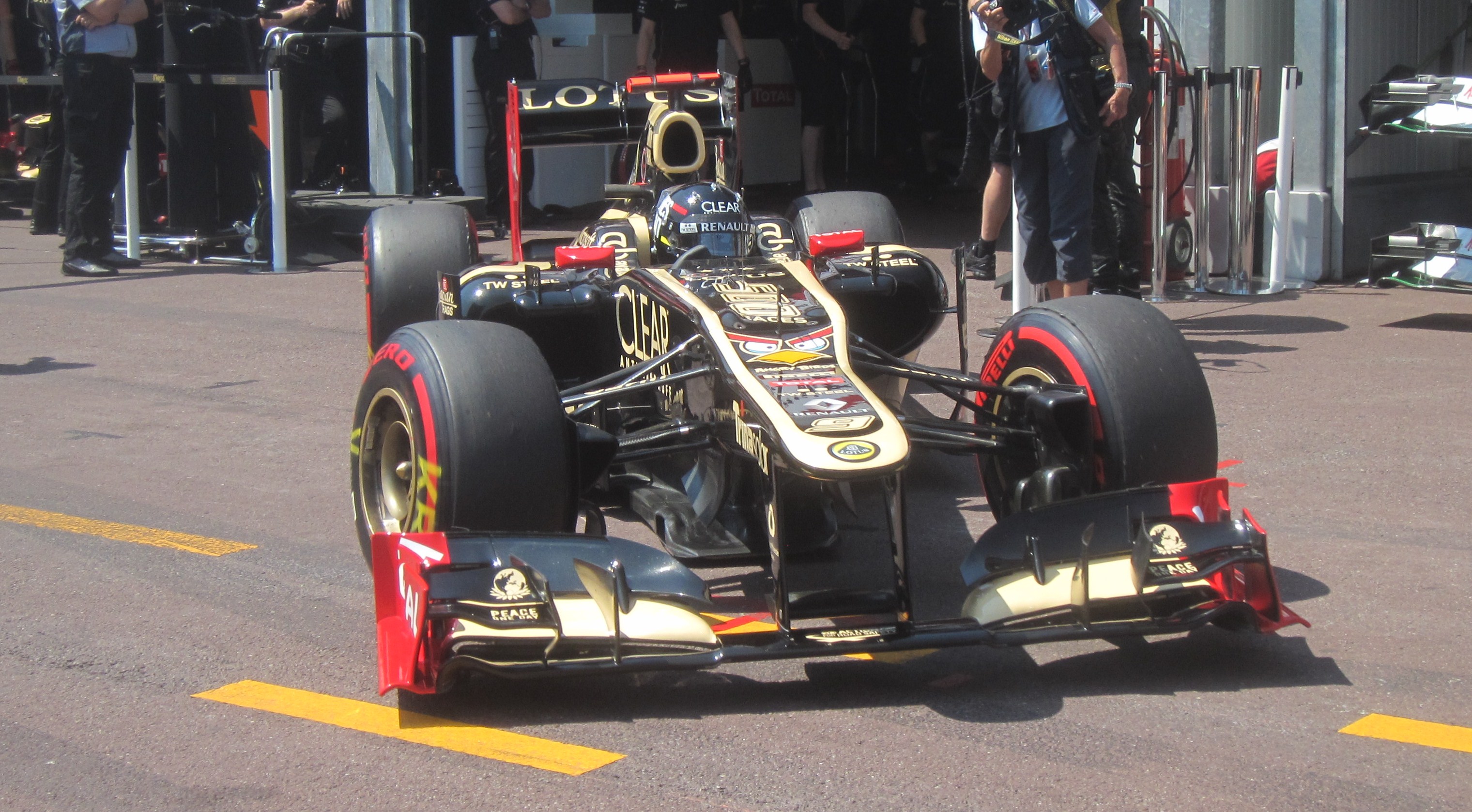
Lotus F1 team posts £20.8m loss for 2011

Lotus posted another significant loss last season

Lotus F1 Team Ltd made a loss of £20.8m in 2011 according to the newly released financial accounts – but the team was actually better off than in the previous season, when it lost £34.2m after tax.

The improved situation was due to a significant increase in turnover, up from £82.1m to £115.6m. The team says that was due in large part to the now cancelled sponsorship from Group Lotus, along with new income from Russia and Brazil, related to 2011 drivers Vitaly Petrov and Bruno Senna.

However, operating expenses also rose from £122.1m to £134.3m. The team says this was attributed to “several areas of the business including acquisition fees and commercial functions, tyre supply agreement, salary increases, and race related costs.”

The accounts also reveal that the team had net debt of £37.1m as of December 31 2011, and that the average number of employees fell from 514 to 500 in 2010-11.

1 Comment

Filed under Uncategorized

Paul Pietsch 1911-2012

Paul Pietsch – the last surviving driver of the pre-war Silver Arrows era – has died just a few weeks short of his 101st birthday.

He was a unique living link to the days of Tazio Nuvolari and Bernd Rosemeyer.

Born in 1911, the German spent his early career as a privateer. He started with a Bugatti in 1932, before getting his hands on an Alfa. However he showed enough promise to interest both Mercedes and Auto Union, signing for the latter after a test at the end of 1934.

As team mate to Rosemeyer, Hans Stuck Sr and Achille Varzi, Pietsch drove for Auto Union in six races in 1935. His best result was third in the Italian GP, where he shared his car with Rosemeyer. He left the team after his wife famously had an affair with Varzi, and following a divorce Pietsch sat out the 1936 season.

He returned in 1937, mainly driving private Maseratis. In perhaps his most famous race he drove for the works Maserati team in the 1939 German GP, briefly leading ahead of the fancied Silver Arrows. He eventually finished third after mechanical problems delayed him.

After WW2 he resumed his career, making three World Championship starts between 1950 and 1952. He drove a works Alfa Romeo in his home race in 1951, but his day ended in an accident.

Pietsch was equally well known off track for founding a famous motoring publishing company.

Leave a comment

Filed under Uncategorized

Hungarian GP promoter Frank passes away

Tamas Frank, the promoter and main driving force behind the Hungarian GP, has passed away at the age of 65.

Frank was reportedly found dead at his apartment in Budapest this morning.

A close associate of Bernie Ecclestone, Frank was a familiar face in paddocks around the world. He was Vice President of the Hungaroring and of the MNASZ, the country’s motor sporting authority.

He also pushed the career of Hungarian F1 driver Zsolt Baumgartner.

His role in keeping the Hungarian GP going over the years via his personal connections with Ecclestone cannot be underestimated, and his death is thus a big loss for the country’s motor sport community.

Leave a comment

Filed under Uncategorized

Roy Salvadori 1922-2012

Former Grand Prix driver Roy Salvadori has passed away at the age of 90.

His death comes just a few weeks after that of Carroll Shelby, with whom he shared the winning Aston Martin DBR1 at Le Mans in 1959.

A long time friend of Bernie Ecclestone, Salvadori started 47 World Championship races in a career that spanned from 1952 to 1962, with a best finish of second in the 1958 German GP.

Although inevitably overshadowed at F1 level by the likes of Stirling Moss, Tony Brooks, Peter Collins and Mike Hawthorn, he was considered one of the best British all-round drivers of the era.

Born to Italian parents in 1922, Salvadori started racing immediately after WW2. He made his World Championship debut at Silverstone in 1952 in a private Ferrari, in which he finished eighth.

He drove in five Grands Prix for the works Connaught team the following year, but failed to finish a race. Between 1954 and ‘56 he had occasional World Championship outings in Sid Greene’s Gilby Engineering Maserati 250F, but fared rather better on home soil, winning several non-championship F1 races against strong opposition.

His form did not go unnoticed, and in 1957 he had chances with three British works teams. He failed to qualify with BRM in Monaco, and then had a one-off outing for Vanwall in France. Joining Cooper he scored his first points with fifth in the British GP at Aintree.

In 1958 he was a Cooper regular, alongside Jack Brabham, as the rear-engined cars began to make their mark. He was fourth at Zandvoort, third at Silverstone, second at the Nurburgring, and fifth at Monza – accumulating enough points to finish fourth in the World Championship.

In 1959 he drove mainly for Aston Martin, taking a pair of sixth places in the uncompetitive and outdated rear-engined car. Meanwhile his Le Mans win with Shelby was proof that he was one of the best sportscar racers of his day. He mixed the Aston programme with other F1 outings in a private Cooper, a schedule that continued into 1960. That year he was also third at Le Mans for Aston, sharing with Jim Clark.

In 1961 he drove a Cooper for Reg Parnell’s Yeoman Credit team, alongside John Surtees, and earned a couple of sixth places. He very nearly won the US GP before his engine failed while he was catching leader Innes Ireland.

In 1962 he drove a Lola for the renamed Bowmaker team, again as team mate to Surtees, and suffered badly with unreliability. At the age of 40 he retired from F1 at the end of that season. He continued in sports and touring cars, and was closely involved in the birth of the Ford GT40 programme. He retired from racing in 1965, running his final race in a GT40 at Goodwood.

For a couple of years he shared his experience as team manager and test driver for the Cooper F1 team, where he worked with the likes of Bruce McLaren, Jochen Rindt and Pedro Rodriguez, not to mention a mechanic called Ron Dennis. After a disagreement he left the team before the start of the 1968 season.

For a while he ran a garage business before spending some four decades in retirement, living for many years in an apartment above the start/finish straight in Monaco with his wife Sue.

4 Comments

Filed under Uncategorized

Red Bull forced to remove floor holes for Canada

This document will be the source of much frustration at RBR

As expected the FIA has clamped down on the controversial Red Bull floor by clarifying its position and stating that the holes in front of the RB8’s rear wheels are not permitted.

The ruling, given via the traditional route of a Technical Directive sent to all the teams, applies from Canada onwards. It does not affect past results, which is normal when such clarifications occur.

Other teams had expressed their opposition to RBR’s interpretation of the rules applying to ‘surfaces lying on the step plane’, and the FIA came to its conclusion after reviewing that input – along with Red Bull’s opinion.

Ferrari and McLaren had considered a protest in Monaco but chose not to make one after the race, on the basis that they assumed that the FIA would come to such a conclusion.

Red Bull’s view was that in effect there was a grey area in the rules which did not specify that holes were banned in that particular place. However, the FIA now says “we disagree with this view and consider it implicit that fully enclosed holes may not be located there.”

Although the consensus was that the RBR holes did not necessarily provide a significant performance advantage the concern was that it could have led to developments that had a greater impact.

This writer has seen a copy of TD/013-12, the text of which reads as follows: “Following on from a number of discussions in Monaco, during which it became clear that certain misunderstandings existed, we feel it would be helpful to make our position clear with respect to the presence of a fully enclosed hole in any surface lying on the step plane.

“It has been argued that, as it is not explicitly stated that fully enclosed holes cannot be located in a surface lying on the step plane rearward of a line 450mm forward of the rear face of the cockpit template, then they may be located in such areas. We disagree with this view and consider it implicit that fully enclosed holes may not be located there.

“If they were permitted the opening part of the second paragraph of Article 3.12.5 (which was added to the regulations at the same time as Articles 3.12.9 and 3.12.10 for 2011) would be superfluous.

“Furthermore, locating a fully enclosed hole partly or wholly within the 50mm band which is exempt from the requirements of Article 3.12.10 along the outer edges of the surfaces lying on the step plane does not exempt it from the requirements of Article 3.12.5, those parts lying outboard of Y650 are still parts of the surfaces lying on the step plane.”

12 Comments

Filed under Uncategorized