Pirelli’s planned change to Kevlar-belted rear tyres for the British GP could still be blocked by the teams, despite its apparent confidence that the switch will go ahead.
The Italian company may be a little optimistic, because the change still requires unanimous consent from the teams, and that has not yet been forthcoming.
It’s believed that three teams have been reluctant to agree, in some cases specifically because – as outlined here this week – they would lose the advantage they currently gain by running the steel-belted right and left rear tyres the wrong way round. That will no longer be relevant with the Kevlar tyres.
Regarding the planned change Paul Hembery noted in Monaco: “It risks changing the dynamic of the tyre in terms of shape and deformation for example, you can imagine that there are a number of teams that have been extremely vocal about wanting dramatic changes, and there are a number of equally vocal teams who want absolutely no changes.
“You’re stuck in the middle of that. You have to find a solution that’s sportingly equitable, which means making as few changes as possible, because everybody had the same information and data when we started out the season, and it would be unfair on teams that perceive they are doing well at the moment to penalise them with a chance that is too dramatic.”
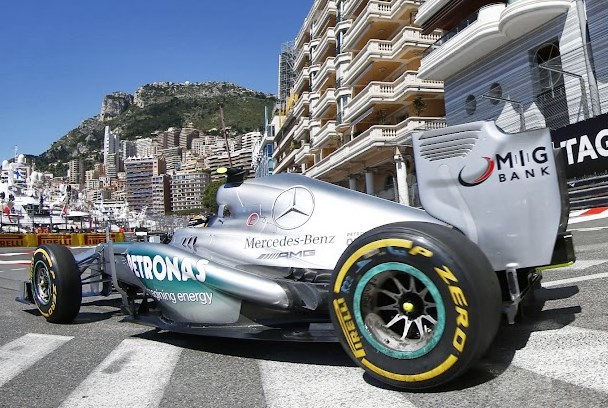
No agreement was reached in time for Canada, but in postponing the move until Silverstone Pirelli is at least hoping to diffuse some of the tension resulting from the teams learning that Mercedes ran Kevlar tyres at the Barcelona test, thus getting a jump start on the opposition.
The other 10 teams will now have a chance to run them on Friday in Montreal, with each driver being given two sets under the ‘experimental’ tyre rule.
However if it is wet in Montreal on Friday it seems highly unlikely that even those teams supporting the move will all agree to run the new tyres at Silverstone, knowing that Mercedes is still the only competitor with prior knowledge.
Agreement is required because Pirelli has not played the safety card, which trumps the usual arrangement, and requires no agreement from the teams.
One might assume that Pirelli does not want to resort to formally declaring that its current tyres are unsafe in order to force the change through. Indeed Paul Hembery has repeatedly made it clear Pirelli is more worried from a PR point of view about how a tread delamination looks on TV.
There is also the question of whether a loss of tread can be justified as a safety issue, when in fact it has allowed drivers to continue safely when as opposed to losing control due to a complete tyre failure.
Indeed even Hembery admitted in Monaco that the delaminating tyres could actually be viewed as safer given that they allow drivers to continue.
“It doesn’t deflate, that’s certainly true,” he said. “That is an aspect. Visually from a tyre maker’s point of view, it’s not great. Some of the damage we’ve seen this year more than likely would have caused a deflation, as we’ve seen in previous seasons, so that is debatable. It just looks really poor, so we have to change.”
Others in the pitlane support the view that the current tyres are better.
“The safest mode of failure with a cut tyre is what they have,” one team insider told this writer. “Or you can have a puncture that deflates rapidly and then explodes. The safest thing they can do is basically make this construction not delaminate. That’s just a bonding issue between the tread and the casing, that’s the bottom line.
“They found out that last year’s tyres have the better bond, because the bond between Kevlar and rubber is a lot easier to get right than it is between steel and rubber. For them it’s let’s go back to Kevlar, and then the tread won’t come off. But you’ll get punctures…”


 Adam Cooper F1