Aston Martin Formula 1 technical director Dan Fallows says that the team’s substantial Imola upgrade package is “aggressive” – and he insists that there is still more to come.
For the first European race of the season the AMR24 features a new front wing, nose, floor and floor edges, diffuser, engine cover and rear suspensions fairings.
Early running at Imola on Friday was inconclusive, and the team’s progress was not helped when Fernando Alonso had a major accident in FP3 on Saturday.
While the team has brought several packages already this season – for example at Suzuka – Fallows conceded that this weekend set of updates is the most significant thus far.
“Yeah, it is quite aggressive,” he said. “We knew we had a car we that we had a lot of opportunities with.
“At the beginning of the season we wanted to make sure we had continual upgrades coming through. So this is probably our biggest one to date. But it’s just part of our plan, and we want to sort of keep going with this in the next few races as well.”
Fallows says that the updates were initiated after testing in Bahrain, rather than as a result of how the car performed in the early events, when the car performed better in qualifying than in races.
“I think the majority of this update has been based on what we saw from the launch car, from the car in testing, and then how we wanted to sort of evolve that,” he said.
“We’ve seen some circuits suit our car better than others. And something we focused on, trying to make sure we can perform everywhere, whenever we need to.
“It is generic, it’s trying to make the car more competitive. There are areas we can see where we need to make specific improvements. So we’ve certainly worked on those.”
Fallows said it was key to ensure that the AMR24 is competitive on different types of tracks and a range of faster and slower corners.
“We have an era of ground effect cars where they have specific windows of performance that you’re always trying to sort of broaden that.” he said.
“And you want to make sure when you bring an update that it does perform in all the different conditions. I think we’re all kind of trying to chase the same thing, really.”
Expanding on the quest for consistency he said: “I think we’ve seen that some circuits, some conditions, we’re better than other times.
“And it’s obviously something we look at quite closely, to try and make sure that when we develop a car in the future that we try and sort of iron out those differences.
“But I think everybody’s working very hard to try to sort of understand when we do our performance that we add it in the right way. I think that’s the key thing for us.”
Fallow admitted that at times last year’s upgrades didn’t perform exactly as predicted, and that it’s important to ensure that they work as planned.
“Whenever you bring an update, then you obviously would like to just put it straight on the car, and it does exactly what you expect,” he said.
“But there are different ways of looking at the data, and obviously different things that may be slightly unexpected once you’ve put things on the car.
“We have done some learning in some areas, we’ve realised where we can we can push things harder than we could before. And some things we have to be a bit more careful of. It’s been a learning experience.
“And I think we have a bit more confidence now that these upgrades do work. And we’ll see again today. But there’s been a lot of hard work to try and understand that.”
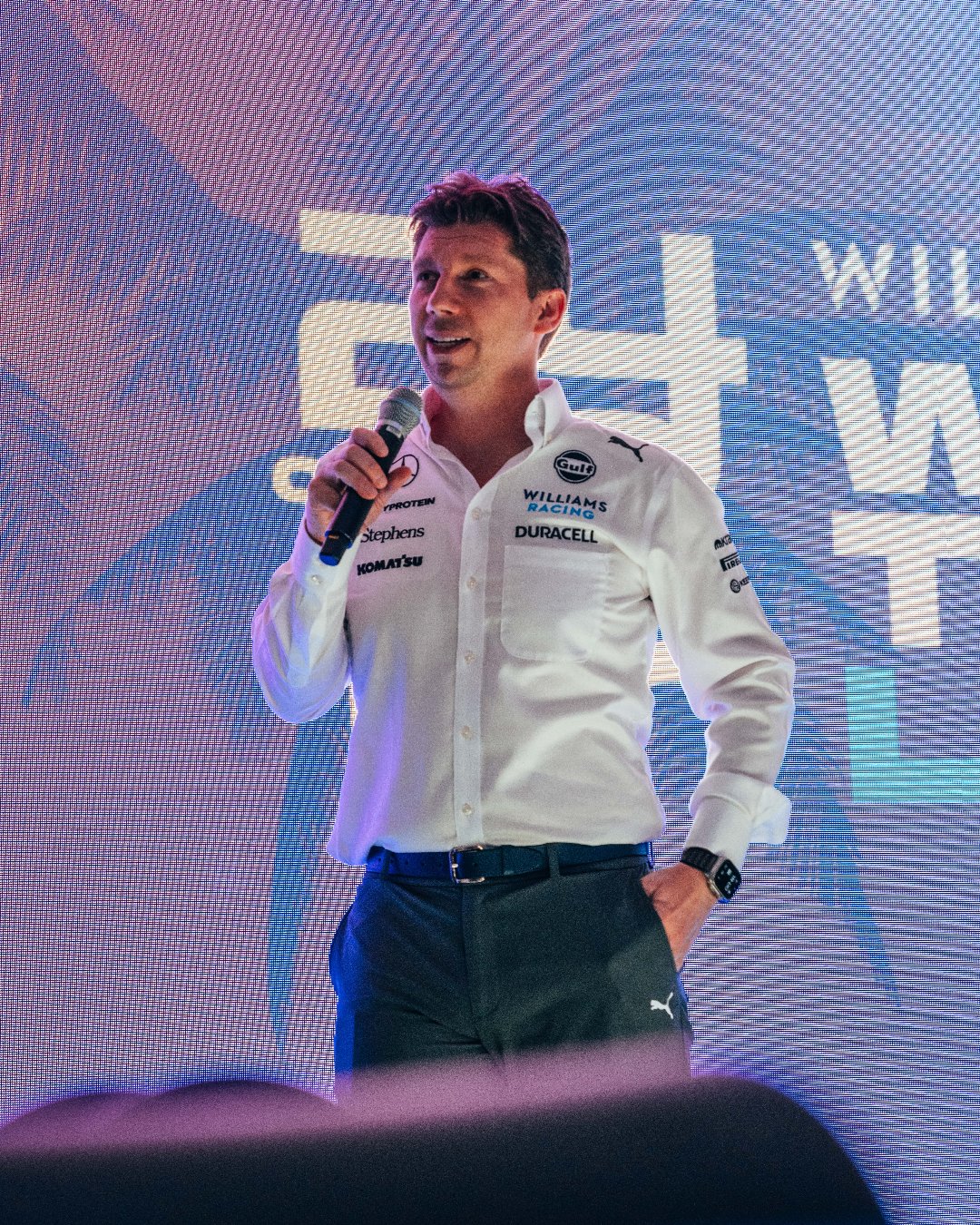
Williams Formula 1 boss James Vowles says that an overweight car has hindered the team in recent seasons – and that this weekend’s race at Imola sees the start of a programme to address the issue.
Vowles says that the team managed to reduce the chassis weight by 14kgs between 2023 and 2024, which represents a significant saving.
However increases in other areas as the team rushed to complete the car in time for Bahrain testing put the overall package added more weight to the overall package.
Vowles says that the extra weight has cost Alex Albon and Logan Sargeant 0.450s a lap thus far this season, which suggests that the FW46 is around 15kgs above the limit.
“We have produced cars that are not at the weight limit – and I only went back and looked unfortunately, too late – every year since 2019,” he said.
“None of the cars have started at the weight limit, they’ve been far up above it. To give you a view of the pit lane at the moment, everyone out there is near enough at the weight limit, and very few will have physical ballast on the car. Very, very few.
“The transformation we did between 2023 to ‘24 was that we took 14kgs out of the chassis. And for anyone in the business that knows those numbers, you’ll realise that’s an extraordinary feat, the team did very well in doing that.
“However, the car this year that we’ve been running is about four and a half tenths a lap slower every lap by the fact that it’s so overweight.”
Vowles says that the extra weight accumulated largely because the team has traditionally been late in completing the new car build during the winter, and thus compromises are made in the latter stages as the deadline of the first test approaches.
“What happens when you challenge the system and the technology is you can get an output from it,” he said. “And the output from it is things get delayed, and weight gets added is one of the fixes in order to get you back on track.
“And we added an enormous amount of weight – despite the chassis being in a much better place, we added an enormous amount of weight.
“And when I went back through the history of us, of how we operate, with these facilities, with the systems, with the process and structures we have, weight became the natural outlet for it. And as a result of that we’ve been overweight for many, many years.
“What we gave Alex is a car that he’s been openly speaking about as much better balanced, it’s a much better package. If you take four and a half tenths off, you’ll have a realisation as to why Alex has been sat here frustrated.
“What’s not of interest to me is what’s happened. It’s how we move forward from this point on.
“So Imola is the start of weight being shed, that will now continue across the next six races fundamentally, in order to get us back to where we need to be.”
Vowles also admitted that attempts to save weight and develop the car have been hindered by the accident damage incurred thus far this year, which has soaked up resources.
“What’s hindered us is that across the beginning of the season, we have damaged four gearboxes beyond repair, we have damaged five floors, we have damaged four front wings, four rear wings, and some miscellaneous bits,” he noted.
“Any team on the grid, go speak to them, you can’t deal with that plus taking out weight, plus adding aerodynamic performance we’ve hinted ourselves. So the damage bill I just couldn’t believe would have happened at three races.
“But that’s where we are. I’m not proud of any of these facts. But the reason why I’m being open and transparent about it is that’s a red line.
“And this is where it stops and downwards. we produce cars that are effectively up to where they need to be. Williams for many years has had some great people working on items.
“But it’s incredibly expensive, taking weight out of the car and a lot of what we’ve been doing, I did it last year when I joined here is taking weight out. It’s very inefficient in doing it. And that stops now and that’s one of the foundations moving forwards.”
Pierre Gasly says that Alpine Formula 1 team’s latest upgrade package allows its drivers to be a “more pushy” as they fight in the midfield pack.
The new parts were used by Esteban Ocon in China before Gasly received them in Miami, where the A524s finished 10th and 12th, with Ocon logging the team’s first point of the season.
As well as aero benefits the package created a valuable weight saving, the cars having been over the limit since the start of the season.
“I think weight is true lap time, you can quantify like roughly 10 kilos is three-tenths per lap,” said Gasly. “So it’s quite easy to quantify. But then even when you’re talking about a few kilos over a full race distance in terms of energy you put in the tyre, it does affect it.
“So it helps you in performance, degradation, all around. In terms of car balance, not a huge difference. You see with the floor, it’s a bit more downforce as well.
“It’s just like a tiny bit, but at the moment in that midfield just a tiny bit allows us to race a bit more, be a bit more pushy sometimes, be able to overtake or defend.
“And I think that was the whole point of the race. We had some great battles, I managed to even pass [Fernando] Alonso at some point when I didn’t really expect to fight with him. We just seem to be a bit more in the mix.”
Gasly conceded that Ocon’s point was a boost for the whole team.
“I think we are just showing we’re making a lot of progress,” he said. “Very positive for the team to open the account and get a get a point out of that race. The whole weekend was positive, I finished ninth in the sprint, as well.
“So yeah, a lot of positives, and great motivation for the guys now, I hope we can keep pushing that direction, and hopefully things can start coming a bit more our way on our side of the garage.”
He added: “We keep trying things, and it feels like at the moment the car is not really quite giving me the stuff that I like. But we’re slowly getting in the right direction. So yeah, it’s slowly coming, but hopefully we can see us fighting for top 10s a bit more consistently now.”
Natalie Robyn has left the FIA CEO role after just 18 months
The FIA’s first ever CEO Natalie Robyn is leaving the organisation after just 18 months in the job.
She will leave the FIA at the end of this month by “mutual agreement”, and a process to find a replacement has already begun.
The CEO role was created by created by president Mohammed Ben Sulayem as part of a modernisation process.
Robyn was named in the job in September 2022, and officially started that November.
She had previously worked in senior roles in Daimler, Nissan and Volvo, and was heading the Swiss division of the last named company before moving to the FIA.
“Performing in the role of CEO at the FIA has been an enormous privilege and I am grateful to have directed a programme of restructuring and reform,” said Robyn.
“Now is the time to step away in the knowledge that the organisation is better placed for the challenges which lie ahead.
“I take great pride in my role in advancing the FIA’s transformation across both Sport and Mobility, and I am pleased to leave an organisation comprised of a wonderful team of talented and dedicated individuals.”
Confirming her departure the FIA noted: “Throughout the past 18 months, Natalie has spearheaded a comprehensive overhaul of the federation’s operational structure, playing a pivotal role in modernising the FIA, enhancing governance, and securing sustainable financial stability.
“Natalie’s appointment to the role of CEO in November 2022 marked a milestone, leveraging her 18-year career encompassing roles within both the automotive and finance sectors.
“Her decision to pursue opportunities outside of the FIA has prompted her departure from the organisation by mutual agreement, effective at the end of May.”
Ben Sulayem said: “Natalie’s appointment was notable as the first CEO in the history of the FIA. She has contributed greatly to a wide-ranging reorganisation of our operational and management structure. On behalf of the FIA, I wish her well in her future endeavours.”
Sergio Perez locks up on the inside line at the start in Miami
Sergio Perez admits he was fortunate not to take out team mate Max Verstappen after what Red Bull team boss Christian Horner called an “optimistic start” in the Miami GP.
Perez took the inside line on the way into the first corner as he battled with Charles Leclerc and then locked up and went straight on, just missing the rear of Verstappen’s car.
He then ran wide and had to find his way back onto the racing line without making contact or losing too many places.
“I had a good start, Charles had a really bad start,” he said. “But as soon as I braked there was no grip, like with Lewis [Hamilton] yesterday. Offline there was no grip and I ended up locking. I nearly took Max out, so I had to come off the brakes.
“It was quite close. But as soon as I saw he was so close I came off the brakes, and I ended up going straight, and I couldn’t keep the position.”
Horner admitted that it was a tricky moment for the team.
“His start was optimistic,” he said when asked by this writer about Perez’s start. “I think that obviously Charles didn’t have a great start ahead, I think that caused Checo to lift for Charles.
“And then [Leclerc] left him a window into the first corner, he went for it, and then obviously got in very deep and was lucky not to collect Max at the first turn, and then collect the Ferrari coming back onto the track after the first turn. So I was pleased to see both cars survive that.”
The Mexican eventually finished fifth on the road, but he then gained a spot from a time penalty for Carlos Sainz.
“I think we were struggling for some pace today,” he said. “We just couldn’t manage to get the pace when we needed it. It’s something that we’ve got to work on to try and understand why.
“I was a bit too much front limited in the high speed, and then rear limited in the low speed, so there was such a big trade-off between low and high speed.”
He also lost time when stuck behind Esteban Ocon after his pit stop: “Yeah, on the hard it took me a few laps to warm up the tyre.”
Perez conceded that McLaren showed impressive pace over the Miami weekend.
“They were very strong already in qualifying,” he said. “I think they just messed up a bit their qualifying, they couldn’t make the soft tyre work. But I think they’ve been the fastest this weekend. And we were probably a little bit behind them. Lando [Norris] put me on a lot of pressure on that first stint towards the end.”
Regarding the future threat from McLaren he added: “It would be track dependent, in some places we will be a bit stronger, in others not so strong. But yeah, certainly I think it will be a very close fight with them.”
McLaren Formula 1 team boss Andrea Stella says that Kevin Magnussen’s blocking tactics in the Miami GP sprint race were “completely unacceptable.”
Magnussen picked up a string of penalties for going off track while trying to keep Lewis Hamilton behind. In so doing he prevented the Mercedes driver from attacking the other Haas of Nico Hulkenberg up ahead.
Hulkenberg eventually finished seventh, and while Hamilton was eighth on the road he lost his point for a pit speeding offence. Magnussen’s penalties dropped the Dane to 18th. He was also subject to an unsportsmanlike behaviour investigation.
Although the tactics made no difference to the races of his own drivers Stella questioned Magnussen’s sportsmanship and suggested that penalty in such a case should see the driver banned for the race.
“For me, it’s actually relatively simple this case, because we have a case of a behaviour being intentional in terms of damaging another competitor,” he said.
“This behaviour is perpetuated within the same race, and repeated over the same season. How can penalties be cumulative? They should be exponential. It’s not five plus five plus five equals 15.
“Five plus five plus five equals maybe you need to spend a weekend at home with your family, reflect on your sportsmanship, and then go back. And if we see that you’ve become loyal, fair, and sportmanslike to your fellow competitors, then you can stay in this business. It’s completely unacceptable.”
In addition to four time penalties Magnussen picked up three penalty points, taking his running total to eight.
“I guess the penalty points are still is in place,” said Stella. “So I don’t know exactly the situation for some drivers, I have to confess. But definitely it may mean that the metrics might have to be adjusted, damaging intentionally the race of competitors just makes no sense from sportsmanship point of view. And this should be addressed immediately.
“Because if you are out of the points, you get 20 seconds or whatever, at the end of your race, it doesn’t make any difference. But for the competitors you have damaged, you have put them out of their race, again, in a deliberate, perpetuated and repeated way. This is completely unacceptable.”
Asked about the reaction of the FIA stewards he added: “I think they just potentially they were surprised themselves from the fact that this was repeated. And I’m sure they are going to look into that. And by offering a strong opinion, I think I want to reiterate that these values of being fair, it’s a sport, it’s a competition, we need to give everyone a fair chance to compete.
“These values need to be taken into account in creating the appropriate set of regulations. But I’m sure the FIA will look into that. And we’ll come with sensible proposal for the sporting advisory committee to evaluate, and hopefully this will become soon either rules or guidelines that the stewards can apply.”
James Vowles has made a public pitch to Adrian Newey in an effort to attract him back to the Williams Formula 1 team.
Newey worked at Williams from 1990 to the end of 1996 before moving to McLaren, winning titles with Nigel Mansell, Alain Prost and Damon Hill.
While rival team bosses are being coy about any potential interest they might have in hiring him after he leaves Red Bull Vowles made it clear in an FIA press conference that he sees Williams as a realistic potential home.
Vowles downplayed a chat he has already had with Newey, but suggested that a smaller team without manufacturer support might have its appeal.
“I mean, it was a light conversation more than anything else, saying it can’t have been an easy decision, and fundamentally wanting just to have an additional chat about things,” he said.
“But from a Williams perspective, obviously, that’s where Adrian really cut his teeth for the first time. And I think we’re a team without politics. It’s a small team that’s trying to make our way back to the front.
“And I think it could fit very perfectly for someone that wants to potentially dig into a challenge like that. More than that, I mean, what is great about Williams is that it has retained the family feel to it. We’re not driven by an OEM. We’re driven by just a group of individuals that want to be there. And it’s all about racing.
“And hopefully some of that plays to his strengths. And then finally with Adrian, you have someone with his accolades, with his touch.
“There’s not a team he hasn’t been to – and that includes McLaren, ourselves, Red Bull – where he hasn’t made a significant difference. And I think anyone here would be foolish not to at least open some conversation with him at that stage.”
Expanding on what makes Newey so special he said: “He’s an incredible character that has huge accolades behind him in the sport, well known for being the best designer really in his field. And that will have an impact, there’s no doubt about it.
“How much he was involved in Red Bull or not, I couldn’t say. We’re not buried within there. But what I can say is it [his departure] will have an impact. Of course it will, someone of his character and his strength.”
Nico Hulkenberg says that Audi will have “a good opportunity to be competitive straight away” when it joins the Formula 1 grid in 2026.
The German is the first driver with a confirmed seat at the team, which will switch to full Audi identity after one more year in its current Sauber guise.
Hulkenberg, who drove for the Swiss outfit for a single season in 2013, believes that the new chassis and power unit regulations will give Audi a chance to get off to a flying start.
“It’s really difficult to tell, it’s really a white piece of paper,” he said when asked about his expectations for 2026. “And on one side, I think that’s good. It’s not a new team, but it’s going to be labelled a new team, because probably the know-how and advantage that current teams have, it’s wiped away a little bit.
“And it’s more of a level starting playing field for everyone. So, I think that offers a good opportunity to be competitive straight away. But expectations are always to be as successful as quickly as possible. I have no numbers for you on that.”
Hulkenberg says that the interim season in 2025 will give him a chance to find his feet at the team after over a decade away.
“It buys us some time, getting to know each other,” he said. “Still some faces I know from 2013, but also a lot of new faces.
“It’s still going to be a Ferrari power unit, so that’s not going to be foreign to me, but obviously to get to know the team, the infrastructure there, and then already try to help and steer certain things. But that’s then. Now I’m still pretty much in the season, and focused on what’s ahead.”
Although Hulkenberg achieved some good results with Sauber in 2013 he stayed for just a single season, reflecting the fact that it was not an entirely happy experience for him.
“It was obviously very different set of circumstances,” he said when asked by this writer for his memories of that year.
“I think the that with the team, everything was fine. It was only with one person, it was difficult. And that was the team principal, Monisha [Kaltenborn] at the time, which was a bit difficult, and a tricky situation.
“But everything else was fine. Every team I work with and race for I’ve never had problems with the team, with the mechanics, with the engineers. I’ve always enjoyed working with all the team members and working as a force, as a team, pushing for performance. So obviously now that’s quite different from back then.”
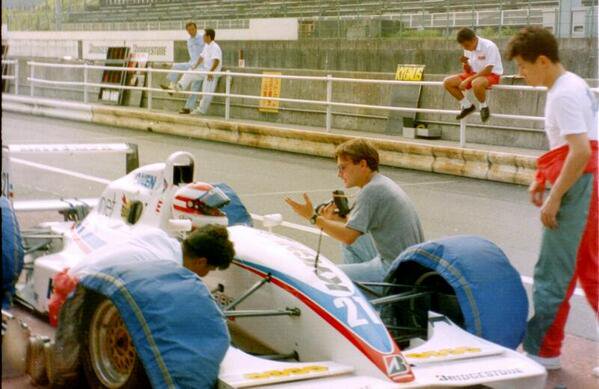
The above picture shows me at the top left, using my camera remote control to take a shot of Marco Apicella, Roland Ratzenberger and Mika Salo. We’re on a bullet train, on the way back to Tokyo after an F3000 race at Suzuka in 1993.
I originally wrote this story a decade ago on the 20th anniversary of Roland’s death at Imola in 1994, and it’s hard to believe that we’ve now marked 30 years since that tragic weekend. I hope it gives you a little taster of what he was like – it was a privilege to count him as a friend.
Today is the day the motor sporting world remembers Roland Ratzenberger, and I’m happy that his name still means something even to those who never had a chance to meet him.
I was fortunate enough to call him a friend. Indeed he was one of the best friends I ever had in motor racing, and someone who played a game changing role in my life. I think about him often, and not just on April 30.
I was pleased when the makers of the Senna documentary went out of their way to find a clip of him talking to Simtek engineer Humphrey Corbett at Imola – footage of Roland is hard to come by, and it was the first time in years that I’d heard his voice, or seen him talking.
Recently I’ve been digging through boxes of ancient microcassettes, and many feature Roland. Mostly he’s talking about understeer or oversteer at whatever race we happened to be at, and I regret that we never sat down and properly talked through his career. The closest I got was when we talked through the 1986 Formula Ford Festival as a Race of my Life for Autosport. The struggles he faced to even get onto the grid that weekend were a reminder of just how hard he had to work to make it.
I had first met Roland when he was starting to make a name for himself in Formula Ford in the UK. He was basically running his own show, working on his own car, having got his start by preparing machines for drivers of lesser talent and teaching in racing schools. He didn’t have a manager, and everything he did was as a result of his own hard work.
I got to know him more as he worked his way through F3, British F3000, touring cars and into sportscars. He was always keen to forge relationships with journalists, as he was well aware of the value of the media. But it was his charm and sense of humour that caught your eye, rather than any boasting about his achievements.
When I was on the staff of Autosport and he was racing in Japan I’d often ring him for the latest gossip and for the inside story on what had happened that weekend. In the summer of 1991 I decided to go and see the Japanese scene for myself, and my two-week trip started with a local Group C race at Fuji.
I’d been to Fuji and Suzuka several times for World Sportscar Championship races, but I was always passing through on the way to a race, and had never had a chance to spend any time in Tokyo. On Sunday night after the Fuji race some of the drivers took me on my first ever tour of the city’s Roppongi nightspots, which proved to be a real eye opener.
We started in Charleston, an Italian restaurant, and then went on something of a bar crawl. Gradually Johnny Herbert, Thomas Danielsson, Volker Weidler and the rest faded away, until just Roland and myself remained in a grotty dive called Deja Vu. We had a few more beers, and I can remember Roland teasing a lady of the night who seemed convinced that she had bagged him as a customer. She finally got the message and left us.
Roland and I were the last customers, and as we departed, they were putting the chairs on the tables. It was daylight as we stumbled back to the President Hotel, and somewhere along the way we came to the conclusion that I should come to live in Japan to cover the local racing scene, and give the overseas drivers some extra publicity back in Europe. It seemed like a good idea at the time, and sure enough, that’s exactly what happened.
The following March I duly turned up in Japan with a couple of suitcases at the start of what turned out to be a two-year stint in the Far East. It was to be perhaps the defining experience of my life, and I formed bonds with drivers that are still in place today, all these years later. I also met the future Mrs C, who was working in Tokyo. And without that drink-fuelled conversation with Roland, it would never have happened.
My first race weekend in 1992 was a Suzuka F3000 event. A team had booked me a hotel room at the Circuit Hotel, and when I discovered that it cost £120 a night – about £120 more than my budget – I was stuck. Roland took pity on me, as he had a spare bed in his twin room, and he was happy to have some company.
That weekend he happened to be driving a knackered old Lola chassis, and when he failed to make the grid he was as depressed as I’d ever seen him. Fortunately the team would eventually give him a new car, and he was soon at the front.
He was well aware that living and working in Japan as a freelance didn’t make much financial sense for me, and he did me a huge favour by asking me to write his press releases, which I then faxed to personal sponsors and his pals in the Austrian media. The inside cover my old address book still contains the list of numbers I used.
He paid me equivalent of around £70 a race. It wasn’t much, but it helped towards my expenses as I travelled around Japan by train and plane. Roland also persuaded other drivers to use me, and soon my client list included Jacques Villeneuve, Mika Salo and Heinz-Harald Frentzen. They all made it to F1 so my PR service must have done something!
Roland had another reason to be a little melancholy on that first Suzuka weekend. In the winter in Monaco he had married the former partner of another driver after a whirlwind courtship. Suddenly he was not only a husband, but also a stepfather, as the lady in question had a son. However, it was all over within months, and by the start of that 1992 season, he was single again.
Around that time I remember we chatted in a restaurant with a British driver who enjoyed a brief spell in Japanese F3. In stark contrast to Roland he was lacking, shall we say, in both the looks and charm departments. When the conversation turned to women he said, ‘I haven’t been laid since Macau.’ ‘I’ve been married and divorced since then!,’ was Roland’s deadpan reply…
His biggest mistake was the commitment he made to the lady in question by throwing away the little black book of phone numbers that he’d spent years collecting. Starting from scratch was not a problem, since Roland always had an eye for the ladies, and he had an amazing success rate. He wasn’t averse to chasing the girlfriends of other drivers, as his brief marriage attested, and that occasionally made life difficult!
One of his unusual goals was to try to enjoy female company in the team motorhome between stints in 24 hour races. I think the last time we discussed it he’d managed the feat twice at Le Mans, and once at the Nurburgring.
At Le Mans in 1990 I was waiting in the pitlane with Roland and a bunch of other drivers before the start of the parade laps. A girl emerged from the crowd. The daughter of a marshal, she turned out to be his conquest of the previous year. ‘Why didn’t you write?,’ she said somewhat sadly. All Roland could do was smile…
At the start of the Simtek era he hooked up with a young lady who would become a major UK TV personality. He sent the team a handwritten fax detailing, in perfect motor racing engineering language, what happened on their first night together – including problems with bottoming out! A debrief of a very different kind.
There are so many stories, such as the time he used his deep Austrian accent to record a Terminator-style ‘I’ll be back’ answer machine message for F3000 rival Jeff Krosnoff, whose own life would be tragically cut short in a Champcar crash.
There was his disappointment when he found out that Jacques Villeneuve knew so little about father Gilles, and his sadness when I told him that Denny Hulme had died at Bathurst. Motor sport history meant a lot to him.
Then there was the time Anthony Reid had a huge accident in front of him during an F3000 test at Fuji. Reid came to a halt without his helmet and with blood streaming down his face. It was actually a superficial injury, but Roland had to take charge of the scene as the marshals had freaked out. Later he made sure I wrote about the shortcomings of safety in a Japanese magazine. He wanted to make a point.
Once we even discussed Austria’s appalling run of racing tragedies – Jochen Rindt, Helmuth Koinigg, Jo Gartner and the sadly forgotten F2 driver, Markus Hottinger. He was not impressed when I mispronounced the latter as ‘Hot,’ instead of something like ‘Hurt,’ with an umlaut. We didn’t know that a couple of years later he would join that sad list.
All these memories have been bouncing around my head for the past 30 years, and he’s never far away. But what I remember most of all is that huge, beaming smile that was his trademark. I consider myself lucky to have known him.
Esteban Ocon says it is too early to judge the upgrade package trialled on his Alpine A524 Formula 1 car at the Chinese GP.
The Enstone team was able to fast track one set of new parts for Ocon’s use in Shanghai, while his team mate Pierre Gasly stayed with the standard car.
Ocon started 13th and had a solid race to 11th in the main event, while Gasly was not far behind him at the flag.
Ocon conceded that it was and the team’s his best race of 2024 thus far, but he remained cautious on the overall impact of the changes.
“I think happier and a bit disappointed at the same time not to be in the points,” he said when asked by this writer about his race.
“We ended up through 2.3 seconds away from the points, which is difficult to swallow, given the job that we’ve done this weekend.
“I think it was fully maximised. I feel like this race has been my best driving race of the whole season, I was very happy with how I managed everything.
“And there was clearly nothing left on the table. So to not have that reward is a little bit sad, but it’s going in the right direction, a small step at a time.
“I think both cars made a good step forward, well inside the top 15. Of course, a lot has happened this race. So difficult to give conclusions exactly on where we would have ended up if everyone was there.
“But we will keep pushing, and hopefully we have one more shot of being close to the points in Miami.”
Ocon stressed that the team would have to conduct a proper analysis of how the upgraded car compared to rivals in the Shanghai event.
“I think we need to dig in exactly on what has been better,” he said. “I think for sure the weight has been an improvement.
“On the rest, I think we need further analysis to exactly see if it has brought a clear performance advantage, because I think both cars were in good shape in that weekend on that side.”
Regarding future prospects he added: “At the moment, we haven’t scored one point this season. So it’s early to say. But it’s our best finish of the year with both cars.
“We need to be careful what we read into it, we need to be careful also, who was there in that race? There’s been many things happening, and lot of contenders that are in the back.
“So that’s the other thing, that we need to be careful on. But on the same time, I feel like it’s been a very strong weekend on the operational side, and on my side driving, and I’ve been happy with that. So we keep going.”






 Adam Cooper F1