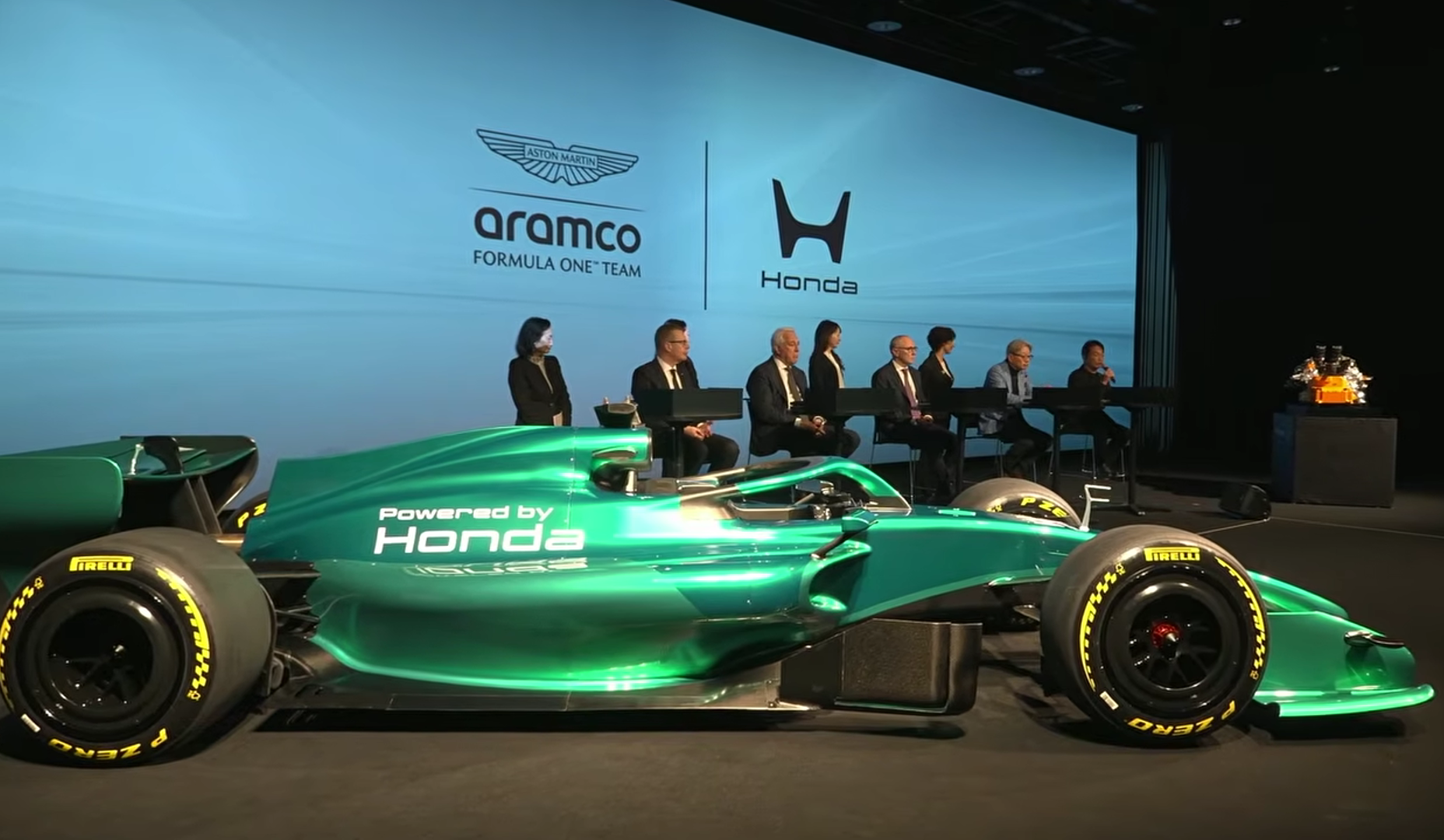
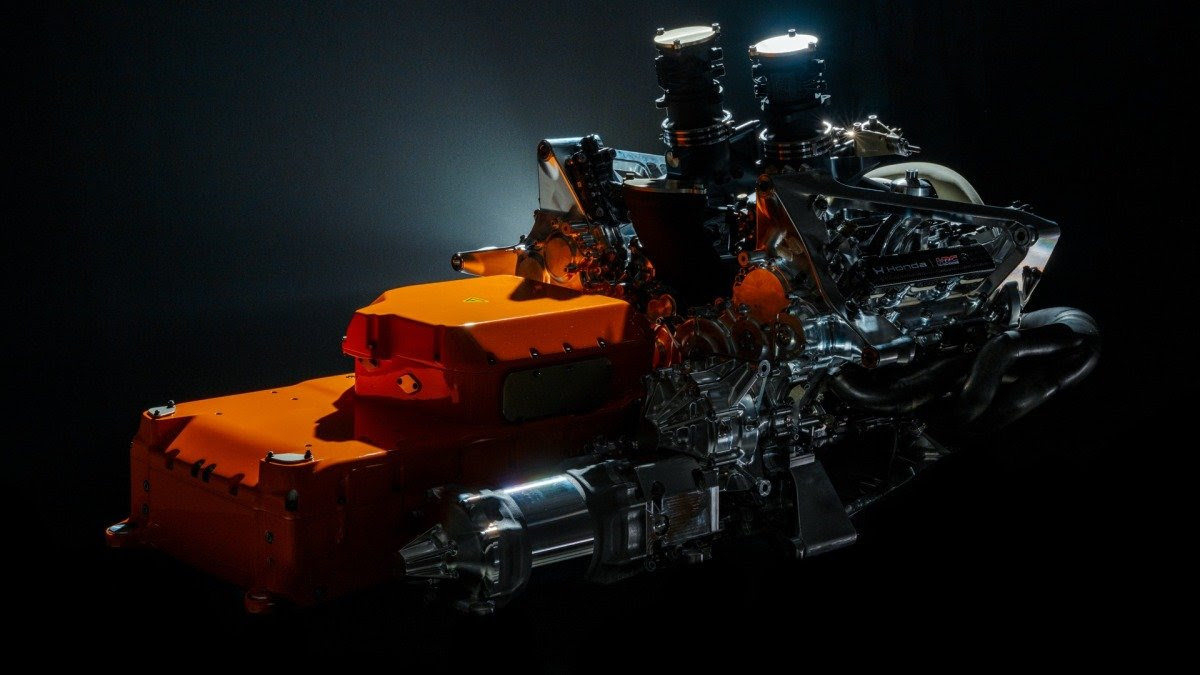
Honda unveiled its RA626H PU and new logo in Tokyo on Tuesday
Honda has made it clear that it hopes that the FIA will address the compression ratio controversy that is set to overshadow the start of the F1 season.
Mercedes and Red Bull Powertrains are believed to have found a loophole that allows them their new PUs at a more favourable compression ratio on track than the 16:1 limit prescribed by the rules and which is measured at ambient temperature.
Honda, Ferrari and Audi have expressed their concerns to the FIA, and the matter is set to be discussed by the governing body and the manufacturers in a meeting this week.
Speaking at the launch of the 2026 F1 power unit in Tokyo on Tuesday Honda president Toshihiro Mibe indicated that the company is relying on the FIA to address the situation.
“Regulations do not have everything listed very clearly, bit-by-bit,” he said. “So in the new regulations, we look into the possibility of the new technology for each of the different power units. There is a lot of room for interpretation as well, and this is also part of the race.
“So for the FIA, it’s up to them to decide on whether it’s good or bad, so they have to take on it. For Honda, we have a lot of different ideas, and we would like to discuss with the FIA to understand if our ideas are accepted or are not okay.
“So I think that’s how we’re going to proceed. So we would always look to the FIA to consult them on regulation related matters.”
Aston Martin F1 team chief strategy officer Andy Cowell – whose former HPP colleagues are responsible for both the Mercedes and RBP/Ford projects – also put the onus on the FIA.
“The topic of compression ratio, there’s always a topic that bubbles up when new regulations come into place,” he said. “And every competitor reads the regulations and pushes performance to the limit.
“Compression ratio is clearly a key thermal efficiency enabling aspect of an internal combustion engine, so you always push it to the limit. So I’m sure every single power unit manufacturer is doing that.
“And as mentioned, the FIA have the job to make sure that everybody interprets the regulations in a fair and equal way. Which is what’s ongoing at the moment.”
HRC president Koji Watanabe was circumspect: “There are a lot of factors that need to come in discussion. So there’s more to it. So we would like to keep that aside for now, but then we want to make it clear that we want to meet and comply to the regulations.”
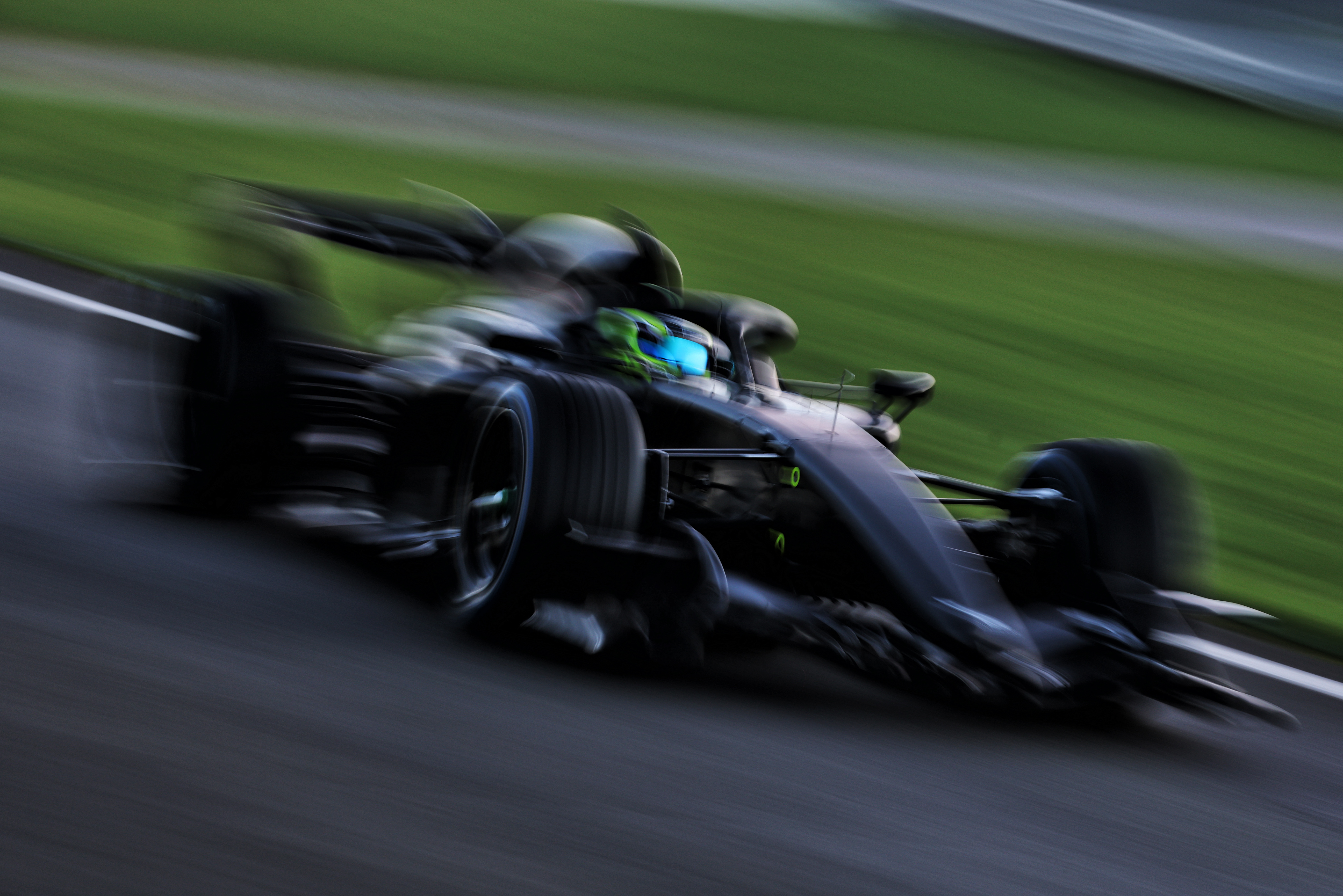
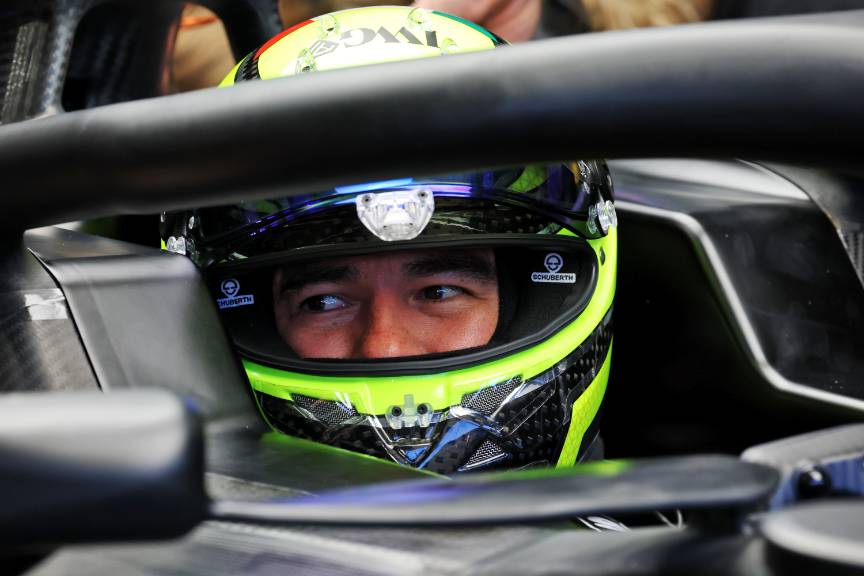
Sergio Perez had the honour of giving the new Cadillac F1 its first lap in a promotional day shakedown run at Silverstone on Friday afternoon.
It was also the first on-track run for the 2026 Ferrari engine, with the Italian team having issued a clip that included audio of a first fire-up in its own SF-26 in Maranello.
Thanks for reading! Subscribe for free to receive new posts and support my work.
The US-owned team issued only a few indistinct images of the car and a brief video snippet ahead of its first proper appearance in a launch livery at the Barcelona test, which will be followed by the official unveil of the car’s new colours on SuperBowl day.
The Silverstone run came the day after GM’s rivals Ford grabbed the limelight with a Red Bull launch in Detroit on Thursday.
“Today’s shakedown is a significant step for the Cadillac Formula 1 Team,” said CEO Dan Towriss. “Watching the car roll out of the garage is a moment of pride. The first laps on track mark a historic milestone; the culmination of thousands of hours of work, driven by pure passion.
“Graeme [Lowdon] has done an outstanding job of assembling a team of absolute racers that have given everything to get to this moment. This is just the beginning, as our work continues at pace towards Melbourne and beyond.”
Team Principal Lowdon said: “Today represents countless hours of hard work, commitment and belief from everyone involved in the team. It shows the progress we’re continuing to make in a short space of time.
“It’s been a great opportunity for the team to gel in a live garage environment, verify car systems and resolve any initial issues.
“But it’s just the beginning of the road; we now turn our attention to pre-season testing in just a few weeks’ time, which will provide even more opportunity to learn.”
“Today was really an amazing day,” said Perez. “Everyone should feel incredibly proud to complete our first laps as a team. Each and every person has worked so hard to get to this moment and it was emotional to be part of motorsport history.
“We can, and should, all enjoy, but it’s absolutely fired me up for more. I just want to get back in and get mileage – this is just the start.”
Perez’s team mate Valtteri Bottas and reserve Zhou Guanyu were also present at Silverstone.
“I’m proud of the whole team for getting to this point, which is really impressive,” said the Finn. “It was special to be part of this moment and witness the joy from the team. Our first day is done and now we push on.”
Bortoleto has agreed an F1 deal – and the consensus is that it’s with McLaren
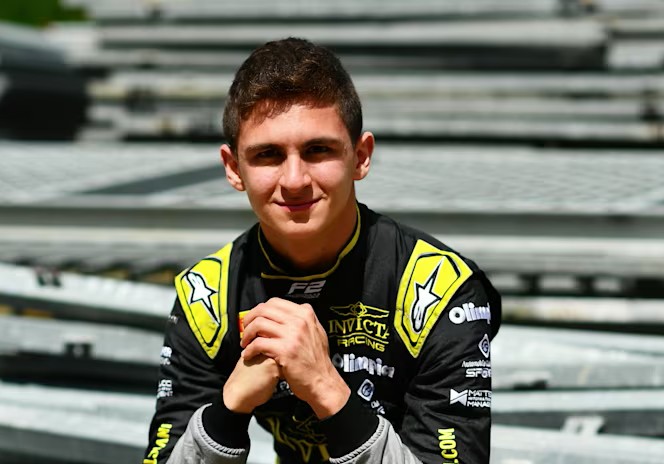
New FIA F2 champion Leonardo Fornaroli finally agreed a deal with a Formula 1 team prior to securing the title Sunday’s deciding race in Qatar.
Sources have indicated that a contract was signed over the weekend, although there has been no official confirmation of where he is going.
Fornaroli has reached the top rung of the sport without the support of any F1 junior programmes, beating multiple drivers who are associated with GP teams.
He won the 2024 F3 title with Trident despite not winning a single race over his two years in the category.
He moved up to F2 this year with Invicta, and an impressive rookie season has seen him win three sprints and one feature thus far, boosting his reputation after his winless F3 career. He clinched the title with second place in the Qatar feature race on Sunday.
He thus repeated the feat achieved by his friend Gabriel Bortoleto, who won the F3/F2 titles in 2023-’24 – with the same Trident/Invicta combination – and has since enjoyed a strong F1 rookie season with Sauber.
After clinching the title he said: “I have an idea of what’s happening with my future. My focus still remains on the last round of F2 in the meantime. My manager and management are doing an amazing job, and I’m very confident for what’s next. And I hope you will be able to see what will happen in few weeks’ time.”
Multiple sources have linked Fornaroli with McLaren, which would be a logical choice given that the team has cut its links with Alex Dunne and has plenty of capacity to give an F2 graduate FP1 and TPC running, and to have someone permanently on hand as third driver.
He would in effect be a direct replacement for Bortoleto, who was released from his McLaren contract to take up the Sauber opportunity after the team had invested in his development.
While he appears to be set for McLaren the 20-year-old’s name has also been linked with Ferrari, and a deal that would involve TPC running and FP1 sessions, including seat time with Haas.
Adding a proven talent to the Maranello talent pool would be an interesting move given that Oliver Bearman is being lined up to eventually follow Lewis Hamilton at Ferrari, and Fornaroli’s presence would give both teams more future options.
However where it doesn’t quite add up is that F3 star Rafael Camara is regarded as the team’s main long-term prospect, with an F1 development programme being built around the Brazilian alongside his F2 commitments in 2026. The team also has Dino Begonavic in its ranks.
Fornaroli is known to have been in the frame for a third driver role at Audi, and while it’s thought that he has signed a long-term deal elsewhere he has also been mentioned in connection with doing the upcoming Abu Dhabi rookie test with Sauber.
The paddock consensus is that Tsunoda won’t have a race seat – but Honda is still trying
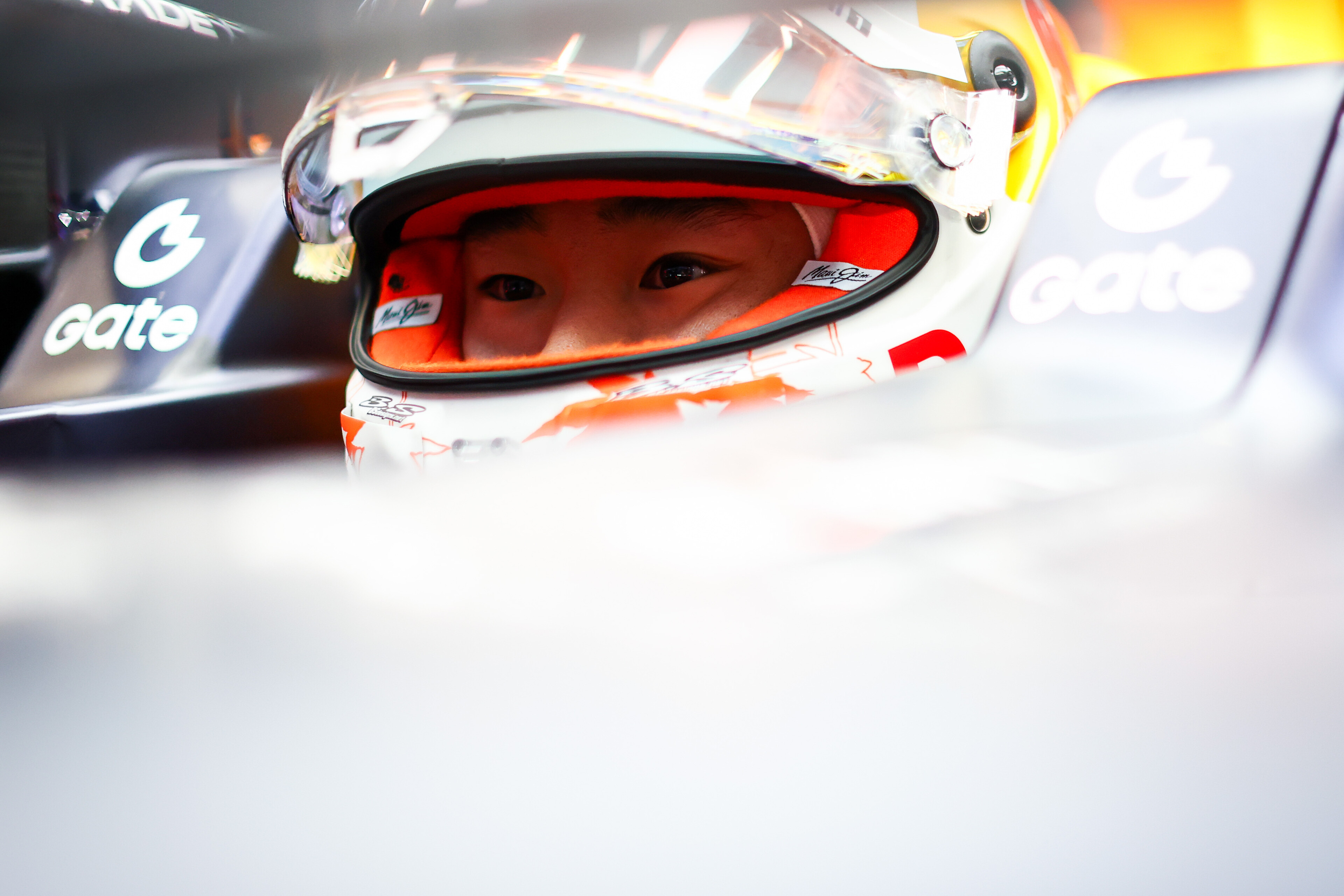
A late intervention from Honda using a TPC car power unit supply as leverage could help to give Yuki Tsunoda a reprieve in the Red Bull camp for 2026.
Next season Isack Hadjar is set to graduate to Red Bull Racing as Tsunoda’s replacement, while F2 star Arvin Lindblad is being lined up for a promotion to Racing Bulls.
That leaves the remaining Racing Bulls seat down to a choice between incumbent Liam Lawson and the demoted Tsunoda.
Both drivers signed contract extensions several weeks ago, moving the latest date for a decision over next season from September 30 to November 30, which explains why Helmut Marko has made it clear that the choice would be made over the Qatar GP weekend.
The consensus in the paddock is that in the wake of Tsunoda’s difficult year alongside Max Verstappen at RBR he will be sidelined, and Lawson will get the nod to stay on.
However RB sources insist that the final decision has not been made, and thus Tsunoda can still earn his place with a strong weekend in Doha.
He did his case no harm by outpacing Verstappen to qualify fifth for the Qatar sprint on a day when Lawson was only 17th fastest.
If it really is still a close call between Lawson and Tsunoda then the latter’s longtime supporter Honda could tip the balance.
It has some leverage as Red Bull needs power units for the TPC cars of its two teams – and that requires a brand new deal given that the Japanese manufacturer’s current commitment effectively ends with the upcoming Abu Dhabi test before it switches its future focus to Aston Martin.
The major rules changes reduce the specific relevance of the older cars relative to the new models.
Nevertheless an extensive TPC programme would be a vital part of Lindblad’s preparations for and development during the 2026 season, and without Honda PUs the only option would be to rent someone else’s car.
Honda is thus in a position to dictate terms, and the Japanese company is understood to be using the situation to encourage Red Bull to give the Racing Bulls race seat to Tsunoda.
It’s understood that talks are going on between the two parties this weekend.
If Tsunoda is left without a race seat he could still transition into a reserve role across the two Red Bull teams, or potentially look for a similar job and a fresh start elsewhere.
Aston Martin is an obvious safety net, although the team recently announced Jak Crawford as its third driver, noting that he will be “reserve at all races.”
I had my first F1 media pass in 1985 – but things didn’t really get going until a decade later
This weekend’s Formula 1 race in Qatar is the 600th Grand Prix that I’ve been lucky enough to attend with a media pass.
Throw in a dozen that I went to as a youthful fan before I kicked off my journalistic career and I can say that I’ve been present at 53.3% of all the events held since the World Championship started in 1950, which is quite a fun stat.
Looking back at 10-year-old me, watching F1 cars in action for the first time at the Race of Champions at Brands Hatch in March 1976, I find it hard to believe that I managed to translate a childhood passion into a career. It’s a privilege that I never take for granted.
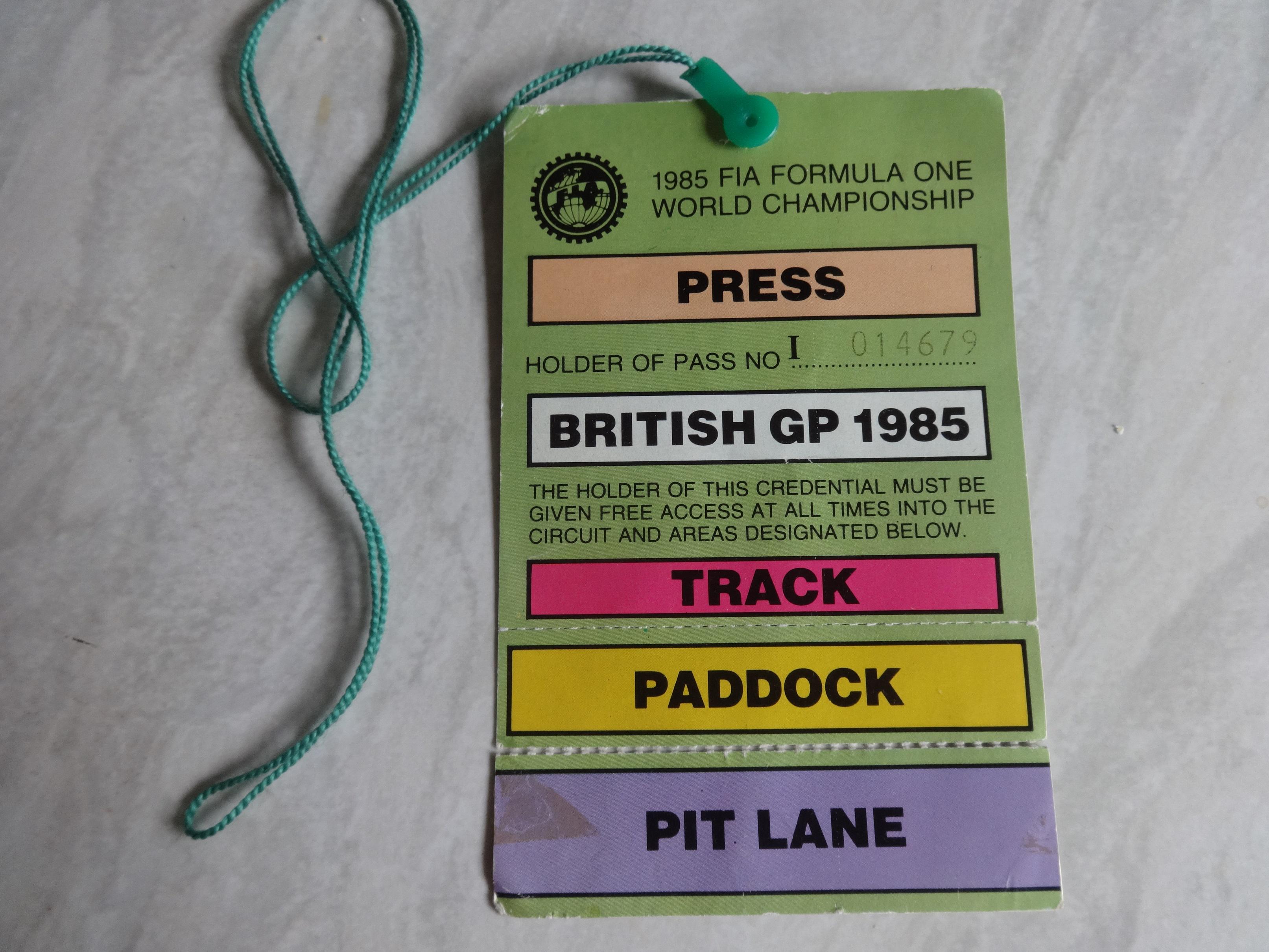
I had my hands on an F1 media pass for the first time at Silverstone in 1985. However over my first decade in this job, including a five-year stint on the staff of Autosport from 1987, it was slow progress in terms of GPs attended – just 15 in 10 seasons.
Instead I covered everything from club racing to WEC via the BTCC, F3, IMSA and NASCAR, attending hundreds of race meetings from Mallory Park to Macau.
That period also included a couple of memorable years covering the racing scene in Japan in 1992-’93, and then one following the Indy Car series in 1994, with Nigel Mansell, Mario Andretti and Emerson Fittipaldi in the field.
With the CART schedule over at the end of that year I went to the Japanese and Australian GPs, and witnessed two memorable F1 races – Damon Hill beating Michael Schumacher in the rain in Suzuka, followed by their infamous collision in Adelaide.
That winter I had a think about what to do next. I enjoyed the USA and would happily have returned and built a life there, but I couldn’t find any work. Meanwhile top level sportscar racing – my mainstay for many years – was basically dead. The only real option left was to try my hand fulltime in F1, something that had always seemed out of reach.
At a time when anyone can now become a bedroom blogger it’s hard to believe how hard it was to break into F1 journalism back in the nineties. There was no internet, only newspapers and magazines. The guys who were doing it had been there for years and were well established, and in effect it was a closed shop. It didn’t seem possible to get a foothold.
Nevertheless I bought a ticket and headed off to the first races of the 1995 season in Sao Paulo and Buenos Aires. I found just enough work to justify my trip, including writing press releases for the new Forti Corse team for a little pocket money – although in the end I didn’t get paid.
From there I went on to Imola, Barcelona, Monaco and Montreal and beyond, and then I carried on into 1996. At the start of that year word was sent to us from Bernie Ecclestone. Any accredited journalists found to be supplying stories for this new thing called “the internet”, something I’d barely heard of, risked losing their passes. The F1 boss regarded it as flouting his broadcasting rules…
The web would soon became a thing that even Bernie couldn’t control. Meanwhile the F1 seasons flew by, and I continued to travel to all the races. It never really occurred to me to skip one.
Thus 31 years after that famous Hill/Schumacher fight in Japan in November 1994 I’ve now attended 585 GPs in a row without missing one. Adding in the aforementioned 15 races I attended earlier in my journalistic career makes for that total of 600.
It also equates to 2400 days at circuits, and while I missed the odd Thursday long before it became the regimented media day it is now, I can counter that by including Monaco Wednesdays from when the race had its own schedule, plus the many days of F1 testing and circuit-based new car launches that I’ve been to over the decades.
The final total means that I’ve spent roughly seven years of my life attending F1 events at circuits. I’ve seen GPs at 44 different circuits in 30 countries, spent endless hours on European motorways, and flown a few million miles. And I’ve missed four flights – and been upgraded from economy once!
Apart from a handful of races when I was on the fulltime staff at Autosport, I’ve done it all at my own expense, which means organising and paying for flights, hotel rooms and hire cars and everything else as soon as I leave my front door. I do it on the proverbial shoestring, but nevertheless the total cost of all that over the decades is a number that I don’t want to calculate…
Inevitably normal life has at times taken a back seat. My wedding was squeezed in between Monaco and Montreal, so the latter served as the honeymoon, while the funerals of both of my parents had to fit into my schedule. The biggest regret was missing the birth of my daughter by three or four hours as I drove across Europe in the early hours of Monday morning after a Monaco GP. Even I have to admit that I haven’t always got the work/life balance right…
The toughest time in terms of physically getting to the races was the Covid-19 era. The cancellation of the 2020 Australian GP on the eve of first practice remains one of the most frustrating events I’ve witnessed (and no, I don’t count it in the 600!).
When the 2020 World Championship was rebooted behind closed doors in Austria after a three month break only 10 journalists were invited, and I have to thank the FIA for giving me the opportunity to keep my attendance record going.
However, we were confined to the media centre and couldn’t speak to anyone in person, and all interaction was done online. We could at least still see and hear the cars.
The year or so that followed was a difficult period, with endless (and costly) Covid tests required both before travel and at the races. The nightmare scenario was getting stuck overseas with a positive result, especially in somewhere like Sochi, potentially with your visa running out two days later. Fortunately I made it through safely.
I’ve been lucky enough to get to know hundreds of drivers over the years, and to spend time with many of them away from the track. I’ve sung karaoke with Michael Schumacher, partied in Kimi Raikkonen’s Tokyo hotel suite, and helped to calm down a random punter who’d just bashed an F1 driver on the nose in a Shanghai bar. I once shared a room with Rene Arnoux, which was a good story even before he brought a lady friend back with him…
When I started the drivers were my age or older – Jean Alesi was the last man born before me to start an F1 race – and now some of them could be my grandkids. However down the generations the most talented have shared the same driven personalities that make them so successful.
I agree with Andrea Stella’s recent suggestion that the current crop is the best ever in terms of overall quality all the way through the grid, and there’s been a similar improvement in the level of the teams. The days of a Forti Corse stranded at the back of the field are long gone.
As much as I appreciate the sport’s past – and there are always lessons to be drawn from what’s gone before – I’m always keen to focus on the here and now, and while not everything is perfect in modern F1, in many ways it is a golden era.
Indeed, this year’s title battle is one for the ages. Let’s hope that it goes all the way to my 601st GP!
Gasly twice scored a point in Brazil, but he could not explain Alpine’s form
The Sao Paulo GP weekend saw some unusual swings in form, and perhaps none was more surprising than a return to the points for Pierre Gasly and Alpine for the first time since the Frenchman finished P10 at Spa back in July.
In the seven races that followed Gasly managed only 19th, 17th, 16th, 18th, 19th, 19th and 15th, usually starting from close to the back and running a long opening stint in the hope that a red flag or safety car might help out.
In Brazil, where he finished third behind team mate Esteban Ocon in the previous year’s wet race, things suddenly clicked, and neither he nor the team could explain quite why.
He scored a point in the sprint and then another in the main race – not much in the grand scheme of things, but a useful boost for a team that has tumbled to last in the pecking order and which has long been focussed on 2026.
Whether those points turn out to be the last ever logged in F1 by a Renault power unit remains to be seen over the final three weekends of this season.
From 13th on the grid for the Interlagos sprint Gasly moved up to P8, helped by some attrition ahead and by a crucial move on Lance Stroll in the closing laps.
“I’m gutted they didn’t show it on the TV, because it was two nice launches into Turn 1,” he said when I asked him about his progress. “And I knew the points were right in front of me, and I would have not slept tonight if I would have not tried something.
“So my first one, my first move, was quite optimistic, and he managed to actually get it back on the exit. But I wasn’t going to let him go away with that point!”
On Saturday afternoon Gasly ran through the first two qualifying sessions in P2 and P6, before earning P9 in a closely bunched middle order in Q3.
“We were on the wrong side of the pack, let’s say,” he noted. “I think seven-hundredths gets us to P5. It is what it is. At the end of the day, I look at where we were last week, the week before, last month, two months ago.
“I think we can be extremely happy to be seven-hundredths from P5 and four-tenths from pole position. If someone would have told me that coming into the weekend, I would have taken it.”
This was Gasly’s first appearance in Q3 since Silverstone, and he was as surprised as anyone by the surge in form.
“Much bigger things to understand,” he said. “At the moment, we’ve just got to dig, because it’s not like the car is very different than it has been. From the first lap, it just felt like a completely different car, more similar to what I’ve had when the car was at best this year in Bahrain, or this type of track.
“So bigger picture, a lot to understand. I must say on my side at the moment I’m more enjoying session after session and actually feeling like I’ve got a car that I can race with and drive more the way I want to drive.”
He had no explanation as to why things had clicked: “There are few ideas. But the reality is we don’t fully know. I don’t want to say anything which might not be true. I know the guys are looking very deeply into it, and it’s quite complicated, but we need some answers. At the moment, we have a lot of questions, not many answers.
“Hopefully we will have some more in the coming weeks. I think track characteristic plays quite a big factor. But I cannot believe it’s only down to that. So we’ve got to understand it.”
Starting P9 boded well for Sunday’s GP. In the end he gained a spot from the retirement of Charles Leclerc, while losing out to Max Verstappen and Nico Hulkenberg, on the way to 10th place.
“Very happy, because last time we scored points on a Sunday was in Spa before the summer break,” he said. “And it’s been a very long walk in the middle of nowhere for three months. A strong weekend, Q3, one point in the sprint, one point today.”
Nevertheless he admitted that he wanted more from the race: “If I’ve got to be honest, I’m a little disappointed with today. I took a great start, managed to pass Bearman, managed to pass Russell. Both occasions, I’m losing the position in the straights, which would have put us in a much better track position for the rest of the race.
“I managed to dive twice in the inside of Hadjar, but every time in the straight to Turn 4, he got past me very easily. I feel like I had quite a lot more pace, I was just not really able to fully like show it.
“At the end, it’s one point, and I’m definitely not going to complain about it, because I would have taken it every single day since three months. I’m sure we’ll have a look if we could have done any anything different. But I do feel we had some more pace than we were able to show.”
He took an aggressive approach as one of the eight drivers to use the soft initially, in contrast to recent races where he has started on a hard tyre and run as long as possible,
“This is what you do when you’re far off the pace and trying to bank on a red flag or safety car at some point. Today I just wanted to use the pace, which unfortunately is not what I was able to do. I think I struggled more on the soft.
“We fitted the new medium on the second stint, hoping to go a bit longer. But unfortunately, we got pushed to box quite early. So I did a short stint on the new tyre, and a longer one on the used.”
Despite some frustration Gasly was happy to have a car that he could push to the limit, which hasn’t been the case of late.
“I was able to drive in a way that I want. The car was responding to what I expect the car to do, and we had a lot more potential. In quali yesterday, to be less than five-tenths from the McLaren knowing the package we have, it just showed there was something like we’re actually very competitive in the corners, and I was pleased the car was responding to my input, and there was nothing really very strange.
“So it’s what I expect from a race car. One point is not going to change my life, nor the life of the team. But I think it’s just important in the bigger picture to understand where that entire potential came from, and where it was the last few weekends.
“Everything’s got to be analysed. It’s rarely down to one single factor. It’s probably a lot of small things added together which make a bigger difference. And it was night and day was what I felt since three months.”
We now head to Las Vegas, another quirky track where last year Gasly followed up his Interlagos podium by qualifying third, only to retire with an early engine failure.
“We have no idea why we’re fast here, and we have no idea why we were so slow in Mexico,” he said. “We do have small ideas, but not enough to say that’s going to be fine. Last year I qualified third in Vegas.
“I will not put money on third from me in Vegas this year, but Max was nowhere yesterday, today he was third. Usually we’re nowhere, and we were strong the whole weekend. So it’s quite a few things to work on.”
The Sauber rookie had two costly crashes in front of his home crowd at Interlagos
To say that the Brazilian GP was a weekend of mixed emotions for new local Formula 1 hero Gabriel Bortoleto would be something of an understatement.
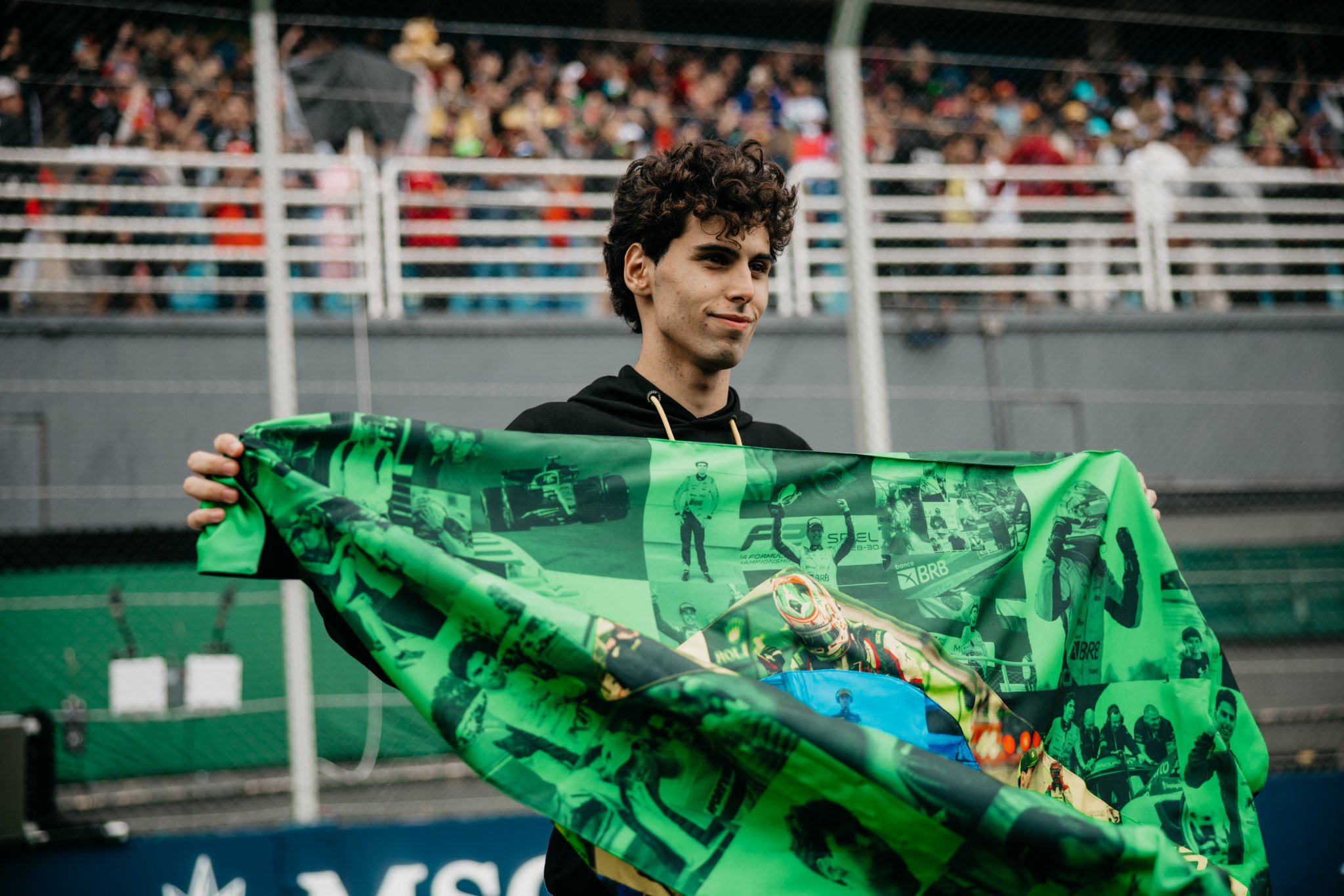
On the positive side he had a huge amount of support, as evidenced by the number of Sauber shirts in the crowd, and the reception he received when he was singled out for special treatment during the drivers’ parade, with his own car and interview slot.
On the downside he had a huge crash in the sprint race while racing Alex Albon, and trying to make up for it after missing qualifying, he crashed again on the first lap of the main race while battling Lance Stroll.
Given how few mistakes he’s made in his rookie year it’s hard not to draw the conclusion that he tried a little too hard to impress in front of his home crowd, and simply overdid it.
To his credit he readily admitted that he took too many risks, and that he has learned some lessons – not least to be a little more cautious in a sprint, given that his team lost the race to build up the spare car for him for main qualifying.
“First of all, I need to congratulate the team, because they rebuilt a car from zero, and they almost made it work for qualifying,” he said when I asked him about missing the session. “So that’s not easy. They did an amazing job.
“And from what happened from my side, I tried the first lap of the move on Alex, and I managed to succeed, but then he overtook me back with DRS. And then on the second lap, I think was a combination of things. I went for the move, I divebombed him again. And DRS was on.
“I braked probably a little bit in the wet patches, and ended up that the car pointed completely to the left in the wall, and after that, I was just a passenger. You cannot control it. Just terrible.”
A local journalist likened the incident to one in China, when Bortoleto was taken out by Jack Doohan in the sprint, and then suggested that it was avoidable given they were “fighting for P19.”
Having considered the comparison, and given that he and Albon were actually racing just outside the points, Bortoleto came up with a sensible and logical answer.
“I’ve been used to fight always in the front in my previous series, and now in F1, I don’t have quite there the car yet,” he said. “So I need to fight at some point. And the whole year, I think I’ve been backing out and not being able to fight.
“But I think I need to learn and to test things as well, because the day that I hopefully will get a car to fight for championships, I cannot make such mistakes. And I believe things like today create better drivers – like everyone did, if you see Max Verstappen at the beginning of his career.”
Regarding the Shanghai comparison he said: “And coming back to China, I think I was upset with Jack, yes, because he literally locked up everything and ended up hitting me. But we talked after, and it was fine. Obviously, in the moment I was very upset.
“Today I made the move the lap before that ended up quite well. We didn’t crash into each other. And today, I don’t know, it was wet, I hit the wall. It was not even Alex, I ended up in the wall.
“So I am sorry for him, because I saw my front wing ended up hitting his car. I don’t know if had damage from that or not. But life moves on, and I hope I will learn from my mistakes in the future as well.”
It was always going to be tough from P20 on the grid, and thus it was a useful bonus that with Verstappen and Esteban Ocon in the pitlane, he actually started from P18.
After a good getaway he passed the delayed Lewis Hamilton and Franco Colapinto before he came across Stroll – and found himself in the barrier for the second time.
At the time he blamed the Aston Martin driver, but having reviewed a replay, by the time I asked him about it he’d changed his mind.
“It was a good start,” he said. “I overtook two cars, Lewis and Colapinto in the outside of Turn 6. It was a nice move. And then Lance, I was just side-by-side with him out of Turn 9.
“There’s no pointing fingers here, just lap one, and I was in the outside, he opened a little bit more than than what there was space there. He clipped my front tyre, and I ended up in the wall. I think it’s a racing incident.
“Obviously, if he had given a bit more space, I would have done the corner, probably overtaken him because he had worse tyres than I had, because I was on soft. But again, it’s a racing incident, he didn’t do it on purpose, I’m sure. Every time I fight with him, he’s fair with me. So just racing.”
Bortoleto is a very smart guy, and despite the obvious frustration he was able to rationalise what had happened over the previous couple of days. He had no one else to blame.
“Yeah, a tough weekend,” he said. “We can forget and move on. I just take the positives that my whole country was here supporting me, the Brazilians, and just sad because I have not been able to race today and show a bit of the pace that I believe we had.
“It comes from me, from my incident in the sprint race that caused me not to do quali. So I’m going to be the first one harsh on myself here.
“I believe it’s a consequence of things that happened earlier in the weekend. But anyway, obviously it’s more painful because it’s my home race. But it’s just another weekend.
“We had so many good ones. We had bad ones as well, and there’s nothing I can do about it. I just need to move on, analyse things and learn from my mistakes and go for the next one.”
So what sort of lessons had he learned?
“I think just risk management, I think I’m happy that I’ve been trying to do different things this weekend, being more aggressive and trying things.
“But a sprint race, it’s probably not the best moment to try a risky thing when you can break your car and not do qualifying like I did. So that’s for sure learning.”
The F1 boss is optimistic about how the sport will look under the 2026 regulations
Formula 1 boss Stefano Domenicali insists that the quality of the sport remains his main focus, and he has no concerns about the impact of the changes coming for the 2026 season.
Since drivers first started running 2026 models in factory simulators some have expressed concerns about the kind of racing we might see.
Domenicali insists that if the field isn’t close enough – which could happen if there’s a disparity of performance between power units – the mechanisms exist to bring the field closer together.
“As we always said, the sport is at the heart of our platform, and no one has to doubt about it,” he said.
“You know that next year we’re going to have change. In order to be to be calm with the fact that the technology applied to F1 has been always very relevant we will have sustainable fuel at the centre of the of the new power train.
“And it is normal to think that when there is such a big change of regulation, there could be a big difference at the beginning.
“But the regulation is done in a way that if this would happen, we know that there are mechanisms to make sure that the gaps can be reduced in a smaller time than normal.
“And therefore this is a very important element to keep the dynamic of our sport at the centre. And if you didn’t have these dynamics, no one would have been interested to come in in our sport.
“That’s why this is for sure, one of the main focus that we need to keep the centre of our business the sport and the racing itself.”
Domenicali believes that there will be plenty to keep people interested in 2026.
“I think the fact that on the paddock, everyone believes that he is faster than the other means that there are so many variables that everyone believes to have the secret of being more competitive,” he said.
“I do believe that of course the level of technology that is needed in terms of knowledge is not only the power unit. We forget that it’s a new car. We forget that it’s a total different dynamic on how you have to drive your car – it’s dynamic aerodynamics.
“It’s a different way to manage the tyres. It’s a different way to manage energy. It’s a different way for the drivers to drive with the new regulations.
“So everyone is really focused, and the beauty of that is that we have still teams that are fighting for points that will be converted in dollars at the end of the season for the championship.
“So there are still some developing during the last couple races, because no one wants to give up. So it’s all fascinating. I think that really all the elements of attention are there and on which we should be very, very proud.”
Haas has moved up from P9 to P8 and has bigger ambitions over the last four races
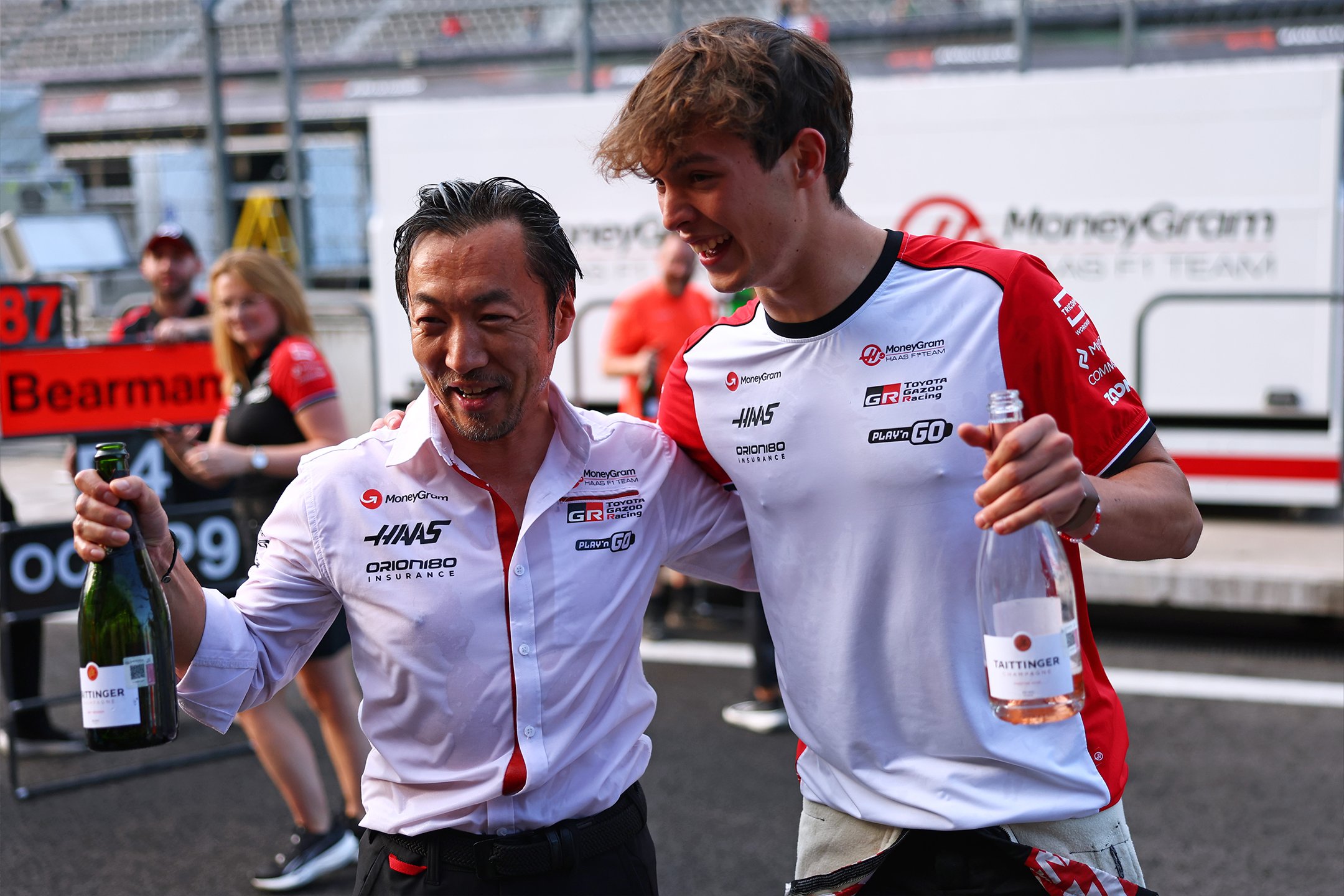
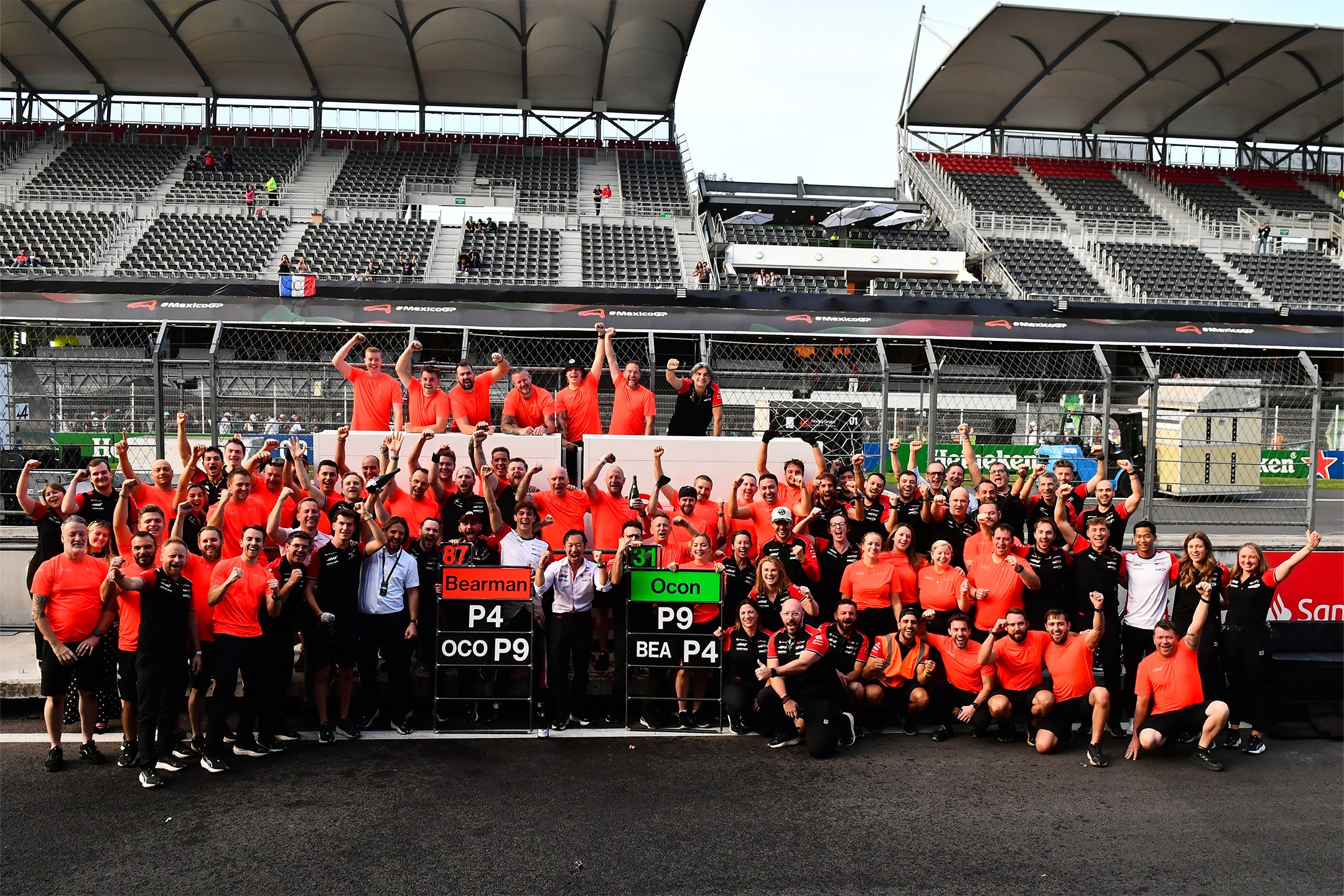
For the Haas Formula 1 team the Mexican GP saw a dream result, with Ollie Bearman’s fourth place and ninth for Esteban Ocon allowing it to jump Sauber for eighth in the World Championship.
The focus is now firmly ahead, with Aston Martin and Racing Bulls both within a 10 point range.
Mexico was just reward for a well-executed weekend, with Bearman obviously doing a brilliant job in the cockpit and the team making a smart strategy call that ultimately paid off.
It also came in the wake of the decision to introduce an upgrade package at the US GP that only has a life of six race weekends in order to provide a late season boost in the constructors’ battle. That already paid off on its debut in Austin with a ninth place for Bearman, and Mexico brought more vindication.
“We’re definitely happy,” team boss Ayao Komatsu told this writer. “Without the upgrade, I don’t think we could have had the Austin result, I don’t think we could have had this result.
“So it’s already proven that regardless of championship position, because like I keep saying, a result is a result, you cannot 100% control that. Let’s face it, we moved up one position, but they [Sauber] are only two points behind. It’s nothing, absolutely nothing.
“All I’m trying to say is we’ve just got to try the get the best out of the car and drive and execute every single race weekend. If we do that, I’m sure we can move up. But there’s just no point counting the points.”
The team now has its sights set on getting ahead of both Aston Martin and Racing Bulls over the course of these last four race weekends.
“Even before I said P6 is possible,” said Komatsu. “But again, it’s just no point thinking like that. A 22 points gap with six races remaining – of course, it was possible, but there’s no point thinking, how are we going to get 23 points? It may not happen. But that’s out of our control, right?
“That we suddenly got 14 points, great, it’s now 10 points to P6. But again, it’s not about how are we going to get 10 points? It’s more about how are we going to start Brazil FP1? Make sure we get the sprint quali right.
“If we do everything right, we can score points in the sprint. And then that puts us another step ahead for main quali and race. So I think it’s very important for us to focus what’s in front of us, and that mindset, honestly, is the one let us make the right decision for the second pit stop [in Mexico].
“Imagine if we were too hung up on the podium?. I’m sure we would have lost the podium with Max coming through. I’m not sure if we could have hung on to P4 with Piastri coming through with the new tyre. So yeah, I think the mindset is very important.”
That strategy call was a difficult one to make, but it was the right one, and it showed signs of clear thought and a good process.
Bearman was running in an unexpected P3, and he had the option to stay out, run to the flag, and try to hold on.
However when cars behind pitted they not only gave themselves fresh tyres with which to fight, but also helped Max Verstappen to have a clearer run at the Haas. The team decided that a solid shot at P4 was better than risking all trying to hold on to third and potentially tumbling down the order in the closing laps. The collective head ruled the heart.
“At that point we were going for the one stop,” Komatsu explained. “So if nobody pitted, we’d have just stayed out and done the one-stop, because I think Max would have got stuck in the DRS train. He wouldn’t have been able to overtake.
“But the minute those two cars behind made a pit stop, that means Max had George [Russell] to go through, then us to go through, pick us off one by one. He would have done that. Then we already made 70% decision to box after those two cars pitted, but as soon as we heard that George is boxing as well, there was no doubt.”
Giving up P3 was the logical move: “We’d only lose position to Max, and he was going to overtake us anyway. So that wasn’t about covering for undercut, it was just about those guys are already converted, and Max was going to come through, so we had nothing to lose.
“Max has got tyre delta. That’s probably why those two guys decided we’re not going to be able to defend. So as soon as we lost that buffer of cars, it’s not going to happen. And you saw how close Max finished with Leclerc, then you saw how much behind we were compared to Leclerc.
“So imagine Max had completely taken us easily, and then how far we’re going to drop back against those cars who made a second stop? So for me, at that point, it’s what’s in front of us? What’s our objective? We’ve got to make sure we get P4.”
Bearman had put his car in a podium position with an early charge that saw him fighting with drivers in the top teams.
“That was good racing, right?,” said Komatsu. “That was amazing, out of Turn 6. That was great racing. And then first stint we had Max behind. Second stint, we had a Mercedes behind. Third stint we had a Mercedes and McLaren behind. I mean, what a privilege to be racing against those top guys.”
Bearman has had something of a messy first full season, getting into scrapes and earning a few penalties, and a good result was just what he needed.
“We’ve been working with Ollie, of course, continuously,” Komatsu noted. “And like I said so many times, his potential is no question. It’s about harnessing that, managing to build up the weekend, nurturing that talent.
“Singapore was very good. Austin was again, very good, but a couple of things, in the sprint, and then the race, incidents. In Mexico missing FP1, jumping in for FP2, bang. And then such a tight qualifying.”
“And then essentially the entire race he was fighting against three top teams, Red Bull, Mercedes, McLaren – teams we shouldn’t be fighting. So that is amazing. Track position, free air so much more important. It’s important everywhere. But here with all the temperature restrictions, it’s so important.”
There are fine margins in the midfield these days, and just missing out on Q3 consigned Ocon to a much more difficult race, hampered by traffic. The Frenchman also didn’t feel well during the weekend.
“Austin, the high speed stability, he still struggled, whereas Ollie got the most out of it,” said Komatsu. “This circuit he got everything out of it. He’s not being well this weekend, all the way through, he had a massive headache.
“You look at Esteban’s quali performance. He lost Q3 by three hundredths. He was five-hundredths behind Ollie. They’re basically the same pace all the way through this weekend.
“And then during the race, what obviously made Esteban’s race more difficult was he was stuck behind Tsunoda. During the first stint, he was very happy with the car. He was clearly quicker than Tsunoda. He had a very similar pace to Piastri, so he had the same pace as Ollie. What kills you is the traffic.”
So what then of the last four races – can Bearman and Ocon find enough points to move the team to P7 or P6?
“Honestly, I’ll be least looking forward to Vegas, because it’s a long straight again,” said Komatsu. “In low downforce we are not as competitive, but most of the circuits, like Brazil, Qatar, Abu Dhabi, should be OK. Honestly, because margins are so small, there’s no point looking too far ahead.”
Bearman stole the headlines but Ocon scored useful points in his wake
He may have been overshadowed by the superb fourth place in Mexico for Ollie Bearman, but Esteban Ocon gave his Haas team a further boost with P9, contributing to a two-point advantage over rivals Sauber.
The Frenchman was quicker than Bearman in FP2 and FP3 – admittedly the rookie had lost track time by missing FP1 – and was then an encouraging P5 in Q1, providing further proof that the Austin upgrade package had paid off.
Alas in Q2 he was wrongfooted by the presence of Yuki Tsunoda and Charles Leclerc, and ended up in a frustrated 12th on the grid.
Hit by Fernando Alonso on the first lap, he was then held up by Tsunoda, complaining of a “dangerous defence” by the Red Bull driver.
Along the way Ocon helped Bearman by briefly keeping Oscar Piastri behind, before ultimately moving up three spots from where he started.
“As a whole it’s fantastic for the team, and really shows that we had a great car pace this weekend,” he said when I asked about his race.
“I really tried to maximise the pace we had. We got unlucky with quite a lot of things. The start, I got touched, I got stuck behind Yuki who was defending like I’ve never seen!
“I defended on Oscar, trying to protect Ollie. I made him lose quite a few seconds with that fight, between four to six, so that was quite good.
“Overall, the car was working super well. I’m happy with our performance this weekend and our learning. Obviously, it didn’t smile to us, the luck, every session. But I think we can be pleased with what we did.”
The Tsunoda defence came a race after the Japanese driver upset Bearman in Austin.
“He moved under braking, that was the point,” said Ocon. “And unfortunately, he was the one also giving me a shit quali, which was not his fault, to be fair. So yeah, I always seem to catch him in the wrong place, the wrong time.
“And basically, that damaged our race, because we must have lost eight or nine seconds stuck behind him in that first stint, and I couldn’t get by. And once we cleared him, then we could stretch our legs. And it was much better. But it was too late.”
There may have been some personal frustration at his unrepresentative grid position, but Ocon was pleased with the team’s overall result.
He’s hoping that fortune goes his way in Brazil, where he made the podium last year with Alpine.
“It’s a big day, obviously,” he said. “We didn’t get the full rewards with the updates that we should have had. I think the pace for us this weekend was very good. We didn’t show everything that there was, so there was some left on the table.
“But it definitely feels good to have that behind us. And I hope it’s not only track related. We are going to see at Interlagos how it is. It’s a track that I look forward to. Good memories from last year. Obviously, I want some rain. That would be nice!”




 Adam Cooper F1