George Russell says it’s not a surprise that his Mercedes Formula 1 team is fast in Qatar given the smooth nature of the track.
Russell initially qualified second, having gone wide when he came across a slow moving Max Verstappen just before he started his lap.
Having earned pole the Dutchman was later given a one-place penalty for moving unnecessarily slowly, thus swapping the positions of the two front row men, and giving Russell his fourth top spot of the season.
Speaking before that decision was made Russell suggested that the Verstappen incident had prevented him from earning pole on merit.
“To be honest, my first lap was really strong,” he said. “I was really pleased with that. I think it was a couple of tenths clear. And then I just didn’t improve on that last lap.
“Obviously, I had a really scrappy out lap with the near collision with Max, and I ended up going through the gravel two corners prior to opening my lap. So it was not a good start. So that was probably the 55 milliseconds.
“It’s great to be in this groove at the moment, four front row starts in a row, which has been really pleasing considering where we were three or four races ago.
“And the race pace this morning looked great. So Max did a great job. Red Bull seemed to turn it around a little bit since yesterday, but let’s see what tomorrow brings.”
Russell had a clear idea why Mercedes has been so fast recently.
“Well, I think these last two races, the circuits have played in our favour,” he said. “We know when we can get the car low and stiff on a smooth track, it works pretty well.
“Brazil, we didn’t actually have the pace. We were very slow in the sprint, in the sprint qualifying, but of course it was a wet qualifying on the Sunday morning, so that evened things out a little bit.
“So I think we flattered ourself a bit in Brazil, but these last two races, when we really, analyse it. I don’t think it’s a surprise the car is performing as well as it has shown.”
Regarding the race he said: “I think it’s going to be a really close fight between all four teams. Ferrari looked on the same pace as Lando and myself this morning. I hope it’s going to be a good one, but the tyres seem pretty resilient. Maybe we’ll see another DRS train, I don’t know.”
Norris helped his team mate out in the Qatar sprint
Lando Norris says he made up his mind in Brazil to pay back McLaren Formula 1 team mate Oscar Piastri for his help by handing him a sprint win should circumstances arise.
Race leader Norris moved over coming out of the final corner of Saturday’s sprint in Qatar and gave the win to the Australian, while successfully keeping George Russell in third.
Piastri had let Norris past at Interlagos when the latter was still in the hunt for the World Championship.
However with Max Verstappen confirmed as champion in Las Vegas Norris was able to sacrifice a victory and a point in Qatar without worrying too much.
“I made my mind up in Brazil when it happened,” he said. “So it’s a sprint, I only care so much more about the Grands Prix, as does everyone. After that happened in Brazil, I made my mind up that I needed to do something to give it back.”
Norris said that the wider McLaren team wasn’t aware of what he planned to do.
“No, it wasn’t something that was really discussed,” he said. “I didn’t have to do it, if I didn’t want to. I told my engineer that I would do it. So he was the main one that probably knew about it, and I told him before the race, if we have a bit of a gap and we’re first and second, then I would try and do it.
“So he knew, and he was telling me not to do it, because I think the gap was to George was probably a bit too fine for their liking. But Oscar did his part in trying to help me win and win, or help me get closer to Max in the championship, and give that opportunity a go.
“I deserve that right to have a chance, and that’s how we have to work as a team when one of us has that opportunity, and I returned the favour today.
“I don’t think any of us are proud of necessarily winning a sprint race, or we’re also not too unhappy on giving up a sprint race win, but we work together well as a team, and I think that’s probably one of our biggest strengths.
“So for everyone is how well we work together. I don’t think any other team would do such a thing and help each other as much as we’ve done this year for one another. And yeah, it’s our strength, and we’ll continue to do that.”
Norris tried to help Piastri pass Russell at the start of the race, and later he let Piastri have DRS in order to stay clear of the Mercedes driver.
“Having clean air is a beautiful thing,” he said. “So I could control things quite a lot, and I did as much as I could to help Oscar. I knew George was going to be quick this race. I tried, in Turn 1 already, to stay quite tight. I knew George was on the inside. So instead of running wide and giving Oscar the dirty air I tried to stay tight and give George the dirty air. So that seemed to work.
“And then we got a one-two from there, which was lovely. I think I could build a gap, probably not a big gap, but I could slowly make some progress. But George was still very fast in the middle part of the race and towards the end.
“So I backed off a few times to try and get Oscar the DRS again, because our target was to finish one-two today, and that’s exactly what we did.”
Connelly says that the meeting with the drivers was positive
Chairman of the FIA F1 stewards Garry Connelly says that there was “no finger pointing” in Thursday evening’s meeting at Qatar to discuss the Driving Standard Guidelines and overtaking.
The drivers met with Connelly and other key FIA personnel to discuss ways of improving the guidelines following recent controversies.
The drivers were keen to point out that circuit layouts and the availability of run-off areas are a key issue.
“The meeting was the most productive one we’ve [ever] attended,” said Connelly in a lengthy statement on the FIA website. “The drivers were fantastic with their input. Very constructive. There was not one negative comment. There was no finger pointing.
“It was very inspiring to see the world’s best drivers, communicating clearly and speaking constructively on how we can improve the Driving Standard Guidelines to the benefit of the drivers and to make all of our jobs easier.
“As stewards, we are not here to inflict pain on drivers. We’re here to provide a level playing field. It’s not us against the drivers, it’s the drivers against the drivers and we’re here to make sure everyone gets a fair go.
“We have an open door policy. The door to the stewards’ room is always open to any driver who wants to come up and talk to us about a decision that’s been taken either in relation to them or in relation to any other driver. We think Thursday’s meeting emphasised that open door policy.”
Connelly stressed that the Qatar meeting was not a one-off, and rather part of an ongoing process.
“The Driving Standard Guidelines are a living document, so every year, as the F1 stewards we try to meet with the drivers, sporting directors and FIA representatives, to see if we need to tweak the guidelines to use the experience of the last 12 months and see what improvements we can make to ensure consistency. The goal of the guidelines is consistency.
“As stewards, if drivers and teams and the FIA agree that they want rules or guidelines to allow more aggressive driving, we’ll apply those rules or guidelines. Likewise, if they want stricter driving standards, we’ll apply those.”
FIA’s single-seater sporting director Tim Malyon, who has played a key role working with race director Niels Wittich and his replacement Rui Marques, agreed that the Qatar gathering was a positive one.
“We will always try and facilitate such meetings,” said Malyon. “Because gaining the feedback, the insight of the drivers, is extremely important in allowing us to evolve the guidelines in the right direction.
“We’ve had some very constructive driver meetings at the last few races, and this was a specific meeting set up to provide the space for that dialogue to continue, so that we can have the open exchange that we need with the drivers in order to be able to evolve the guidelines for next year
“We typically hold a meeting like that at least once a year, sometimes twice a year, depending on the topics that arise. This year we’ve timed this meeting following the constructive discussions in Mexico and Austin.”
Malyon also addressed the drivers’ concerns about run-off areas.
“As the FIA, we work continuously with circuits to evolve in many ways,” he said. “Obviously, we are working on the safety aspect of circuits. But what that meeting highlighted is that there are a number of considerations on the sporting side, which we can prioritise for circuits going forward.
“As we have done this year, we introduced the gravel traps, starting in Austria, and obviously, with this weekend being perhaps the most obvious with gravel traps added in a in a number of places.
“We continue to work with circuits on all topics, but it was very useful in yesterday’s meeting to get the insight of the drivers and see how they prioritise the gravel trap concept, not only for track limits, but also for managing some of the situations that have arisen with overtaking during the course of the last four or five races.
“In all, there was a commitment to work together to find solutions that work for everyone.”
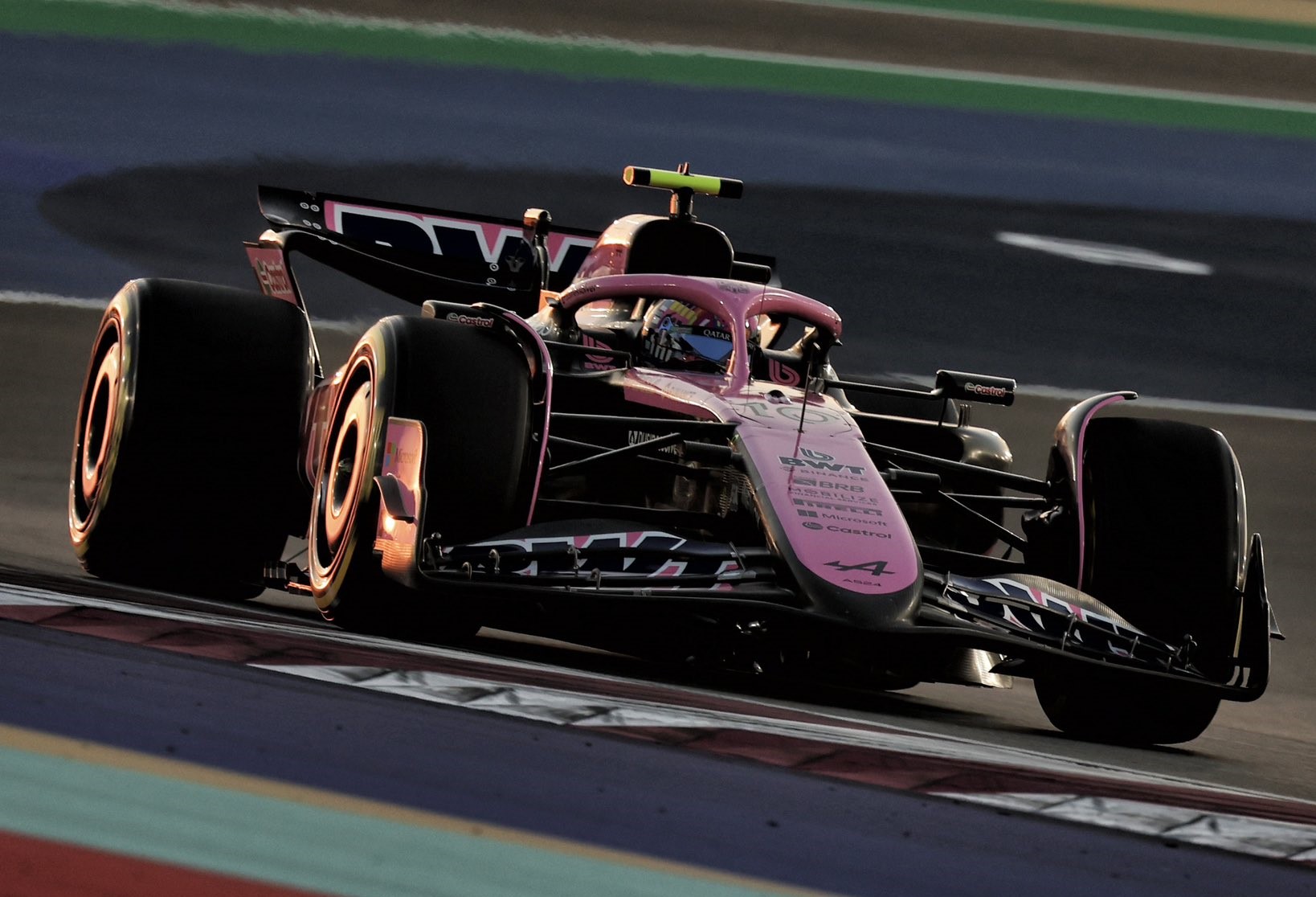
Alpine has been a regular Q3 contender in recent races
Alpine executive technical director David Sanchez admits that the team’s recent jump up the grid after a series of upgrades has been “a nice surprise.”
Sanchez says the team knew that it was improving the car but didn’t know how successfully the changes would move the cars up the order.
The car has been well inside the top 10 in qualifying in several recent races, with a high of P3 for Pierre Gasly in Las Vegas, and Esteban Ocon earning P4 in the wet in Brazil.
The car’s inherent pace also helped the team to take advantage of the tricky conditions at Interlagos to secure a double podium finish.
Asked by this if the car’s form was a surprise Sanchez admitted that
“Yes and no,” he said. “No, because the package we brought to Austin, we had our simulations before, we knew the sort of performance we wanted to see, and we saw all of it, nothing more, nothing less.
“We were quite happy. Then the interesting point which we asked ourselves beforehand was, if we deliver the performance, where does that bring us? And this was the nice surprise, that that performance clearly lifted us in a decent place.”
Crucially the recent changes have made the car easier to drive as well as faster.
“That’s something we’re trying to do,” said Sanchez. “The car became a little nicer to drive with the upgrade. It’s true, whenever you keep adding more and more downforce, at some point you have to ask the question, is it too much?
“Are we making it too peaky? But for now, let’s say the upgrade has improved drivability, and driveability is indeed one of our objectives for our development.”
Sanchez agreed that the improved form has been a boost for the team after a difficult start to the 2024 season.
“For everyone at the factory, it’s been quite satisfying, because this year we’ve seen a few hits and misses from a few teams in terms of upgrades,” he said.
“We had our question marks, and seeing everything translating well on the track, understanding why, and being confident about the direction, was good.”
He added: “It’s been a big boost. I have to say, there’s a good buzz in the office since the last few races, mostly because, after the start of the season, a difficult start, lots of questions to answer about why and what happened then?
“Then across the summer, everyone worked really, really hard to deliver that package, let’s say, between Singapore and today, pretty much a brand new car.
“There was a lot of belief that this upgrade was going to lift our performance, and it did. And everyone is finding a lot of motivation into it.”
The team now has a good direction for the 2025 car.
“That’s what we hope,” he said. “We don’t want to be overconfident, but so far, it’s given us quite a bit of confidence.
“Understanding the struggles and picking the right direction was key. Now it’s a matter of continuing.
“We have a new front wing and a new nose for this weekend, which should be another step in the right direction, preparing us for next year.”
The renamed Cadillac team will have to pay a hefty dilution fee
Aston Martin boss Mike Krack says that the current teams have to “trust F1” to come up with the right financial package to reflect the arrival of the Cadillac entry in 2026.
Under the current Concorde Agreement a new team was obliged to pay a dilution fee of $200m to compensate the incumbent competitors for the potential loss of prize money over the course of that agreement.
The Andretti team won an entry bid to start in 2025-’27, and having missed the first date the renamed Cadillac outfit will start racing under a new Concorde Agreement in 2026.
The complication is that it is going through the entry process with the current Concorde in place, and the new one yet to be agreed by all the stakeholders.
However sources have indicated that while the current Concorde is theoretically in force the new team will pay a renegotiated fee, rather than the $200m.
A figure as high as $600m was mentioned as appropriate by some teams earlier this year. Some reports have suggested that $450m has been agreed between F1 and General Motors, which would give each current team a $45m bonus.
Krack indicated that the current teams do not know how much of a windfall they can now expect.
“Well, this came a little bit by surprise, or came a little bit unexpected,” he said when asked by this writer about 11th team entry and the dilution fee.
“And I do not have so much information about it, to be honest, so I think we have to trust F1 there, FIA, how this is going to go.
“I don’t know about what payments are being made, or have to be made. I think this will have to be defined going forward. So, yeah, I can’t say much, except that we will have to trust F1 that this is going the way it should go.”
Williams boss James Vowles, who has previously expressed concerns about how much current teams will lose out, also said that he’s relying on the F1 organisation.
“I think first of all it’s a sign of how well the sport is doing that we have a major OEM like GM joining us,” he said.
“I think it’s just a sign of the growth, a sign of where F1 is going. I don’t think there’s actually any defined amount of dilution fee. I think that’s a part of the ’26 Concorde, which hasn’t been ratified at this point.
“What I’ve said all the way through is it will have financial loss for existing teams. What we have to do now is grow the sport sufficiently, and FOM need to be aware of that in order to make things good for everyone.”
He added: “This will have a large financial impact on the existing teams, but F1 are aware, and it’s down to them to put forward a correct proposal.”
VCARB team principal Laurent Mekies indicated that there was a bigger picture in that all teams could potentially have a slice of a larger pie that GM can help to grow.
“I think all together it’s a fantastic sign for the sport,” he said. “It’s going to be pretty much all car manufacturers, probably, except for Williams and us. Even Haas is also linked to a car manufacturer now.
“So it’s a battle of giants, and it’s another sign that the sport is going towards the direction of a battle of giants.
“And the details of the financials, they are still under discussions, and hopefully they become small in the big pictures of where the sport can go for its next level.”
Colapinto has gone back to the old suspension spec
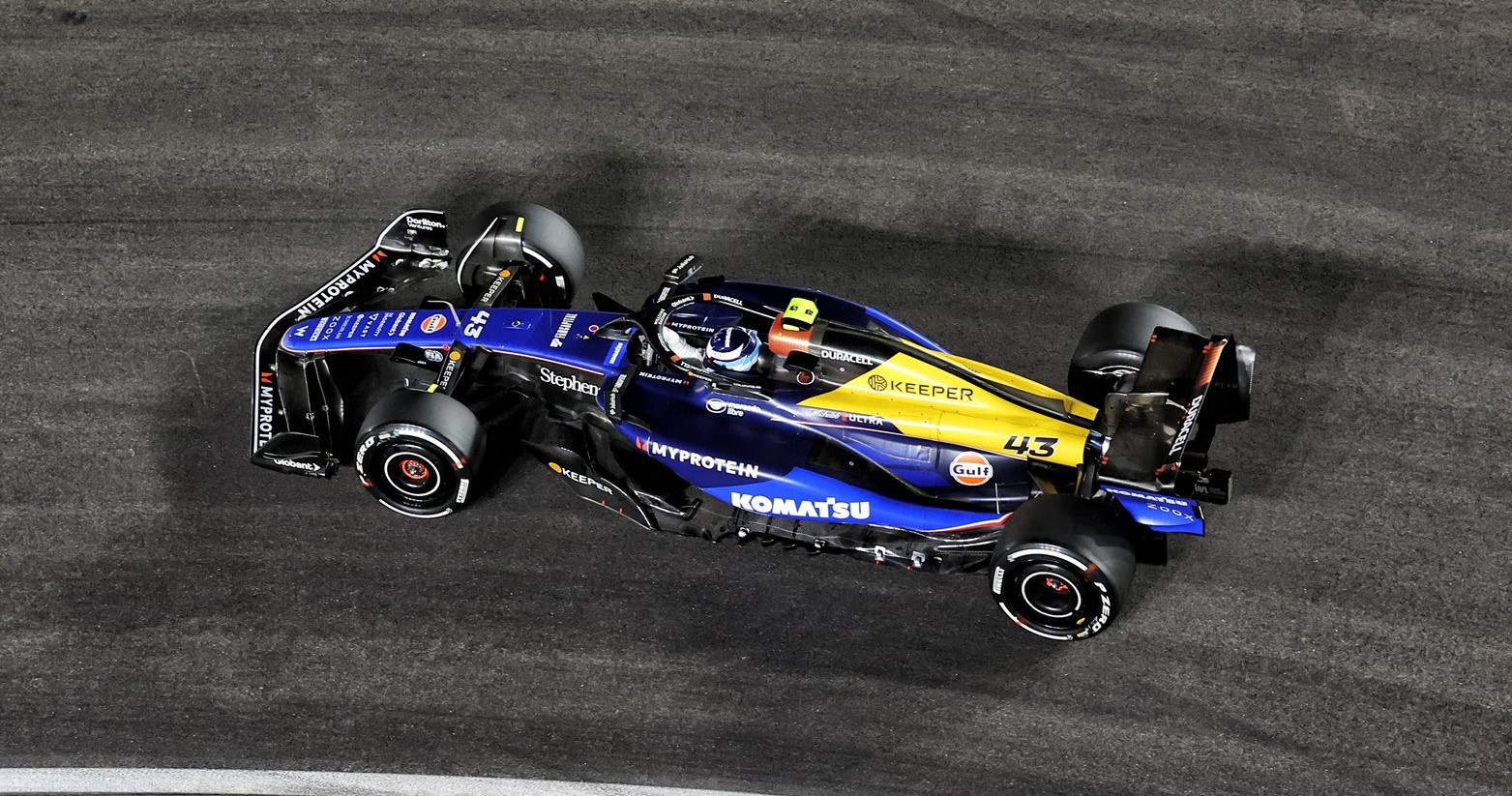
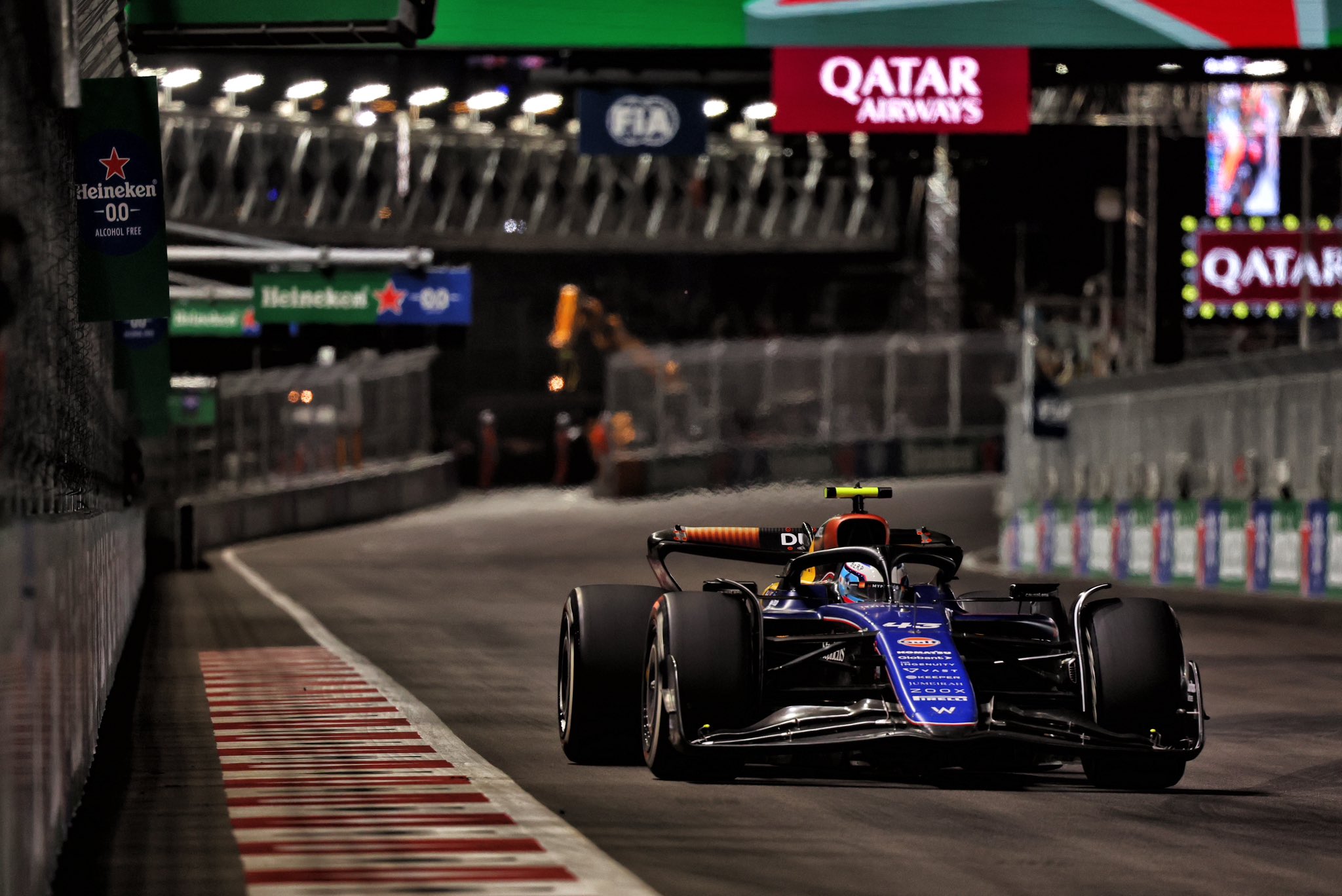
The recent run of major crashes has led the Williams Formula 1 team to split the specification of its cars for the Qatar GP, with Franco Colapinto obliged to run an earlier version.
The team introduced a front suspension upgrade at the Singapore GP, along with associated brake ducts.
After Colapinto’s heavy qualifying crash in Las Vegas he reverted to the older brake ducts as part of the effort to build up the spare car for his pitlane start.
In the wake of six major crashes for Alex Albon and Colapinto across the Mexican, Brazil and Las Vegas weekends the team does not have enough examples of the revised front suspension to provide both drivers with a raceable set and a spare.
It was thus decided that for Qatar Albon should stick with the Singapore suspension upgrade while Colapinto goes back to the previous version in order to ensure that both drivers have a back-up should they have another accident.
It’s understood that the older spec leaves Colapinto at a 2.5kgs disadvantage to his team mate.
“My car is not going to be in the last spec,” he said when asked by this writer about prospects for the Qatar weekend. “So that’s already a point where you don’t want to start like that already the weekend, but it’s part of it.
“So you’re going have to live with that, the old upgrades in the car. We are going to see how it goes. We’re going try to understand quickly the car, what it does, what we need from this different suspension, and we’re going to try to maximise what we have.”
Expanding on the changes for Qatar he said: “There aren’t enough parts. So it’s part of the crashes we’ve been having the last two races.
“We are changing the suspension, the front suspension is different. So that’s the old spec, and some other things. But that’s what it is, and we have to deal with that, and try to our best to maximise the car.”
Meanwhile Albon conceded that 2024 has been a difficult season for the team.
“I think it’s a known story now,” said the Thai/British driver. “The car wasn’t on weight and we were on the back foot from the beginning, and then we missed out on capitalising when we should have.
“Teams like Alpine, they’re on their third, fourth upgrade now. We did one major one, I would say, this year, and let’s say where we are now is kind of expected in terms of pace. but I think we’ve just missed out a little bit.
“All for good reasons, though. I really think that a lot of the reasons why we’ve been on the back foot is just because we’ve made so many big changes back at Grove, which are going to help us definitely in the future, but possibly a little bit of short-term pain for now.”
Mekies says that VCARB has to get everything right
VCARB boss Laurent Mekies says that the Faenza team has to nail the car sweet spot in the last two races in order to beat rivals Alpine and Haas to sixth place in the World Championship.
After Yuki Tsunoda’s ninth place in Las Vegas VCARB has 46 points to the 50 of Alpine and 49 of Haas.
The team rolled the dice by upgrading to the Red Bull RB20 rear suspension in Las Vegas, and it was initially lost in FP1 as it tried to optimise the revised package.
However by qualifying the team had found performance, and Tsunoda earned an impressive P7, although he lost two spots in the race itself to Lewis Hamilton and Nico Hulkenberg.
Mekies says that the team has to get everything right in the last two races.
“We’ll try to concentrate on ourselves,” he told this website. “It’s about nailing our car sweet spot, giving our drivers what they need to perform as we know they’re able to, and if we do that naturally, it will put us where we need to be.
“We need to concentrate on ourselves, execute two very strong weekends, as much as we executed very, very strongly in Las Vegas and in Brazil.
“It’s going to be decided probably on the last lap of the last race in Abu Dhabi. I think it’s fantastic for the sport that you can have this amazing battle at the front, amazing battle in the middle.
“And you have car manufacturers involved in these battles. You have what used to be small teams who are now serious organisations. It’s a giant battle. And I think it’s great for the fans, and it’s what we love in the sport.”
Mekies admitted that the team initially struggled to optimise the upgraded car in first practice in Las Vegas.
“Honestly, we started on the wrong foot on Thursday,” he said. “So we didn’t help ourselves with that. We were at the last two spots of the classification in FP1.
“So this was not great, but the guys have been incredible at analysing what was wrong, and putting the car back in the right window in the tricky conditions. We ultimately produced a P7 in quali, which is a very strong result, and the P9 in the race.
“Yuki was for a large part of the race in P7, and then in P8, so it’s never going to make you happy to lose the top of the midfield positions at three or four laps to go. But that’s what it is.
“I think what is behind is that the performance is now good enough to fight in all conditions. It was good enough to fight in Brazil. It’s good enough to fight in Vegas.
“So we are three or four points away of Alpine and Haas, and it would be a very good fight in Qatar and Abu Dhabi.”
Lewis Hamilton says he didn’t want to make his first appearance for Scuderia Ferrari in the post-season Abu Dhabi Formula 1 test – but admits that missing out will hamper his preparations for 2025.
While Carlos Sainz, Nico Hulkenberg and Esteban Ocon will all be driving for their new teams at the Yas Marina track Hamilton is committed to sponsor activities with Petronas in Malaysia designed to mark his departure from the team.
However he says that he wouldn’t have wanted to have his first outing in a public test, and never formally requested a release from Toto Wolff.
He’s set to have his first drive in a 2022 car in January at Fiorano.
“I know Fred [Vasseur] wanted it to happen,” he said. “For me, I was into two minds. Driving the red car for the first time in Abu Dhabi does not excite me, in that in a perfect world, you’d get to drive it, not be seen, and do the first roll out next year.
“When I did raise it, obviously with Toto, they had all these plans that I’ve got to go and see some sponsors, for them to say their farewells.
“So I don’t think it was ever going to actually be allowed, even if I had asked to have done it, but because I’m contracted to team until December 31. And that’s totally fine.
“But it doesn’t bother me, because I wasn’t going to do the test. It’s not what I wanted to do. I told Fred, that’s not what I want to do.
“Am I missing out something? For sure, it definitely delays the process and makes the start of the year harder, but we’ll do our best to recover.”
Hamilton says as he counts down his final races before his departure from Mercedes it’s starting to hit home.
“I just sat with Bono just now, and I was like, geez, two races left together,” he said. “And so definitely we have those moments. Everyone, we just all move forwards. I can’t wait for Christmas. I’m just excited.
“I’m excited for the season to end, because we’re not fighting for any more positions in the championships, driver-wise, it’s not nothing exciting, there’s not really much that’s going to change. So I definitely miss those times where you’re battling.
“Last year, I think in Abu Dhabi, we’re fighting for that one extra point to keep us be P2, so that’s awesome. When you’re not in the battle anymore, it’s kind of less exciting. Right the second, I don’t particularly feel emotional, but I’m sure there will be a moment.”
Regarding his final race in Abu Dhabi he said: “I’ve had all year to think about it, so there’s been those highs and lows through the year, so I can’t predict how I’m going to feel next Sunday, after the race, or the days to follow, or at Christmas, how I’m going to feel.
“It’s not easy. It hasn’t been easy all year, and even next year – I remember when I joined this team, it was strange driving past my old team in the in the pit lane, to the point that I even stopped at theirs at one point. So yeah, I’ll have to work hard next year.”
Asked what he will miss by leaving Mercedes he highlighted the long term relationships that the likes of Juan Manuel Fangio and Stirling Moss enjoyed with the company.
“It’s what I’ve always said about Mercedes, is that it really is a family,” he noted. “I’ve always said that. And one of the hardest parts of the decision is obviously when you when you’re at Mercedes, you’re a part of the family forever.
“If you look at the past drivers, up until their 80s, until literally their deathbed, you’re a part of the team, and they include you and honour you for life. And that was always a worry in the decision that everything you built that ends.
“In my mind that don’t think that’s the case. I’ll always be a part of Mercedes history. In the future, I’ll always be able to come back and see the museum and know that I was a part of the history of this brand. I think we’ve all worked so hard.
“We’ve been through so much together. It’s hopefully not a burning of a bridge. I think the bridge is solidified and it will last the test of time.”
He added: “In these last two all I want is that we give it our absolute all, which I know we will. For me, these two races, aren’t going to define anything for the future, it’s not going to define our relationship or our past.
“We’ve already done everything and more than we ever set out to do so. But it would be great if we could get a win again. But we’ll see.”
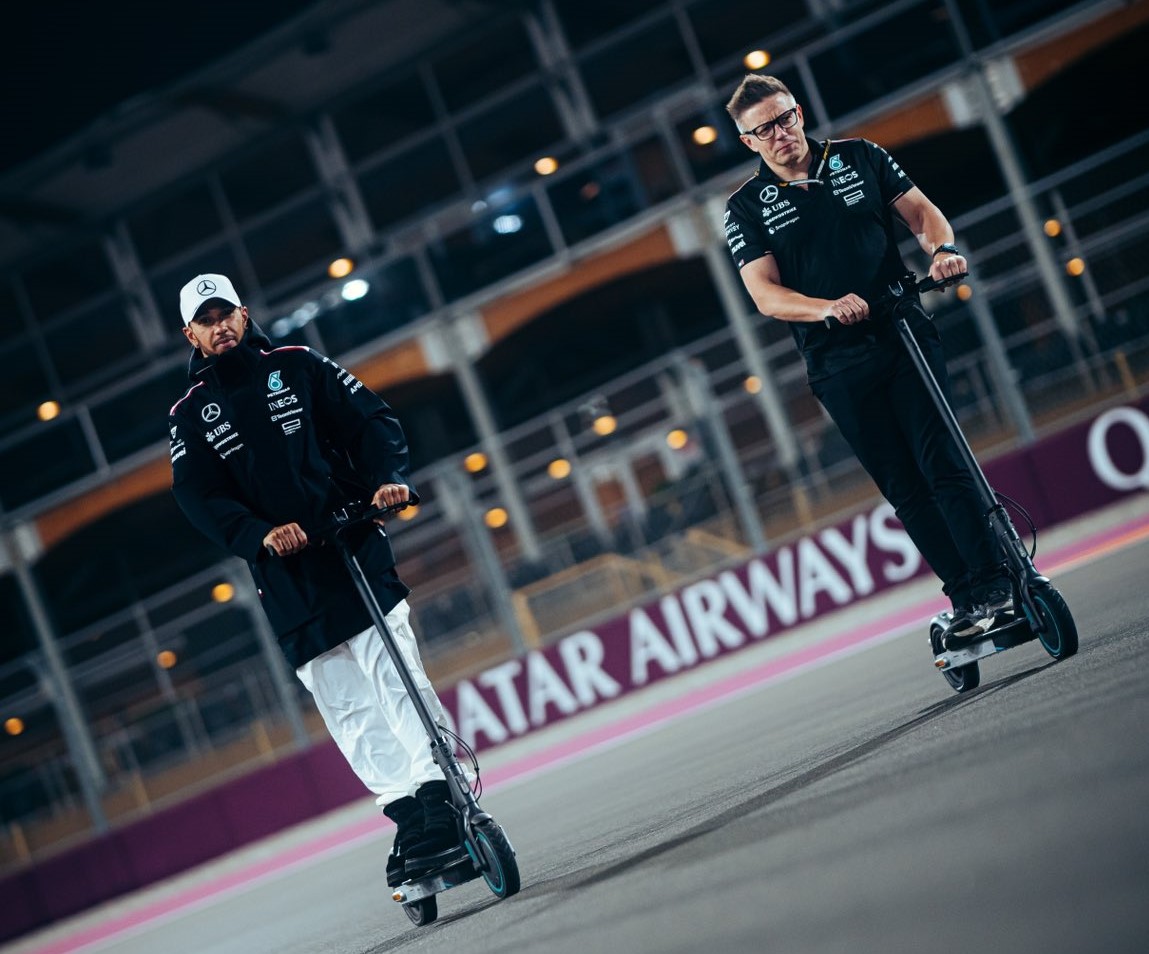
Russell says driving guidelines are not “rocket science” Picture @tinnekephotography
A discussion of Formula 1 driving guidelines in Qatar on Thursday evening focussed on overtaking on the inside.
The consensus that the driver making a pass on the inside should be allowed to run a rival wide, as long as he stays within the confines of the track.
GPDA director George Russell said that it was “not rocket science” to accept that as standard practice.
Drivers also highlighted how track layouts and run-off areas are the main issue in allowing cars to run wide without penalty.
The meeting was scheduled several weeks ago to give the drivers a chance to air their views about the guidelines, which were placed firmly in the spotlight by a rash of incidents and penalties in Austin and Mexico.
With race director Niels Wittich having been sacked in the interim it was also the first chance for the drivers to discuss the subject at length with his replacement, Rui Marques.
GPDA director George Russell said that the discussion had been a positive one.
“It was pretty productive,” said Russell. “I think we all agree the guidelines, they don’t need massive changes. I think we just need the odd sentence removed or adjusted. But I think everybody’s clear with what happened in Austin, what should have been a penalty. What happened in Mexico was rightly penalised.
“And generally speaking, over the course of the year, I think the decisions have been pretty good. It was just probably Austin that was the outlier. So just fine tweaks.”
Russell said that the consensus was that a driver overtaking on the inside should be allowed to run a rival wide, as long as he stays within the confines of the track.
“The discussion was mainly about overtaking,” he said. “I don’t want to go into detail what was what was spoken about, but I think a lot of drivers are aligned that if you are the overtaking car on the inside, rule number one is you have to be able to stay on the circuit.
“If you’re able to stay on the circuit, you are in your right to run the driver wide, as it has been for all of us since go karts. If you’re overtaking somebody on the inside, you’ve got the right to run them wide.
“And we also concluded that most of these issues are down to the circuits. We spoke about a number of issues in in Austin.
“I think a lot of the overtakes wouldn’t have even been attempted had there been gravel there, such as Austria Turn 4, the downhill right hander, you know you’re going to go in the gravel if you go one or two per cent over the limit.
“Silverstone at Stowe, obviously a great racing a couple of years ago, with Lewis and Checo and Charles, ultimately, everyone was off the track, but that’s because the track allowed you. The circuits are the root cause, and the guidelines are kind of like an interim fix that we need to agree on until we can get all of the circuits in a proper manner.”
He added: “Everyone’s in agreement, to be honest. I know there was maybe a bit of disagreement when we had the meeting in Mexico, but I think that was probably just a bit of self-protection.
“I don’t think it’s rocket science, I think we all feel the same way. If you’re overtaking on the inside and you make the corner and you’re not running off, it’s your corner, and you want to see hard racing.
“You want to see drivers battling wheel-to-wheel. It looks awesome when people are going through the gravel and sparks being flown up. And I think the stewards recognise that.
“If you’re on the outside being overtaken, it’s on you to yield. And right now there is a line of a regulation that says the inside driver needs to leave room to the guy on the outside from the apex to the exit, and I think that’s going to be getting binned off, and I hope it’s going to be from this weekend onwards.”
Russell stress that track design remains the key issue.
“I think the overtaking rules on the outside will not be changing much,” he said. “And I don’t think we’ve really seen much of a problem, as I said, on my personal view, generally this year, I think it’s worked.
“It’s just the issues that came up in Austin were obviously highlighted quite a lot, but ultimately it came down to the same fact, which was the circuit allows you to do that.
“If you take Max’s example of how late he braked into the corner, he wouldn’t do that in a corner that has gravel on the outside, because the risk to yourself is too great.
“Whereas when you’ve got tarmac on the outside, the risk is you just run a bit wide, and you get a track limits warning. So that’s going to change now.”
Max Verstappen also agreed that track layouts was the main issue when it came to overtaking.
“We still need, for sure, a few more discussions about certain things,” said the Dutchman when asked by this writer about the meeting.
“But I think it more has to do with the track layouts. “Some places just have a lot of run-off, and that creates already a lot of issues. So that’s something that we have to work on for the future.
“The main problem is the track that allows these kinds of things. So if you have gravel, that naturally stops you from doing things, taking a bit more risk than normal.”
Lewis Hamilton welcomed the opportunity for the drivers to air their views on the subject.
“It’s very complex, because all these different corners, so many different scenarios,” said the Mercedes driver.
“They don’t have an easy job at all. I think it helps us all sitting with them, having a discussion. In their minds this year it has been better in terms of consistency, but obviously everyone wants it to be perfect.
“But until you have those discussions for them to fully understand from where we’re sitting, from where we’re fighting, what we’re fighting for, and where what we think is right or wrong in certain scenarios, it’s good for them to hear and for us to work on real clear guidelines so that also from in the car you know exactly what you have.”
Colapinto recovered from his Q2 crash to finish 13th
Franco Colapinto admits that James Vowles “wasn’t very happy” after his huge crash in Q2 in Las Vegas – but says that the support of the Williams boss helped him to bounce back on race day.
Colapinto had his third crash in two race weekends when he went off in Q2 while trying to break into the top 10.
He was able to start the race from the pitlane in the spare chassis, and had a solid race to 13th place at the flag.
The crash added to the strain on resources that the team has experienced with the high level of crash damage this season, and Colapinto concedes that it wasn’t easy to face Vowles afterwards.
“He wasn’t very happy, but he has been always very, very supportive,” he said. “I always take out of every bad moment very positive things, and it’s every time because of James, his thinking and his mentality and his way of moving forward as a team leader and as a team.
“I think I learned a lot from him, and he has been an amazing team leader for the little time that I’ve been working with him. I know how important how all this is for him, and it also is for me.
“But when these things happen, when two tough weekends in a row happen like this, the mentality and the will to keep pushing forward, not giving up and always finding a solution to the problems is its strength, and always finding a positive thing in the negatives.
“And I think that is very important, and is what is going to move this team back to the top.”
Colapinto admitted that he took too many risks in Q2, while acknowledging that his life was made harder by Pierre Gasly being in front of him.
“When you are driving, you are going to a limit,” he said when asked about qualifying by this writer. “And I think for what the situation was in the beginning of the lap, I had to take more risks to try to get into Q3 – probably not that much!
“I tried my best, I think was difficult to manage that last run in Q2. We were very close to Gasly at the start of the lap, I did a very big gap, I did a four-second gap before starting the push. And then I think he really, really slowed down after Turn 16, after that kink to a left. And before starting the lap, he slowed down so, so much.
“I was eight-tenths behind him. It was Piastri behind me finishing the lap. I was in a very, very awkward position and really not ideal. And I started the lap eighth-tenths behind Gasly.
“So I had to take more risks than what I should have. I had a lot of dirty year in that lap, so just a tough quali for us. I think the pace was there to be in Q, or very close. So it’s tough. I think a tough day for us, because we should have been close to it into the top 10.”
Colapinto admitted that keeping out of trouble was his priority in Saturday evening’s Grand Prix.
“The idea was to have a clean race,” he said. “I think it was not ideal after such a big crash to go straight in the race. And I wasn’t feeling so comfortable the first stint there.
“I was really, really struggling with the balance. I had a lot of oversteer, very difficult to manage the tyres. And just not in a good window. I think as the car kept running and the track also kept getting a bit better, it came a bit more towards us.
“But it wasn’t feeling well at the beginning. I lost a lot of time in the first in that strategy, a lot of dirty air, and the tyres were opening very quick, a lot of graining straight away and dirty air and a lot of sliding.
“I think at the start of the race, I was taking a bit more margin,” he said. “It’s difficult after a crash to get back in the rhythm, going straight into a race start from the pit lane, it wasn’t what I wanted. But I think slowly, I started to get back in the pace.
“So I think a very difficult race to manage in terms of strategy, in terms of pit stops, of a lot graining and the degradation that we had. So we need to focus now on the next few races.”





 Adam Cooper F1