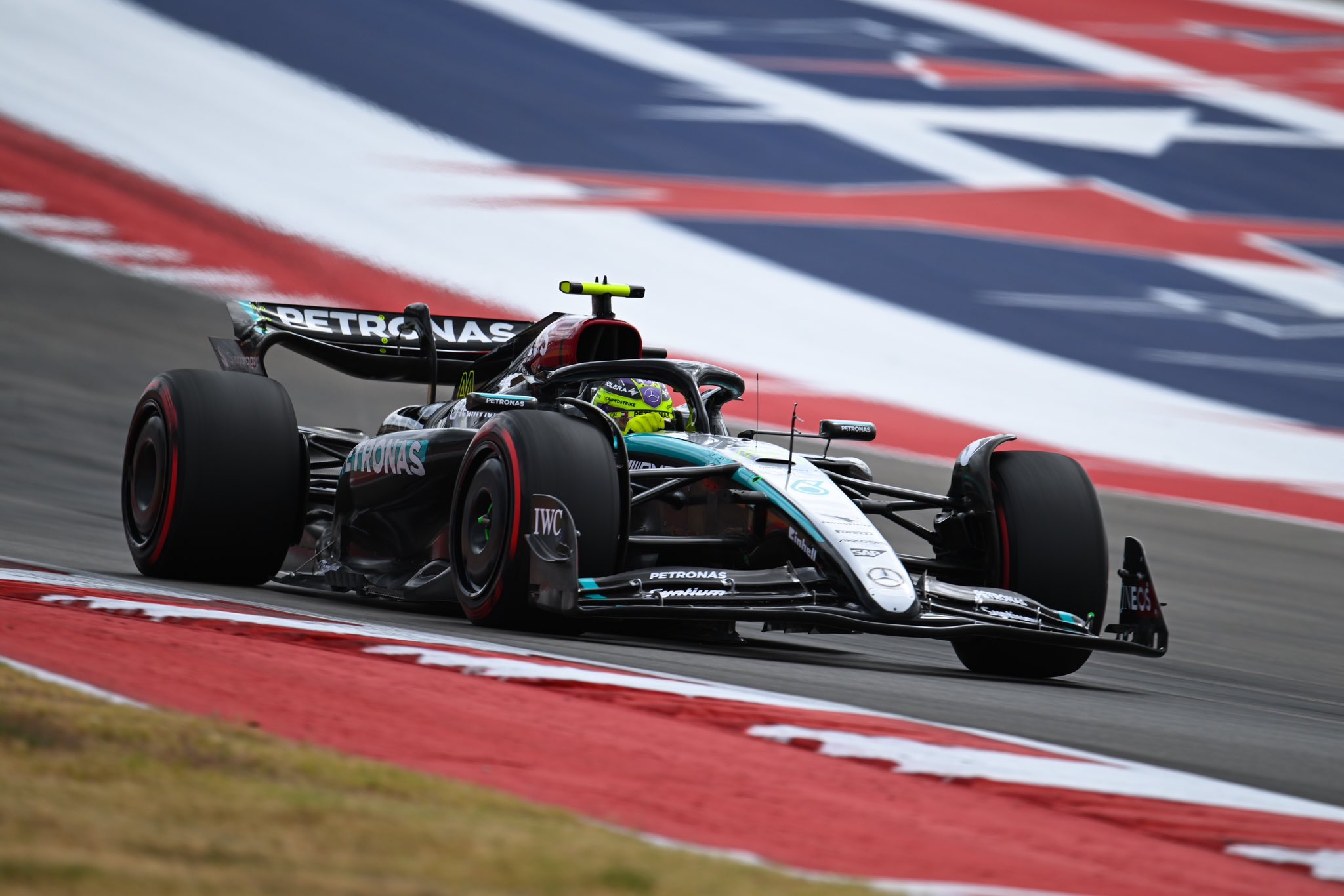
Lewis Hamilton will start the US GP from 19th on the grid after a disastrous Q1 session saw him fail to progress and beat only Sauber driver Zhou Guanyu.
Hamilton’s day was compromised by a broken front suspension element that hampered him in the sprint and left him with severe oversteer.
The team discovered the problem before qualifying and also made set-up changes in an effort to improve the car, but Hamilton struggled with the car and also had traffic issues.
“It’s been pretty terrible,” he said when asked by this writer about his day. “The car felt great yesterday, so obviously came really optimistic for today. And something failed in the front suspension, literally, as we pulled away from the line for the formation lap.
“And I had that through the race. So they figured that out. They changed the corner, and It just felt like a mess. This shouldn’t happen, and it’s obviously not planned.
“When the suspension is failing and breaking and things aren’t coming together… I mean today, honestly I can’t explain. You have to ask the team what happened with the suspension. But I know the guys are working as hard as they can. They did the change.”
Hamilton is downbeat about his prospects for the race, although he hopes he can make progress from 19th.
“There’s not going to be a lot going on. But I mean, I started in karts with a pretty bad go-kart, and I used to come through the field, so see if I can do that tomorrow.”
Regarding the update package he said: “Any performance we bring is positive. And as I said yesterday all of a sudden we were looking really quick. I don’t know where that went. But we’ll keep pushing.”
Mercedes trackside engineering director Andrew Shovlin confirmed that the suspension issue had been costly.
“We found a broken part on Lewis’ front suspension post sprint, and that definitely impacted the overall balance,” he said.
“In an effort to get the car back to the sweet spot we had on Friday, we made some set-up adjustments ahead of qualifying. Sadly these didn’t have the desired effect.
“A consistent balance continued to elude Lewis, although he was unfortunate to be knocked out in Q1 having been impacted by traffic in sector one.”
The final W15 update package appeared to work well in Austin on Friday
The final update package for the Mercedes W15 appeared to give the Brackley F1 team a boost in Austin when George Russell qualified second for the sprint, despite setting his time early and leaving himself vulnerable to being beaten.
Meanwhile Lewis Hamilton was caught out by a yellow flag and slipped down to P7, having been second and third in the earlier sessions.
The Austin updates are focussed on the floor, which has been a major talking point for Mercedes after the last version as introduced at Spa was dropped and then swapped on and off the car in subsequent races.
Trackside engineering director Andrew Shovlin said that the latest iteration was developed from the Spa floor.
“It’s not a sort of fundamentally different concept,” he said. “It’s an evolution of that floor from Spa. It’s not the only change on the car. Hopefully, it’ll be a big enough step that the performance will be obvious.
“We’ve done all the work that we can to be confident that this will be a step forward. Running it and seeing that you get the results you expect in terms of the pressures and the loads, seeing that you make a step forward on the timesheets.
“That’s all part of the box ticking exercise. But to get us to this point, we’ve done as much work as we possibly can to confirm that it should, it should be okay. And yeah, we’ll learn this weekend, and we’ll continue to learn into Mexico.”
Asked by this writer if there is anything else to come he said: “We’ve brought pretty much everything we’re going to bring to the end of the year now.
“That’s not to say that in and amongst the learning that you get across the races, we won’t be making further changes, but there’s no major updates planned for us from here on in.”
Shovlin admitted that the Spa floor hadn’t brought much performance, and the timing of introduction was influenced by the fact that the team needed to replace the previous examples, which had done a lot of miles. So a switch was made to a new spec despite it not brining a significant advantage.
“Before the break, we had a really good momentum, and we’d hope to carry that into the second part of the year,” he said. “Other teams were bringing updates this side of the break, and I think that inevitably had a bit of an effect on us slipping back.
“We’ve done a lot of work looking at that Spa package now, and it wasn’t a big step. Part of the reason we did that was because the floors that we’d introduced in Miami, by that time, were getting very tired. We wanted to make new floors.
“We didn’t have a lot of performance, so we actually went ahead and produced them for what was a relatively small gain.
“The downside of that is it’s hard to know whether you’re making progress. And for one reason or another, we didn’t have great performance in Zandvoort, in Monza, and that was what triggered the decision to roll back. But if we look at it, I think a large bit was our competitors moving ahead of us again.
“When we were quick before the break, we won some races, but we were winning them by the narrowest of margins. We wouldn’t have even said we were the fastest car in Spa. And hopefully this, this will move us back in the right direction. But you’ll see McLaren have got an update here again, so I think they’re the ones that everyone is chasing at the moment.”
Shovlin acknowledged that slow corner performance has been a handicap recently.
“We’re struggling to turn the car in some of those corners, and then that results in the drivers having to sort of finish turning it with the throttle,” he said. “That puts up tyre temperatures.
“So we’re working on those aspects for next year. But this is just more downforce and more downforce tends to make your problems go away, but, you know, there’ll still be things we need to fix.”
Regarding the latest updates he said: “It should help a bit. But that’s the thing that we’re really looking at in the development of the next year’s car is, how can we improve the balance.
“Throughout the life of this car, we found that when it’s in it, in its well-balanced window, it’s a pretty effective racing car, and when you slip out of it, we lose a fair bit of performance.
“And if you look at the McLaren, it seems, wherever they go, whatever the session, they nearly always have it working well. And that’s what you’ve got to aim for.”
The Singapore race proved frustrating for Mercedes
Toto Wolff admits that his Mercedes Formula 1 team “read the race wrong” for Lewis Hamilton on what he called a “painful evening” in Singapore.
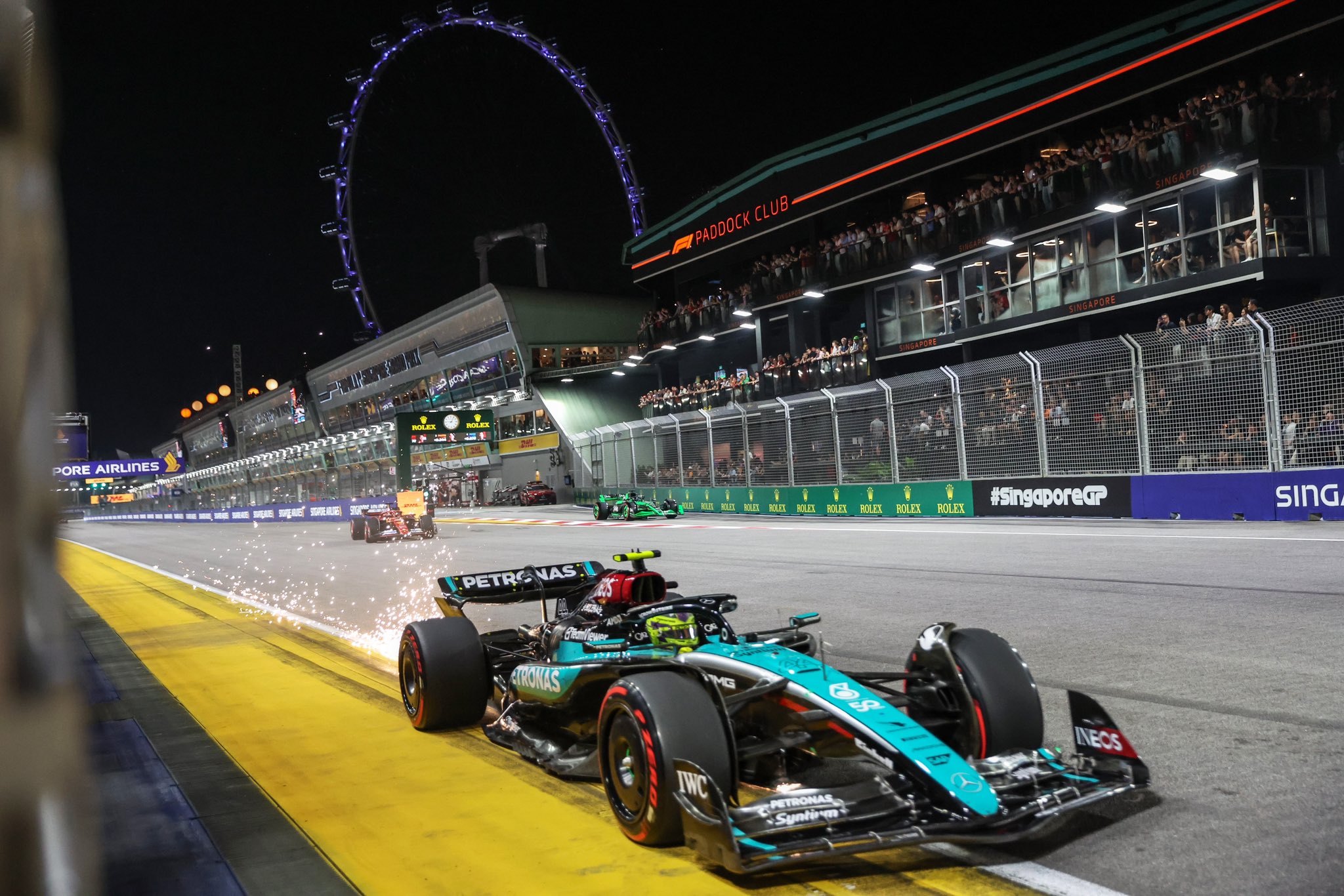
Having qualified an encouraging third Hamilton started on the soft tyres, and after the inevitable early stop he slipped down the order to eventually finish sixth.
His team mate George Russell started fourth and finished in the same position, just holding off Charles Leclerc in the closing stages.
A bigger concern to Wolff was just how far Russell was behind winner Lando Norris.
“It was a really painful evening,” said Wolff. “It’s not about when you look at the positions, you’re fourth and sixth, that’s not good, especially when you’re starting second and third.
“We struggle at the moment with tracks that are hot, and are tough on traction. It was here, it was Baku. But this is no excuse.
“I think it’s just at the moment not what we what we expect from ourselves, because if your quickest car is a minute behind the leader, it’s just difficult to accept.”
Hamilton made his frustration at the strategy choice clear on the radio.
“I think we’ve read the race wrong,” said Wolff. “We took a decision based on historic Singapore races, where it’s basically a procession, Monaco-like, and that the soft would give him an opportunity at the start as pretty much the only overtaking opportunity.
“And that was the wrong decision that we all took together jointly. It felt like a good offset, but with the real tyre deg that we had, there was just one way, and that was backwards.
“So I think there was a logic behind it, but obviously was contrary of what we should have decided. But it doesn’t hide away from the fact that when the car is too slow, you’re too slow. Maybe you’re a position ahead or behind, that doesn’t change anything.”
Hamilton and Russell both skipped media activities after the race as they felt unwell.
“They didn’t feel well at the beginning,” said Wolff. “I think there was a borderline heatstroke or something along that. But they’ve been in the in the water, but they wouldn’t have been able to go to the [media] pen.
“There was no bad feeling or annoyance. It was just we had the doctors with them, but they’re all good.”
Russell will start the Singapore race from fourth, right behind his team mate
George Russell has praised his Mercedes Formula 1 team for recovering from what he called our “worst Friday in probably three years.”
Russell and team mate Lewis Hamilton both struggled on the first day of running in Singapore, with the latter admitting that the team was lost, and suggesting that Q3 would be a struggle.
However overnight work both in Singapore and back at the Brackley factory produced set-up changes that worked in FP3, a session that saw Russell as high as second.
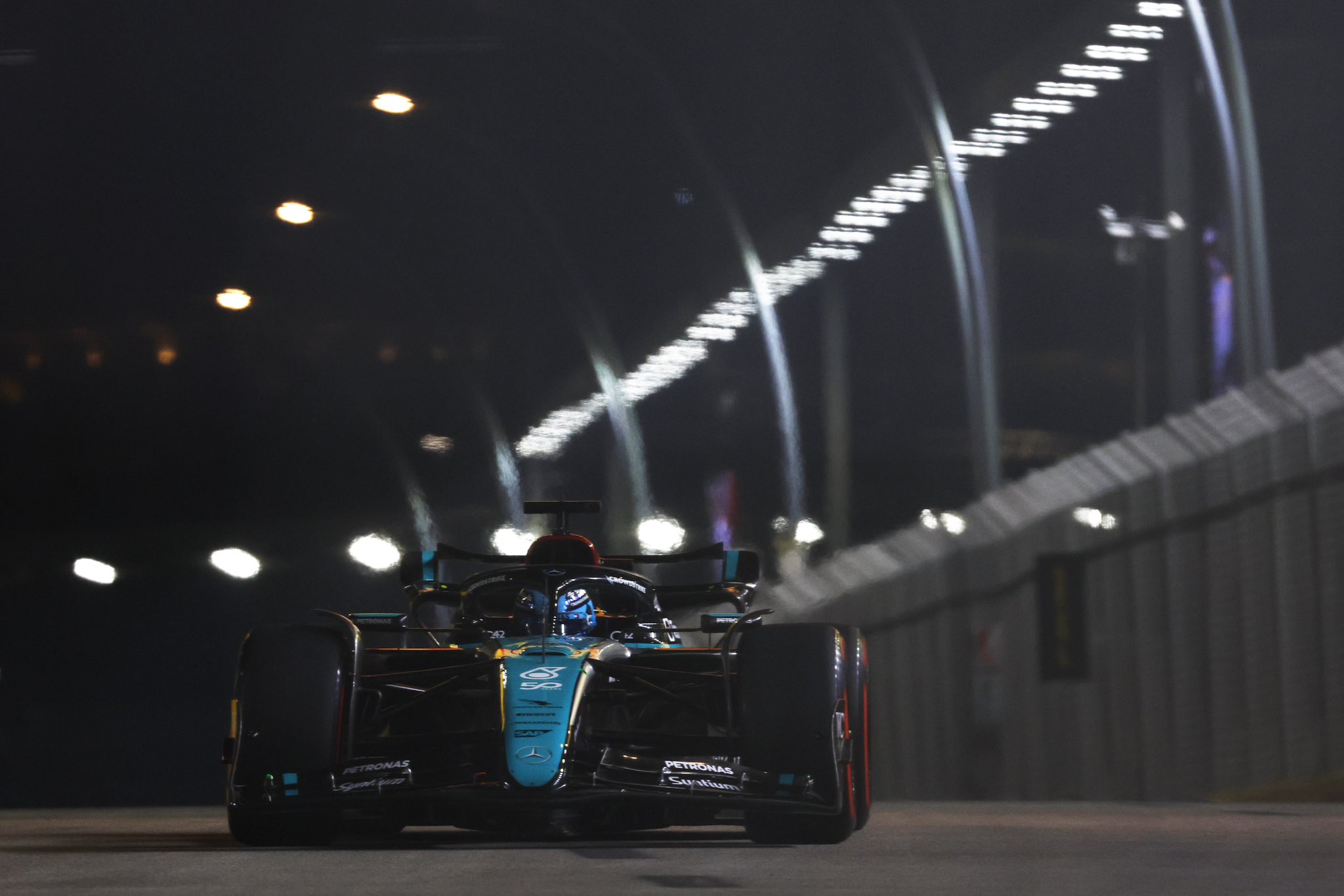
In qualifying Hamilton earned third spot, with Russell right behind him in fourth, with only Lando Norris and Max Verstappen up ahead.
Mercedes posted a picture of reserve driver Frederik Vesti and members of the Brackley sim team, thanking them for their “huge shift.”
Russell made it clear that the changes that they tried had worked on the real cars.
“Absolutely, an incredible turnaround from yesterday,” he said when asked by this writer if it was one of the best recoveries that the team has made.
“It was without doubt our worst Friday in probably three years. And this morning I was second, comfortably ahead of everyone bar Lando and the car was, night and day difference. So credit to all the team for the work we did.”
Regarding the contribution of Vesti and his colleagues he said: “Immense, immense. It’s not only the people on the sim, but it’s the people going through the data, all through the night. The engineers even here, through the night, literally as well. So, yeah, great turnaround.
“It was just we were totally in the wrong window with the setup. We were trying some things yesterday, maybe not the right place to do it. And, yeah, clearly we turned around.”
Russel had a couple of escape road moments as he pushed the limits in FP3.
“I had good confidence,” he said. “I was just seeing if there was anything more in the tank. There wasn’t. Before the session, I was hoping for a bit more, but after Q1 and Q2 very happy to salvage a P4.”
Russell will start Sunday’s race immediately ahead of Oscar Piastri: “He’s going be the main threat from behind. I hope that Lewis and I can take a fight to Max. But realistically, if Lando is leading after lap one, he’ll win the race comfortably.”
Toto Wolff expects that Mercedes will have a further floor upgrade at the US GP in Austin as the Brackley Formula 1 team attempts to get to the bottom of its recent struggles.
A new floor was tried in practice at Spa, but then shelved for the race, in which George Russell and Lewis Hamilton were first and second on the road.
The new version was seen again in Zandvoort and Monza, where the team had two difficult weekends.
The old one was then back again for Azerbaijan, and while George Russell finished on the podium, results were inconclusive.
It will be used again this weekend in Singapore, but Wolff say a “new new” version is likely to be seen in Austin, with the three-week break allowing all teams to make and bring fresh parts.
“The track is an outlier,” he said when asked if lessons were learned in Baku. “Nevertheless, it’s not like this was night and day. We still suffered from the same balance performance that we had on the new floor.
“So in Singapore we have the same one. That’s what we shipped over. And we need to race that. But from Austin onwards, we will probably go to a new spec.”
Asked if that was already in preparation or would draw on what was learned in Baku he said: “I think we need to go over the data.
“So you’re going for new, new when the new didn’t work properly, but the old one doesn’t work either. So it’s either old new, or new new. We don’t know yet.”
Wolff admitted that this season’s formbook continues to be impossible to predict.
“You look at the qualifying performances that we had, where we first and second in Silverstone and we were first with Lewis in Spa.
“So there was much more performance in qualifying and in the race. But between those eight cars, it can swing that way, because we’re not talking about tons of time. We’re talking about two or three tenths in either direction, then you have an outlier like Leclerc in Baku or in Monza, where they’ve always been strong.
“So as a matter of fact, this is about who is getting the balance as good as possible, and who is having the tyres in the right window, and what kind of aero concept works well at a given track.
“I will be quite curious to see what happens after Singapore. Ferrari was really strong there last year. So I have no doubt that it’s the third in the row where they can race for the win. Red Bull wasn’t last year. We were doing okay. McLaren was doing okay. So it’s four teams now that are very close.”
Asked about the rest of the season he said: “I think where we’ve traditionally been fast was Barcelona, Silverstone, Spa at times. Austin was a good one for us. Brazil was a good one for us. Not so many good ones left!
“But the pattern in Ferrari is every year the same, whether they are, going for a championship win or not. It’s those five tracks where they are exceptional, and the driver is exceptional.”
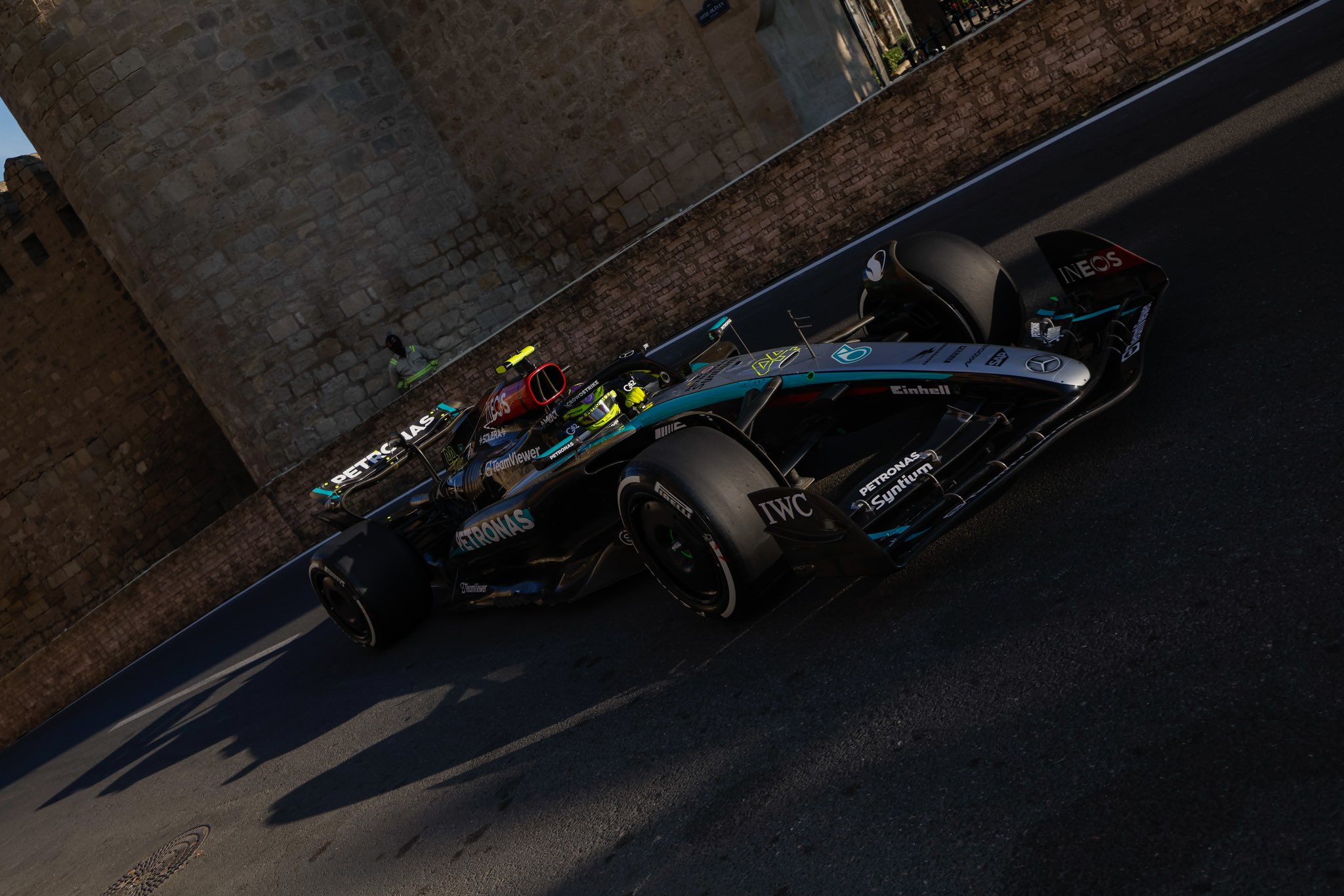
Lewis Hamilton has revealed that a component that “wasn’t correctly built” on his Mercedes W15 made his life difficult in Baku qualifying and contributed to the decision to start from the pitlane.
Despite a difficult session Hamilton qualified seventh, a position from which a team would not usually opt to drop out of parc ferme and take a new power unit.
However having discovered the issue the team opted to do just that, resolving the component issue and giving Hamilton a fresh PU for the rest of the season after a problem earlier in the year meant that a new one was inevitable.
From his pitlane start he worked his way up to 11th before the Carlos Sainz and Sergio Perez collision moved him into the points in ninth.
“It was the team’s decision,” he said when asked by this writer about the pitlane start call.
“We had a great car on Friday, and made the tiniest changes into Saturday. One of the components wasn’t correctly built, and then that led us the wrong way then on Saturday, we didn’t find out until the end of the day.
“And this race was the strongest place, the best place, they said, at least to make the change for the engine, because we need one, because I lost one earlier. So we knew it was going to be a tough day.”
Asked if parc ferme enable him to make setting changes he said: “We just basically corrected.”
Hamilton spent much of the race managing tyre temperatures, while also pointing out to the team how he was having to drive the car.
“Yeah, it was the worst balance I probably I’ve ever had, one of the worst balances,” he said before demonstrating his aggressive steering movements.
“Basically I had so much front end and no rear and, so had to turn like this – it’s not the way you drive. I had to yank the steering to break the traction from the front, slide the front through every corner. It’s the weirdest way to drive.”
He added: “I knew that we wouldn’t be able to overtake today. This is not one of those tracks. It’s difficult to follow in the middle, at least be close towards the at the end. And, yeah, I don’t know why pace was so bad on our side, but it happened from Saturday.”
Hamilton acknowledged that lessons from running the older floor were at least useful.
“We’ve got data,” he said. “I mean, both cars finished, and George got really good points today.”
Mercedes boss Toto Wolff suggested that Baku was a better option for a PU change than the US GP, which was the alternative.
“There’s two different philosophies,” said the Austrian. “And we discussed it at length, one you just swallow the pill here, because starting from P7 we don’t know where that would have gone, and then doing it in Austin. But we feel that Austin is an opportunity.
“We knew that it’s going to be a race of misery, because it’s so difficult to overtake in Baku. And that’s what it was. The moment you come closer, you overheat the tires, and then you go backwards, and I think this is what happened to him. But lots to learn.”
Sanchez is adamant that the pieces can fall into place at Alpine
Alpine’s new executive technical director David Sanchez says that the Enstone Formula 1 team has “everything needed to make a competitive car.”
The former Ferrari man joined Alpine in May after brief spell at McLaren in a role that sees him overseeing a team of three technical directors, divided into the performance, engineering and aerodynamics areas.
The Frenchman, who previously worked at the team starting in the Fernando Alonso era in 2005, has now had time to make an assessment of what he has found.
“They are very good,” he said when asked about the team’s facilities. “Everything needed to make a competitive car is there. So I was very pleased when I joined.
“Coming from outside, there was obviously a few things where I tended to have my own opinion.
“There was a plan in place, we reviewed the plan, we adjusted a few things, and for sure, that car needs a big push on upgrades. We are working on it, and it’s going pretty well for now.
“Some of them were on the pipeline. Now we have a lot more coming up, plenty of ideas, and now it’s trying to pedal as fast as we can.”
Ask about the A524’s weaknesses he added: “I think it’s a bit of a lack of development. We just need more downforce, we need a bit more of everything, especially downforce.
“I think for now, we’re developing around the weaknesses. This year in-season, it’s a lot about aerodynamics and for next year’s car, when we review the hardware, we’ll try and focus on fundamentally changing a few aspects of the car, and that should be another step forward.”
Most teams intended their basic 2024 packages to remain largely unchanged heading into 2025, give the obvious focus on the 2026 rules.
However Sanchez admitted that Alpine will make mechanical changes for the A525.
“For next year, there will be conceptual changes,” he said. “Again, we’re talking on suspensions, mostly. For this year, we’re shifting a big focus on aerodynamics.
“I wouldn’t say it’s going to be big concept changes, because when you look at the car, it will look similar, but when you look at the aerodynamic characteristics, they would tend to be, some of them different, some of them with a just bit more powerful performance.”
Sanchez agreed that the team has done a good job of optimising what has been a relatively stable package recently, with both drivers regularly in the top 10.
“There is for sure at the moment good momentum in the team,” he said. “We’ll try and maintain this until we get more upgrades, and we should build on that.”
“This has been a lot about learning how to how best to run the car set-up wise. There are some aspects to get the car in low-speed corners, which is good, to get the car turning, but in traction, it’s not very good.
“And then it’s about how to combine aero and mechanical sides just to try and get in a different optimum. This is where we seem to be at the moment. We’re trying to go further this weekend, and in the future we will try and have a car bit more adaptable.”
Sanchez acknowledged that weight has been a key issue: “When the car is overweight at the start of the season you know that weight-saving is the most straightforward way to add performance of the car.
“So for us, it was a little unfortunate the extra weight at the start of the season, but there’s been a lot of very good work in the design office to get that car now under the weight limit.”
Hamilton had a difficult race in Austria but still salvaged fourth place
Mercedes F1 boss Toto Wolff says Lewis Hamilton has “all reason to be angry” after a frustrating weekend in Austria.
Hamilton suffered a damaged floor early in the race and could not match the pace of team mate George Russell.
Having passed Carlos Sainz on the first lap Hamilton was obliged to give the position back for going off-track in order to avoid a penalty.
He ran fifth for much of the race but the floor damage on the right-hand side – which the team believes was due to striking the kerbs at Turn 8 – compromised his pace, and left him complaining about understeer.
He also picked up a five-second penalty for missing the pit entry white line when he had a snap of oversteer and lost a place to Oscar Piastri.
The collision at the front of the field between Max Verstappen and Lando Norris that handed the win to George Russell also promoted him to fourth.
After the race Hamilton congratulated the team but downplayed the improvement in the form of the W15.
“I mean, from my side, it’s not feeling massively different,” he said. “But George, you can see he’s doing really well, he’s won a Grand Prix already. So that’s huge for everyone in the team, and a huge boost for everyone.”
Regarding the damage he said.: “I’m not really quite sure. I think Turn 1 a bit of damage, and then the floor was just falling apart. I don’t know when I got the damage,”
Wolff admitted that it had been a difficult race for Hamilton.
“It was one of these bad days, I think,” said the Austrian when I asked about Hamilton’s afternoon.
“A pretty decent start, and then Turn 1, lap one, giving the position back was a harsh thing, but it was pretty clear that we will be getting a 10-second penalty for not doing it.
“And it started a spiral. He pushed it very hard on the entry, you can see how much he pushed and lost the rear end, and obviously the next penalty came about.
“On top of that, we had floor damage because of the kerb ride, which I guess most people had, but his was extensive. It was two and a half tenths in parts that broke off on the on the car. So all reason to be angry about it, or upset about it.”
George Russell led the opening laps in Canada but had to settle for third
Mercedes Formula 1 boss Toto Wolff says that the team “dreamt” about scoring its first win of the year in Canada but doesn’t yet have a good enough car to do so.
George Russell took pole and led the early wet laps of the race, but he eventually finished third, while team mate Lewis Hamilton climbed from seventh to fourth.
Wolff admitted that while it has improved of late the W15 still isn’t as competitive as it needs to be.
“Maybe for a few minutes we dreamt about it, but in reality, probably not,” he said when asked if the team had a winning car in Montreal.
“I think definitely since Imola we’ve taken the right steps and put parts on the car that were working, and that is something that we were struggling with in the past couple of years.
“And now, directionally, we seem to be adding performance every weekend, and we have new parts coming in Barcelona that should that help us. So I would very much hope that we can continue this positive trajectory.”
By way of caution he added: “I am always a bit worried, when you’re being carried away, that everything seems to fall into place, because this is a difficult sport. We’ve had this positive trajectory now since the last three races, and everything seems to be making much more sense. So the stopwatch will tell us.”
Russell and Hamilton both expressed their frustration after the flag, with the former apologising to the team for an “ugly race”.
However Wolff insisted that they should be satisfied with the results they achieved.
“I think when you finish third and fourth, where we have been coming from, then it’s a positive race,” he said.
“Three and four is much better than we had previously, what we had in the in the last few races. So that’s good.
“But I think both drivers saw that more was [possible], because we could have maybe gained a position or two, and that’s why there is a kind of negative sentiment that prevails.
“But if you would have given them third and fourth before the weekend, probably they would have taken it.”
Wolff downplayed the suggestion that the new front wing first seen in Monaco was key to the recent improvement.
“Sometimes when you bring a highly visible part, like a body work, this is pretty much the talk of what has changed the performance,” he said.
“The truth is we have, over the last three races, brought so many new parts, visible and invisible for the eye, that have contributed milliseconds to more performance.
“And I think this is where those marginal gains can have that positive effect. And that was just a huge effort of the factory. And so I think the wheel has started to get some real motion now.”
Expanding on the recent improvement he said: “There’s no such thing as the silver bullet in F1, and therefore it was a constant work of understanding what was wrong.
“And I know that everybody got tired by this answer, but you can’t reverse engineer the performance of the car and say we’re looking at the Red Bull and this is what we want our car to look like.
“You really need to work your way through the problems. And it didn’t seem to correlate between the tunnel and the track.
“And the car was difficult to drive, ride was not good, we had the bouncing or bottoming coming back and then we had we had a clear indication of what we were missing in the jigsaw. We put the piece in, and I think now it’s fine.”
The 2026 rules could change before teams start aero work in January
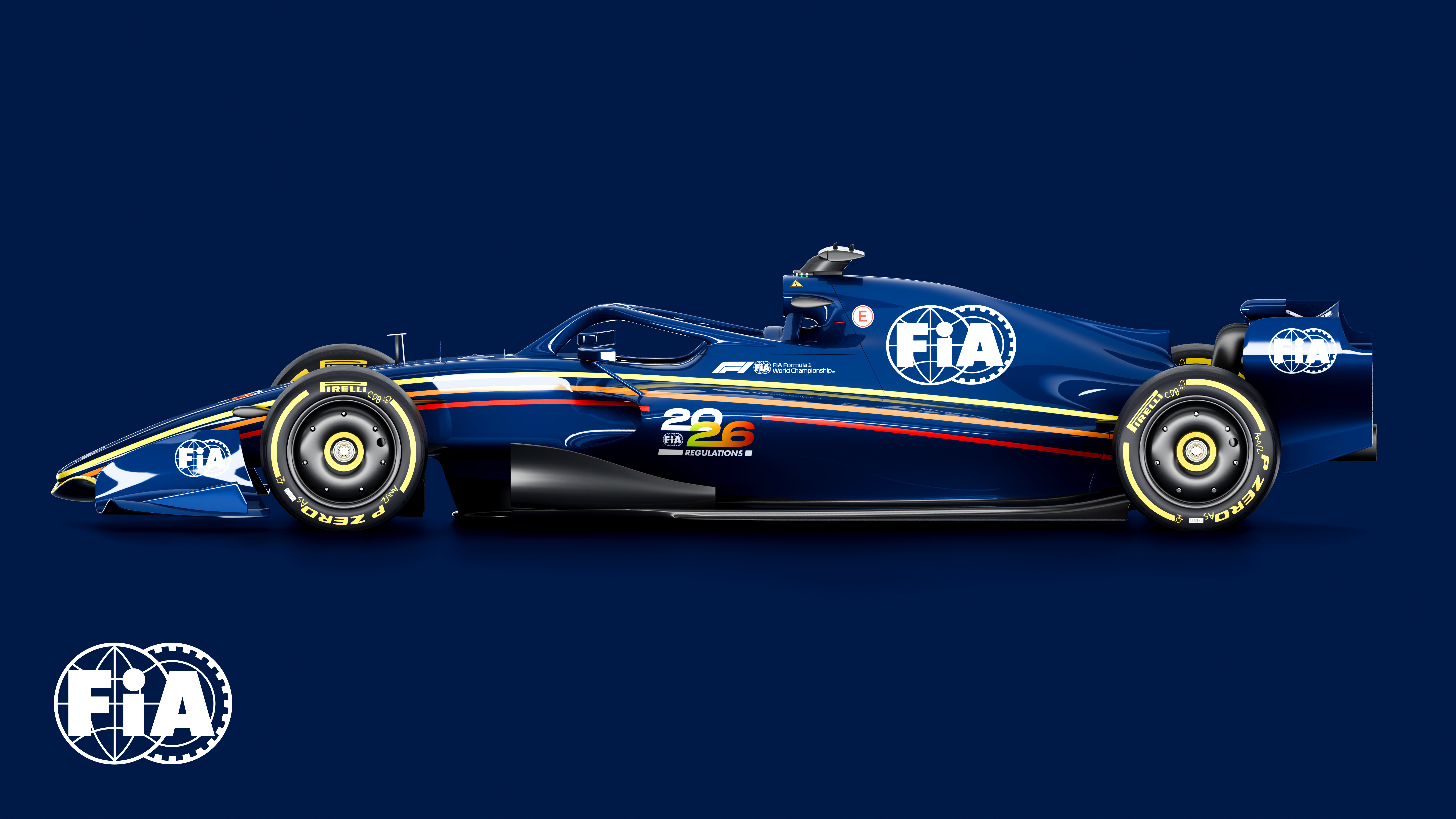
FIA single seater director Nikolas Tombazis insists that the 2026 Formula 1 technical regulations are not yet set in stone, and there is plenty of scope to make changes before they are finalised.
The FIA has given the teams the draft rules, and on Thursday the governing body issued the main details to the media.
Under the International Sporting Code the regulations have to be approved by the World Motor Sport Council by June 30.
Refinements can be made by the end of October, while in reality on the aero side the deadline for detailed changes is the end of the year, as teams cannot start work until January 1.
Teams and drivers have expressed doubts about some aspects of the draft regs, notably the 30kgs weight reduction, the low downforce and hence reduced speed in the corners, and the higher speed on the straights.
Teams are also on happy at how little freedom they have initially been given in terms of aerodynamic development.
However Tombazis made it clear that their views will be taken into consideration in the coming weeks.
“There’s clearly some concern expressed by some drivers or some teams,” he said. “First of all, these regulations are not yet approved.
“We are presenting them to the World Council on Tuesday in a very extensive manner, the aim being to have them approved by the World Council towards the end of the month. But that’s still not the case.
“Additionally, I would say that we clearly wanted to share these things with the media earlier, because we didn’t want things to leak from teams, we just wanted the media to get the full picture early on.
“But finally, most important of all, I would say, the World Council discussion, and hopefully the approval is the first step, we’re not in the final set of regulations yet.
“We do have quite a few things that we need to refine and discuss with the teams. We are fully conscious of some of the concerns over the level of downforce of the cars, or straightline speed, and these are things that are weak class as the refinements that still need to take place.
“So between, let’s say, the end of the month, when these regulations would hopefully be published, and the start of 2025 when teams can start aerodynamic development, because they cannot start earlier, we do expect a reasonable amount of extra work to be done – in full consultation with the teams, with FOM, and everybody else.
“And hopefully that will then lead to some refinements that would be submitted to the World Council maybe bit later in the year, and hopefully approved.”
Tombazis acknowledged that teams believe that as the regulations stand 2026 F1 cars will be potentially matching current F2 speeds.
“I think the fears are accurate because people are taking a snapshot of what the regulations on a piece of paper are now, and are making comments on the basis of what they see,” he said.
“So I don’t have any concern about these issues raised by people, but clearly as I explained at the start, we have full expectation to make some steps up for performance, and that’s exactly why we’ve set the bar reasonably low to start with, so we can build up on that, with collaboration of the teams.
“And to increase the downforce of these cars, is actually quite easy, if you have the regulatory freedom, I mean, and that’s exactly the step we want to take.
“So I understand the comments. I don’t think there’s any concern these cars will be not faster than F2 or anything like that. I think that would be 100% resolved by the time we are in the final regs.”
FIA single seater technical director Jan Monchaux insisted that the views of the teams are being taken into account.
“We are still in discussion, and we are always in discussion with the teams,” said the former Sauber technical director.
“They have expressed concerns. Typically, teams are always a bit reluctant at implementing large changes, so it’s a bit of an ongoing compromise that needs to constantly be found.”
Monchaux stressed that it’s better to start with restrictive regulations, especially on the aerodynamic side, and then give the teams more freedom.
“As Nikolas said effectively the approach we had since we needed to respect the framework, in terms of date of publication,” he noted.
“The regulations as they have been presented now, and which hopefully will be voted, are probably the most restrictive teams will be seeing, because we think also it’s going to be far easier in the next months to start increasing the freedom, and review some aspect of the regulation, which potentially currently are far too constrained, then the other way around, because they will all agree on having more freedom.
“If we had gone the other way around and effectively, let’s say, have something like providing a lot of freedom in their ability to design the cars, we would potentially realise in October or November on that one we don’t necessarily want, because it might put at risk some of the targets we want to achieve with these new regs.
“So it’s simply the approach we think is more reasonable to effectively now, step-by-step, since we have, I think, a solid basis to start discussion, to review some areas where, for the moment, we offer little or no freedom.
“Then if we convince ourselves, with the active support of the teams, to potentially say, ‘Okay, in this area, you can do more, it’s okay for us, you have more freedom,’ because we are convinced, through work they will have to do that it’s not going to put at risk all the high level objectives – the nimble car, which comes with reduction of weight, which comes with some reduction of downforce.
“And I think the process like this will be working, because it’s pretty much straightforward, because they will always say yes for more freedom.





 Adam Cooper F1